We’re up before the sun again, a driver is waiting and the small group of us are off on another adventure. We head up over a mountain pass before sunrise, like how many days start off. The clouds hang low and it remains dark for an hour or so. It’s a damp rainy day, and the muddy potholes are taking over the roads. We arrive at the border early, as planned, and it’s relatively painless.
The borders around Kenya/Uganda/Rwanda were all similar in their controlled chaos. Confusing for an outsider, and without a guide the process would’ve been exponentially more difficult. So we get to the border area, an open area with a military presence and government buildings, things aren’t particularly labeled well, like where you’re supposed to start. Everyone exits their vehicles for inspection, and proceeds on foot to the appropriate building marked with “exit” and waits in line – often being pushed aside by locals – and eventually gets to the front and coughs up their passport (hopefully) with all the necessary visas. So you exit the country you are leaving, get a stamp, go over and do it all again to enter the next country, get stamped, and then you’re good to go. Well, not really, you must wait for the vehicle to pass through, which sometimes takes forever, and sometimes not.
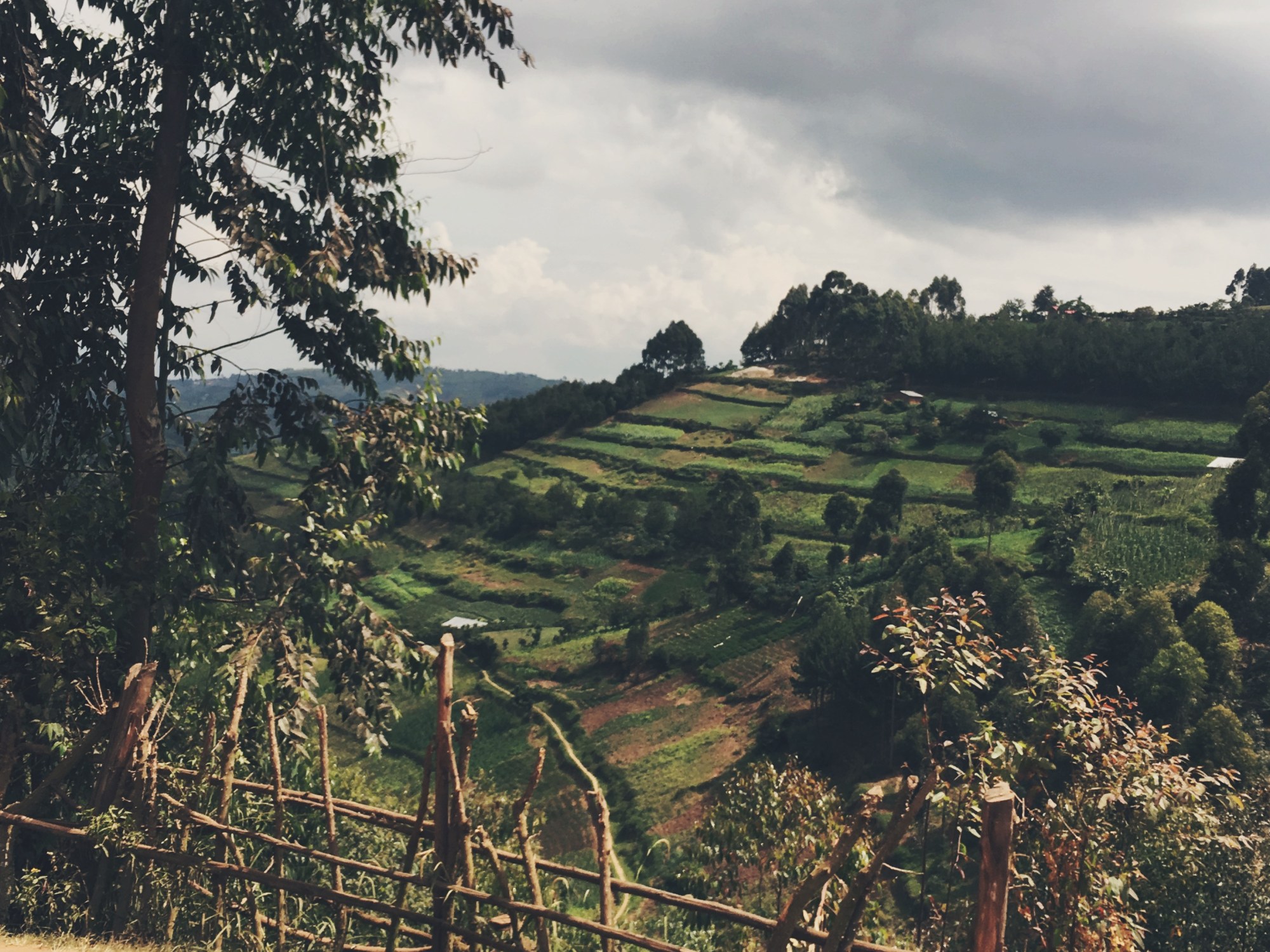
We drove a few hours farther through the rolling hills, covered in tea plantations, it was raining on and off but it was still quite mild and humid. The roads and villages were the cleanest I had seen in our travels. We later found out why, and I’ll get to that shortly. There were workers everywhere picking tea leaves and carrying their harvest on their backs to be dropped off, some women with large sacks of tea leaves and babies tied to their fronts, stereotypical things that I wasn’t exactly expecting.
Our first stop was the Kigali Genocide Memorial. Meticulous building and grounds that provides a resting place for more than 250,000 victims of the genocide. You honestly can’t go to Kigali without a visit here. They have it set up as a walk through history, with videos and captions, they cover the brutality and horror in an incredibly sensitive but thorough fashion. Not far from the Genocide Memorial is the Camp Kigali Army Barracks, where on the cusp of the genocide unfolding, April 7th 1994, ten UN peacekeepers from Belgium lost their lives. The UN withdrew their forces, which basically cleared the way for the Hutu extremist takeover.
So, after our heavy morning it was time for lunch. Kid you not. More like time for a drink. So the logical place to go was Hotel des Mille Collines, French for country of a thousand hills, better known as Hotel Rwanda. If you live in a hole, it’s the location where the hotel manager saved over 1000 Tutsis & moderate Hutus. The one from the movie, but in real life, not the one it was filmed in South Africa. The real Hotel Rwanda is more of a business hotel in real life, 6 stories and generally unassuming. Although the place has been thoroughly refurbished, renovated and sanitized of its horrific past, the history is still there and hard to ignore. So we had a light lunch poolside, beside the pool that was used as the only water source for the cut off occupants for 6 weeks in 1994. No plaques of recognition, no pictures, no mention of bravery, or those that perished. Instead you could indulge in a hot oil massage and listen to kids frolicking and squealing playing in the shallows of the pool.
Kigali has recovered well, 22 years later and the infrastructure is coming along. High-rises and fancy new hotels. Rwanda felt safe, virtually no other tourists, but the vibe was safer than anywhere we had been. We left the hotel and walked around for a few blocks, still accompanied by our guide. He brought us to a family members shop to get some nicknacks.
The streets were clean because of the Gacaca Court System. The backlog in the national court system was understandably overwhelmed post genocide, so in 2005 something changed. The Rwandan government brought back a traditional method. Communities would elect judges to oversee trials of those guilty of crimes relating to the genocide, but not including those that planned for the genocide. The Gracaca would give a low sentence to those showing remorse, usually dolling out community service allotments. There were more than 12,000 Gracaca Courts that processed more than 1.2 million cases. The streets and highways were spotless. And my mind was blown.


 bird of paradise
Oh Roberta You do have a fantastic way with words ! What an adventure ! Love Mom
LikeLike