Day 5, Thursday April 27th
Etosha to Brandberg
We get up early, per usual, a bit later than average, it’s our lucky day. Alarm set for 5:55, tent and bags packed up and away by 6:25, breakfast at 630, we could’ve left by 7 but the bus was fuelling up and the crew told us to chill and use the wifi. Let’s talk wifi. The difference between this trip and the last trip, in east Africa is immensely different in that regard. Over the span of 2 weeks on that last trip we had access to very shotty internet three times, and once was at Hotel Rwanda during lunch. Barely enough to check in at home. This trip it’s one of the first questions asked, and yes, we’re only 5 days in, but 4 out of those 5 days had high speed wifi. Also pools. Twice on the last trip we had dips in pools, and here in Namibia it’s every stop, which has been mint. Today on the bus I had sweat literally dripping down my back.
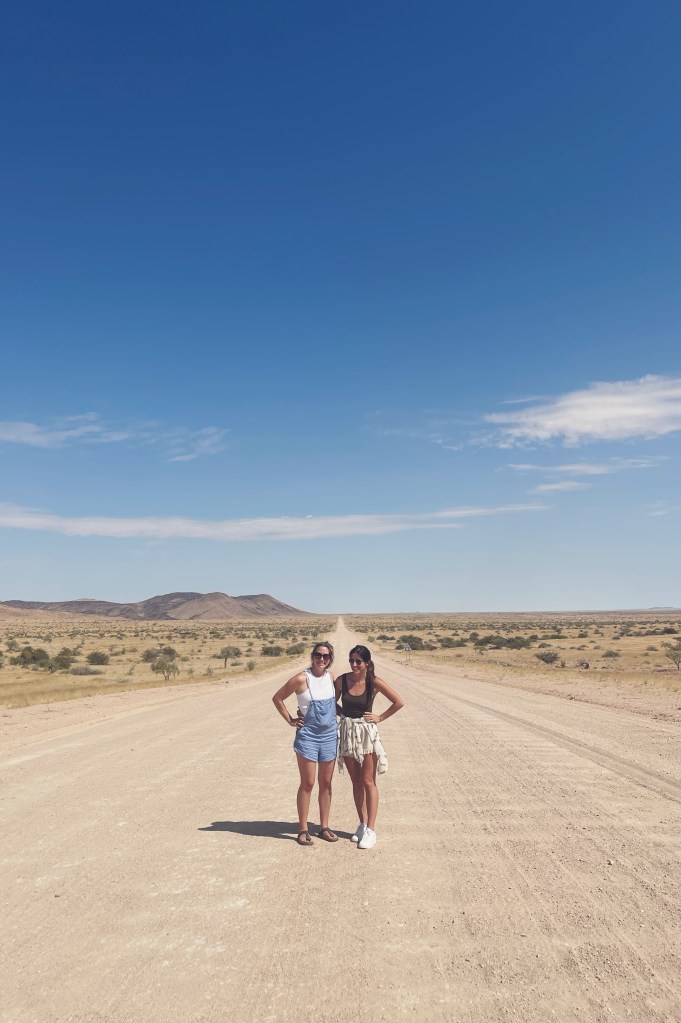
Anyways, todays later departure was due to our relatively short travel day, Etosha to Brandberg, about 350km total. An hour to a shopping centre for the crew to reload (feeding 24 people is no joke) and for the rest of us to get snacks, drinks and whatever we could find that we needed, they gave us 45 minutes. I should just do a blog entry on my experiences in East vs Southern Africa, or I’ll just sprinkle it through here. In East Africa, to get into grocery stores the bus and undercarriage was externally searched by the armed guards, as we passed through razor wire topped barriers and we had to scan our stuff through an X-ray machine, and we all stuck together like herded sheep, sticking out like a sore thumb. Meanwhile, here, we actually blend in? Or at least, no one gawks at us, people are very friendly, less curious, less concerned? I can’t exactly put my finger on it. But it’s definitely way less intimidating.
Our haul: waters, mango juice, ginger shot, local salts – brai salt and coarse, mustard – dijonaise, yes we’re freaks, a delicious chicken pot pie esque hand pie, fresh and warm with buttery flakey pastry, very delicious. We were in need of a lightning cable… somehow we both forgot a basic charging cord, I brought one but it not a basic usb cord so we can’t charge it on the bus… long story, we bought one in Amsterdam, lost it in Cape Town. We’ve been charging in wall chargers using my adapter and wall plug… but it’s a hassle. Anyways, I asked at the shop, which gives QF vibes, and a very sweet girl (who was probably 20, but looked 14) directed me 2 shops over, and they certainly had them. Praise be. I read my books on my iPad, so I’ve been needing a cord. Also grabbed iced frappes and some sort of giant flakey cookie dipped in chocolate. Germany vibes, since it was a colony and all. Still loads of influence, and descendants.
We rolled out around 930, stopped for an early roadside lunch and bushy bushy at 11. That’s a rustic bathroom break for those wondering, or thinking about a budget overland trip. If you can manage a full schedule, early mornings and relieving yourself in the wild, sometimes with minimal privacy, then you may be a fit. We do use gas station and rest stop facilities when possible, but it’s not always possible.
On the way we had a couple stops at roadside curios operated by the Himba tribe’s people, selling sewn bags, trinkets, carved figures and handmade bracelets. The Himba women are known for their use of “otjize” – a paste made of fat and ochre, applied to their skin and plaited hair designs. Each hairstyle holds information about the wearers age and social status The paste goes beyond appearances, it is also a natural sunblock, aids in reflecting solar heat, mosquito deterrent and is beneficial for hygiene reasons. Since water is extremely scarce, as the clay mixture hardens and dries it flakes off removing dirt and old dry skin. Each intricate hairstyle represents the wearers status and social standing, which usually boils down to either prepubescent vs married.
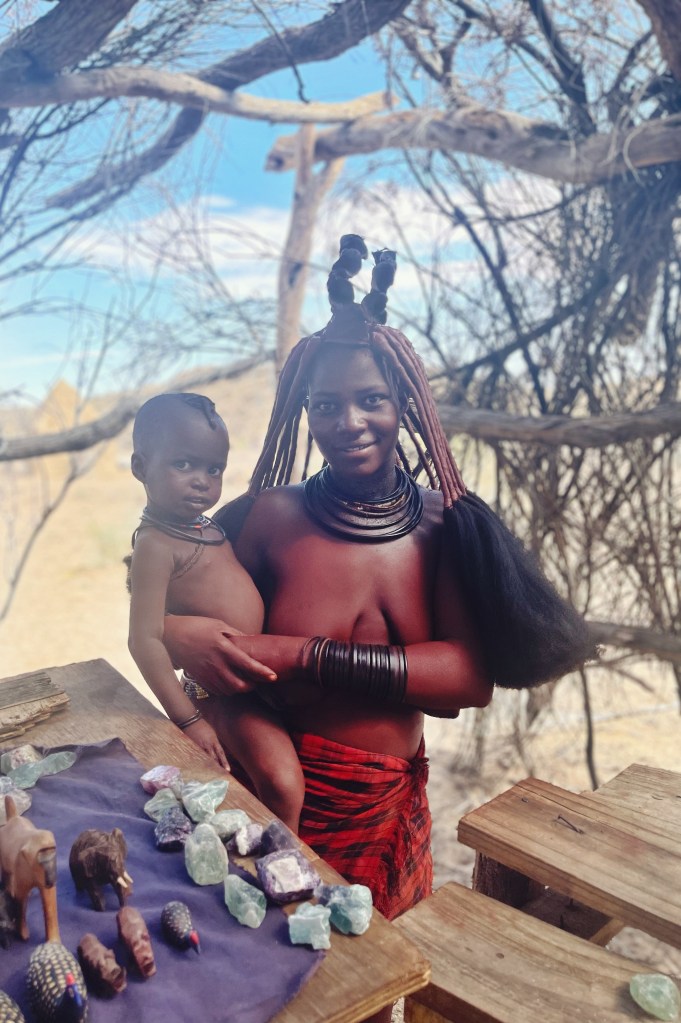
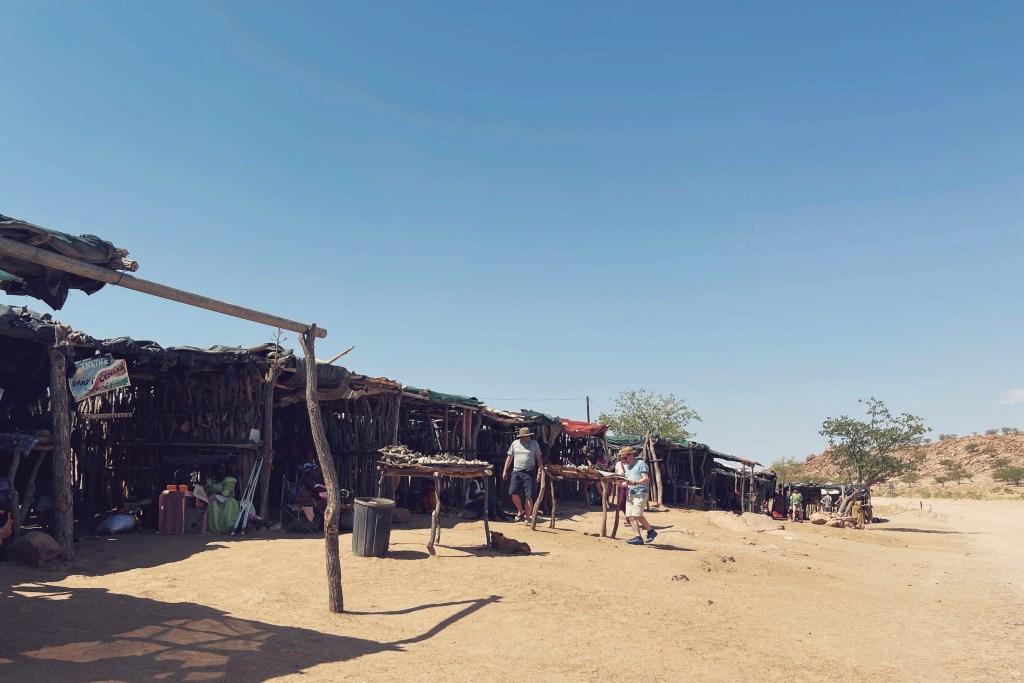
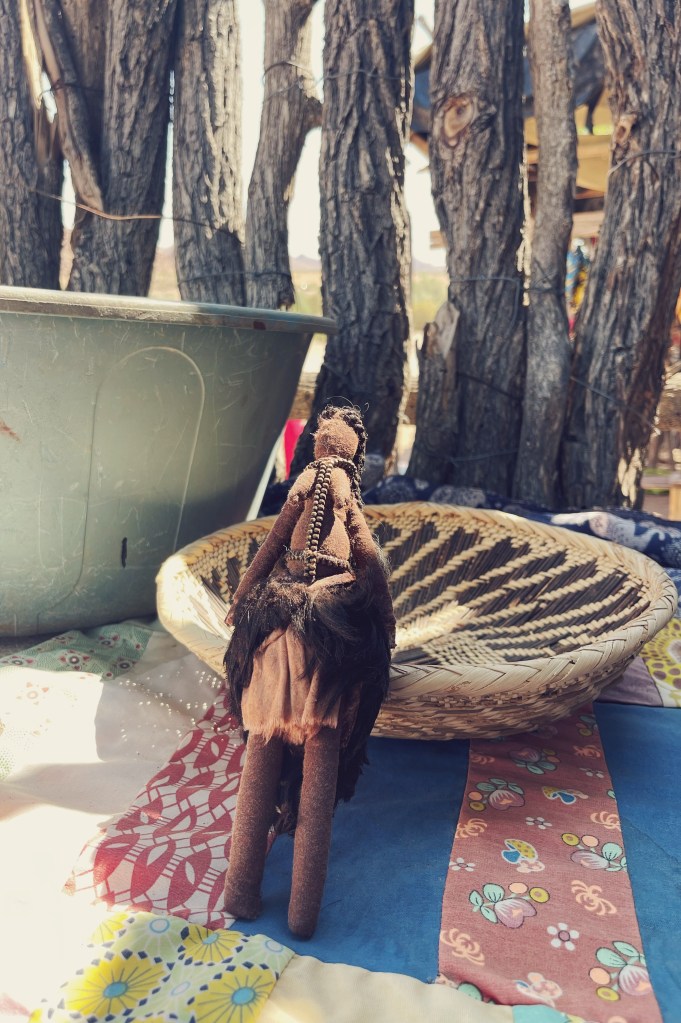
Quite a few members of our group purchased items, which was good to see, I personally didn’t, sorry mother. Sister says no wood, that border security will take. I’m very low on space, and plan on purchasing trinkets for home closer to the end of the trip. I’ll probably have to be checking my loaded backpack.
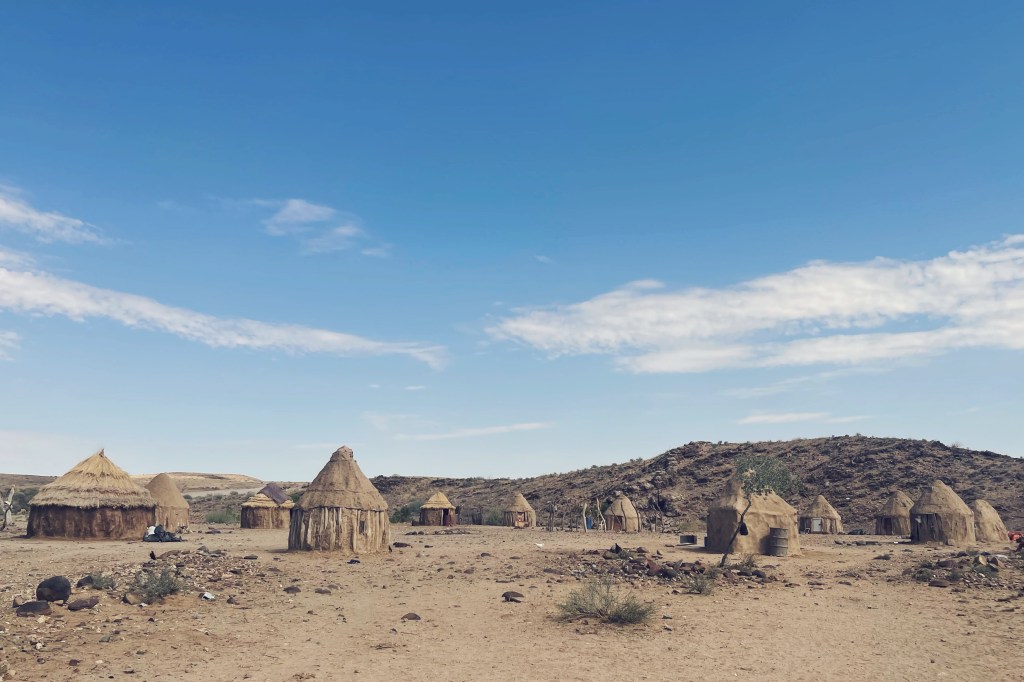
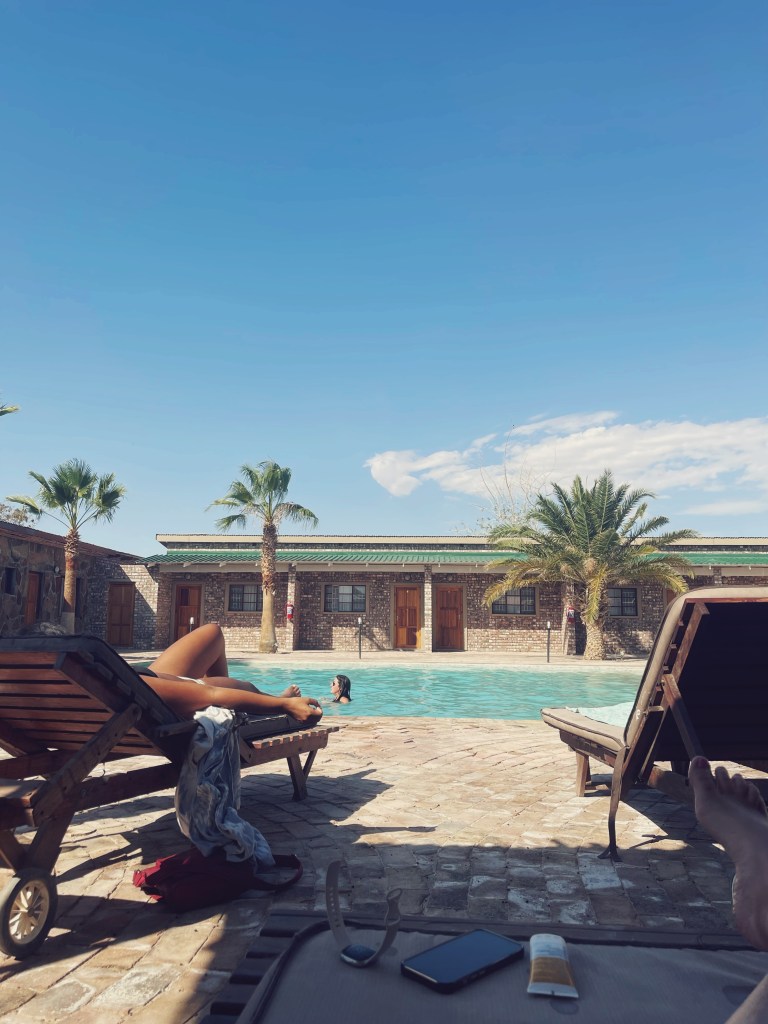
We rolled in to our camp at about 330, set up quick and headed straight to the pool to cool down. I’m hiding in the shade now, poolside, not connected, dinner will be at 7, bed around 830 – to read – and hitting the road again tomorrow – heading south to the coast!
Day 6, Friday April 28th
Brandberg to Spitzkoppe to Swakopmund
It recently occurred to us that our tour doesn’t include time at the skeleton coast, whoops, as we are headed south and the national park is directly west from us. Crisis averted though.
At our dinner debriefing the other night the topic of our optional activities/ self guided activities for Saturday came up, since the crew has the day off and we’re all left to our own devices. There were plenty of activity options we were not all all interested in, like skydiving, fat biking, $500 hot air balloon rides… so we asked our tour leader if there was any way we could organize a day trip North from Swakopmund to the skeleton coast, and Tabbi said maybe. So that was a start.
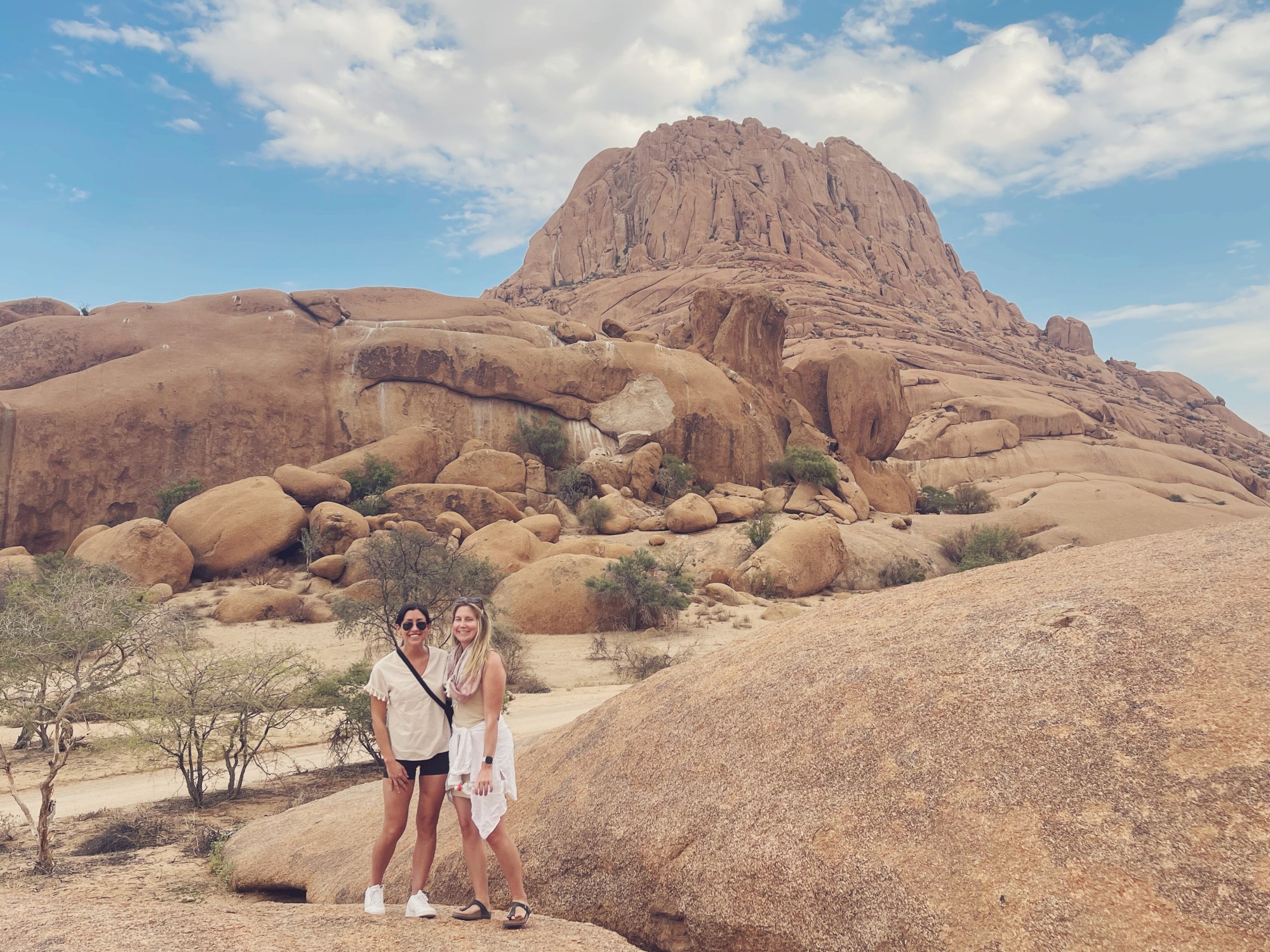
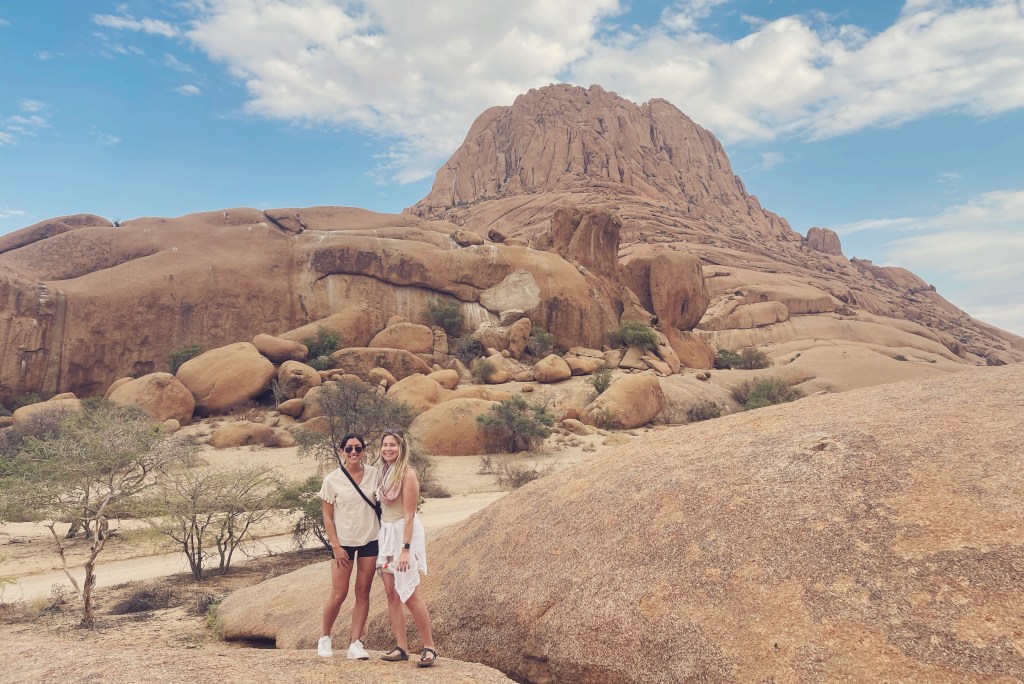
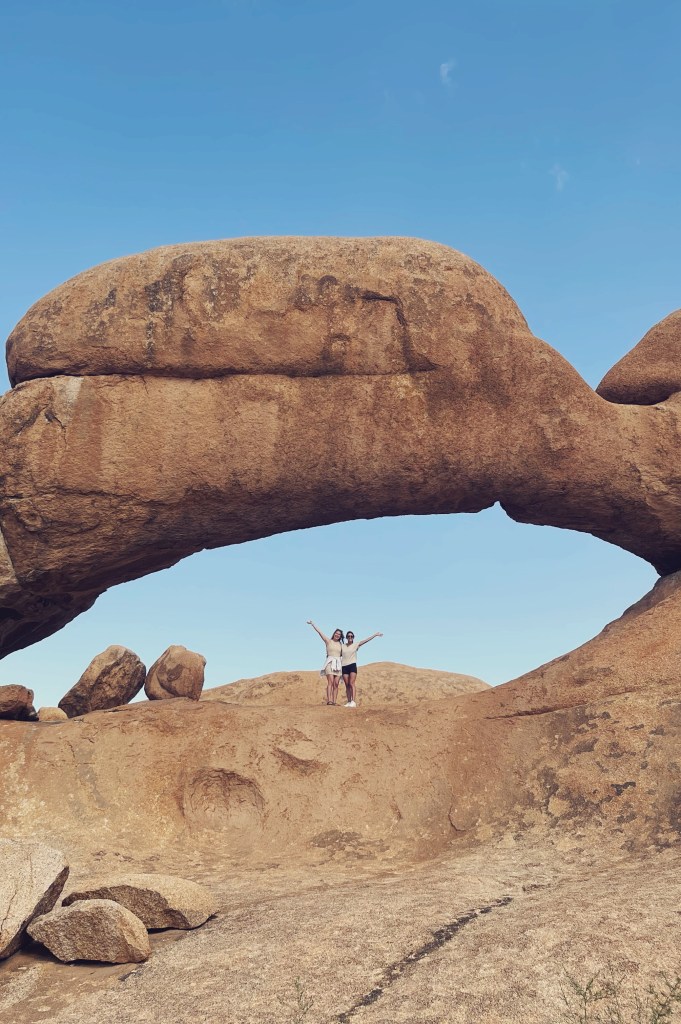
Anyways, back to today. We left Brandberg for a scenic stop at Spitzkoppe and Small Bushman Paradise. The rock formations rise close to 2,000ft and can be seen from a distance. The rock formation was chosen as a communication hub of sorts, the nomadic tribes could leave water, warnings and directions to following passers through. A rock wall with an inward slope was chosen for the drawings for its ability to shield from the elements to preserve the drawings as long as possible. The bushmen would paint water dependant animals like rhinos looking the direction of watering holes, depictions of zebras with hunters cloaked in skins as camouflage and warnings of lions and other predators in the area.
We jostled for pics at the arch, climbed around the boulders and loaded back in the bus.
I finished my book about an hour before arriving. I had started it on the flights over, “the fifth wave” quite good, post apocalyptic, my preferred genre, and there are a couple more books in the series so I’m in luck. I can download them from my library at home and read on my iPad and I actually don’t get motion sickness from it, and it really makes the time fly.
Around 1:45 we arrive in Swakopmund, it’s noticeably cooler on the coast, with an ever present ocean breeze and morning fog. Swakopmund was founded by Germans and a German colony in 1892, and their colonial influence is still quite evident. We sequestered into a little room at the tour place and shown a time share esque informational video and folks piped up with questions about their desired activity. We weren’t interested in solo hand gliding, all you can drink dolphin cruises or desert walks – looking for snakes and scorpions – we wanted skeleton coast wrecks, and Tabbi pulled through by getting some of his contacts to drive us and our tour parents out for the day. Tour parents are a couple of gems, Aussie early retirees, they have 4 sons our age, so they accepted us straight away.
So it was decided, coast day trip. We checked in at the hostel, where basically everyone was auto upgraded to a twin share, so we had real beds for two nights, quite nice, private bathrooms, no complaints. We were lazy and organized ourselves before dinner at 6, had curry seafood – nothing to write home about, as I have high standards. We made it back to the room and tucked in for the night.
Day 7, Saturday April 29th
Skeleton Coast
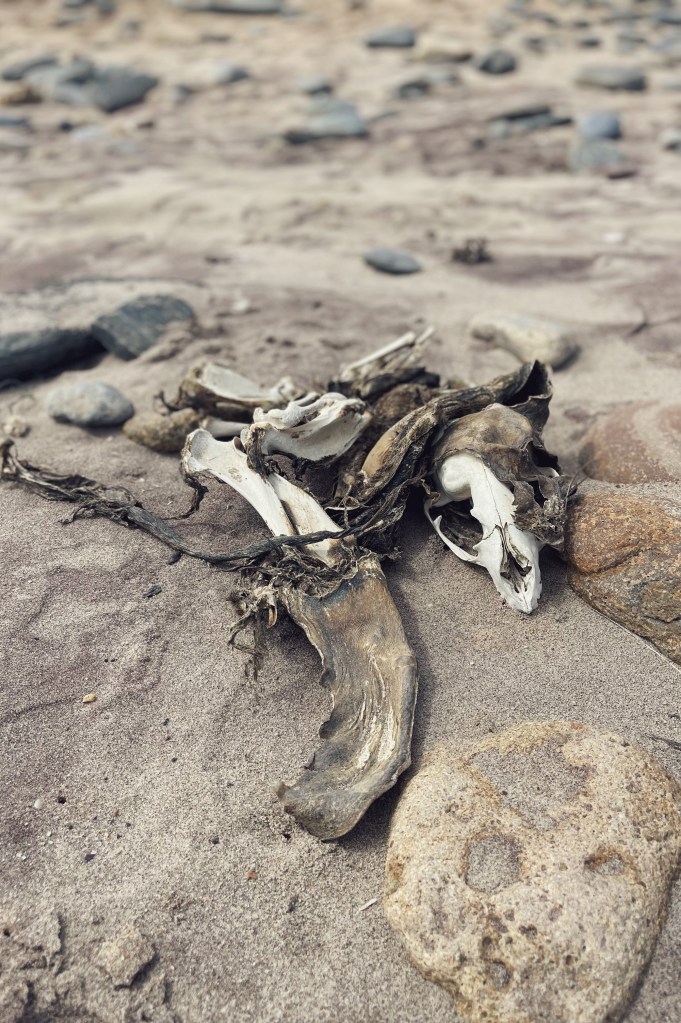
The Skeleton Coast spans the northern portion of Namibia into Angola. It is a vast dangerous section of the Atlantic coast that has taken countless lives, and still to this day is treacherous. The bushmen would refer to the region as “the land god made in anger” while Portuguese sailors dubbed it “the gates of hell”, and it is known worldwide as one of the deadliest places on the planet. The constant booming surf, dense fog, strong winds and barren landscape are a strong mix of lethal power. All that, plus the icy Benguela Current to top it off.
Sounds like a great place to vacation.
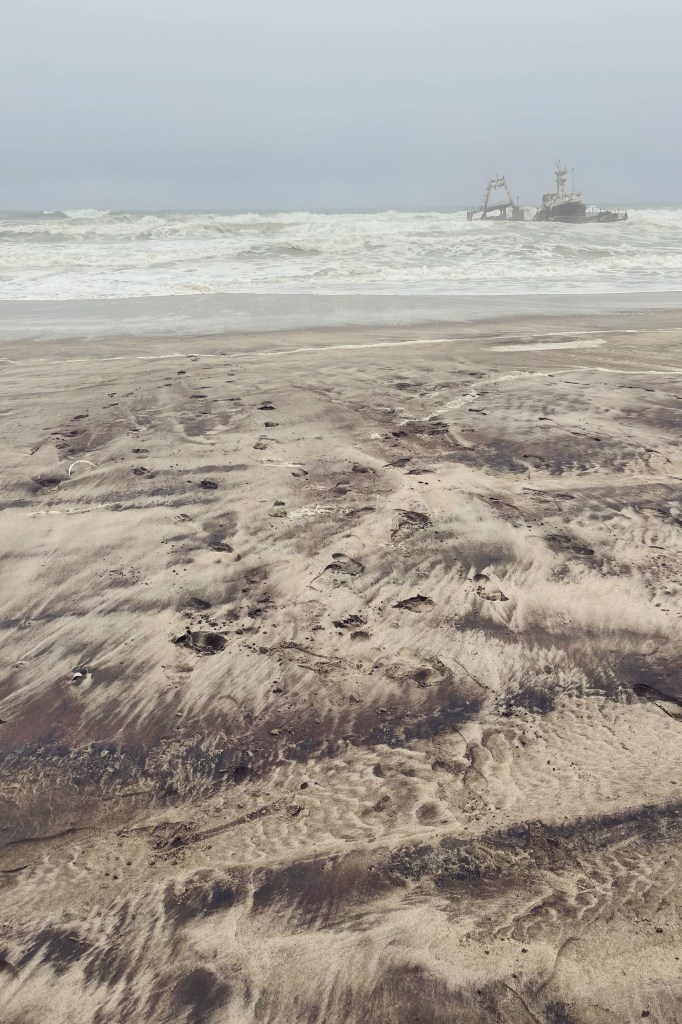
We rolled out just after 8, heading North to the first wreck, arriving just after 9. The first, most southern wreck, is The Winston, an East German 180 ton trawler that sunk on October 17th 1970. It hit ground in the fog and over the years pieces broke apart and washed ashore.
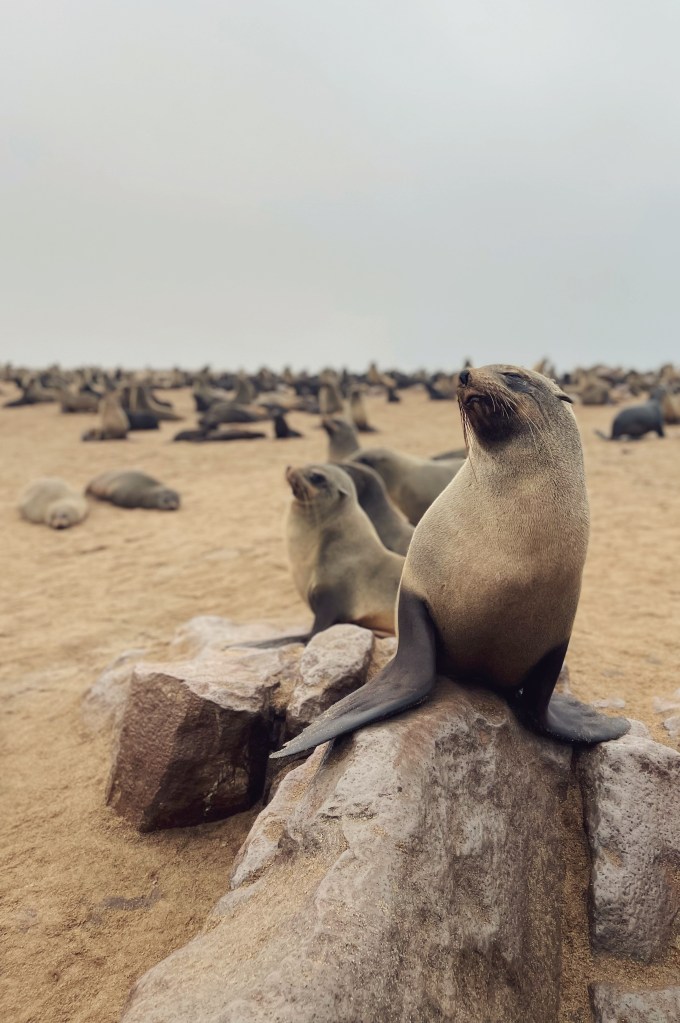
Next stop was the seal colony at Cape Cross where over 10,000 cape fur seals come to feed, breed, birth and die. The smell was beyond pungent. Gag inducing. Foul. Ripe. They were loud and obnoxious, as to be expected, but had more of a “flock of sheep” sound to them compared to the California sea lions at home sounding like an overly gaseous group of old men. There was a long secure walkway that allowed you to get right up close to them, and they’re obviously habituated in allowing this kind of behaviour, it was quite amusing. Babies nursing, territorial squabbles and constant vocalizations, all up close and personal. Every so often there would be a stampede into the ocean, and they would trot along, quite quickly down the sandy hill into the rough violent sea. The waves were filled with seals frolicking, jumping and playing in the powerful water.

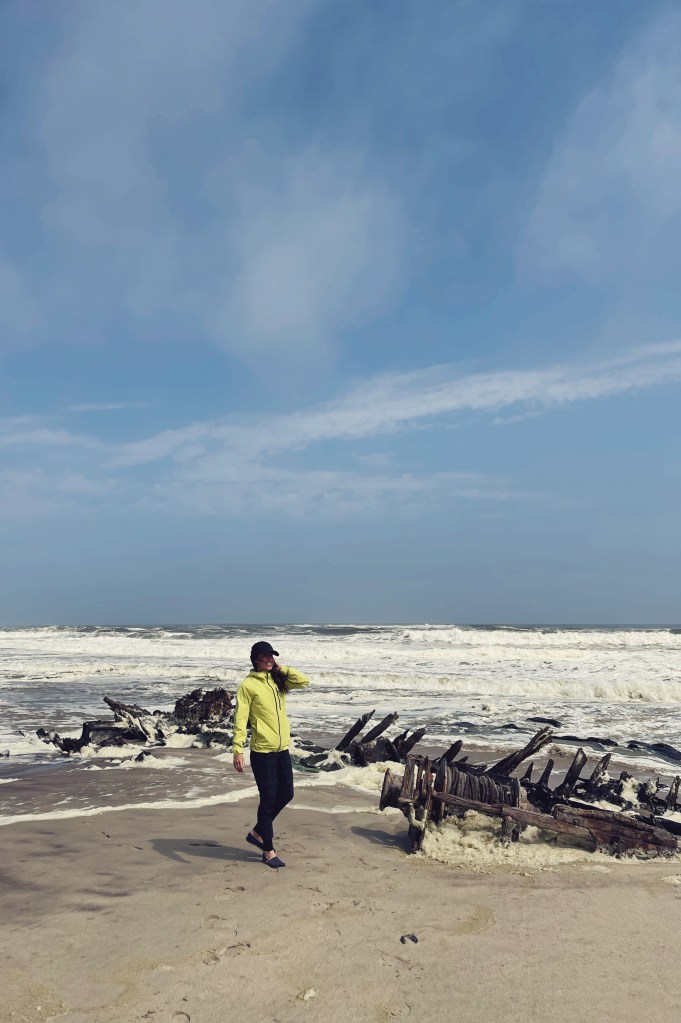
Farther along we come to another wreck, the sign marking the area as South West Seal Wreck. The remnants of the boat that mark the shore are of a 90 ton South African fishing vessel that caught fire and washed ashore in 1976. The skies cleared and we had lunch overlooking the beaches that stretched as far as the eye could see in either direction. We had the experience of seeing two wrecks out of over 500, but time was limited, and I’m glad we had a taste of what was there. The wrecks are disintegrating more and more, and some are removed completely or the metal salvaged. One day soon there may be nothing left of the vessels that met their fate in these waters.
Back in Swakopmund, sister and I had a nice romantic dinner at the Tug restaurant at the south end of the promenade. She had steak and I had a traditional dish with steak and cornmeal mash, which I’m forgetting the name of but it was quite wonderful. We walked back, felt very safe and hit the hay.
 bird of paradise
I love how you write….it is so descriptive, I feel like I am sitting on the bus waiting for your return. Clothing….do you travel with linen?
LikeLiked by 1 person
Thanks Jenny! Yes I love linen, the outfit I wore to the dunes, the rust coloured overalls are a cotton/linen blend and we’re the perfect thing to wear in the heat, loose and airy, while still offering sun protection
LikeLike