
Well folks, another day another adventure. We’ve arrived at Fort Unchagaon, our accommodation for three nights. Located a mere 100km north of Agra, yet taking over four hours to get to, it’s safe to say we’re off the beaten path. After driving along a narrow dirt road for 15km you arrive in a bustling little village, and smack in the middle is the fort; with massive stone walls and medieval gates encompassing the vast property. There are countless structures, as it’s an expensive compound, and I’d assume many areas are in disuse.
The fort dates back over 150 years, and was gifted by the British regime to the loyal Raja Gursahai Singh in 1857 after the revolt. It has stayed in the family ever since, and was completely renovated in 1933. All in all it is quite lovely. Yes, it could use a coat of paint and an exterior pressure wash, but it does look like some revenue is being put back into the site with upgrades, upkeep & additions. And really, upkeep alone could keep a crew busy full time with all the sweeping and burning, and chasing off monkeys. I’m not here calling anyone out, this place would be a lot of work. Plus your stay includes meals, and twice a day tea & snacks.
Today, it’s straight out of left field. After a lovely breakfast, one of the many staff at this place, all with very broken English at best, offers us a “buffalo ride through the mangroves”. Included in stay. We say “yes please absolutely”, as you do, and are instructed to be out in the parking area at 1030. We get out there at 1030 and no one’s around, a group of young workers eventually gathers, as they do, but we can’t communicate. They probably want a picture with the white girl but are too shy. I’ve only had a brief picture request time when we first arrived, our driver set it off, and once one person asks then the others feel it’s alright. I don’t generally mind, I realize I’m an oddity here.
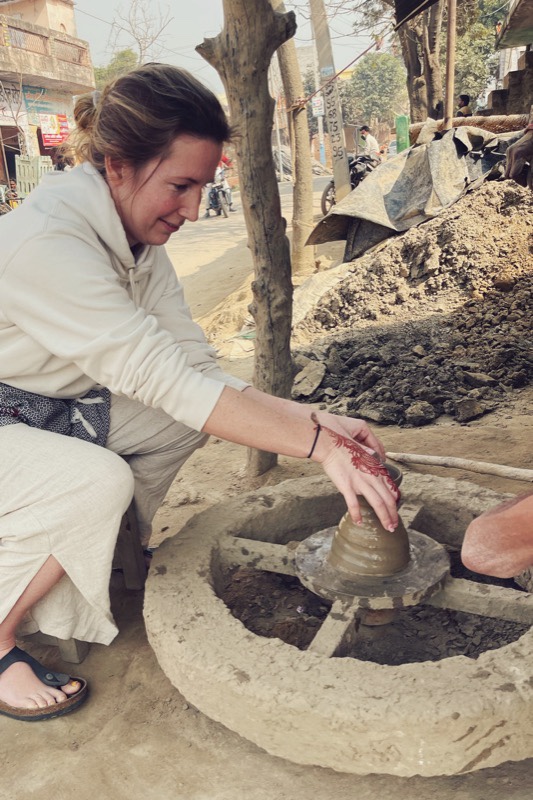
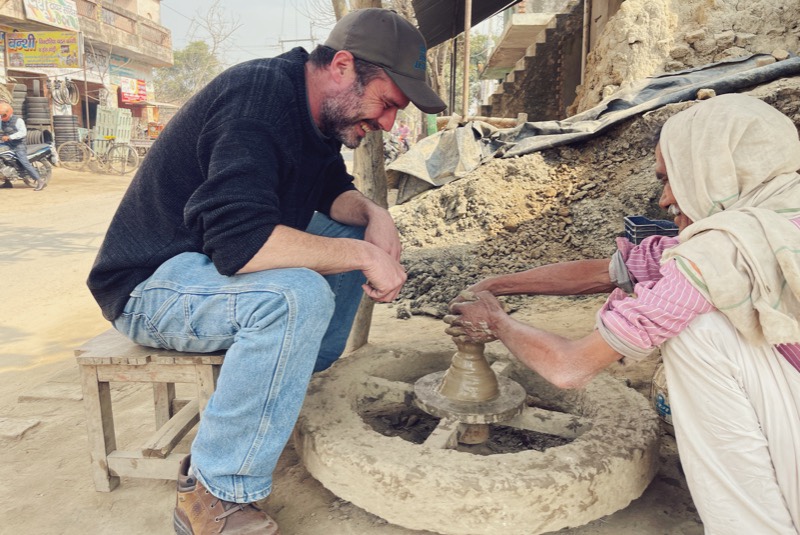
Eventually the buffalo is strapped in and we’re ready for departure. Our buffalo driver doesn’t speak a lick of English, and even our efforts using translating apps are futile. He may speak a different dialect, or might be illiterate. We’ll never know. We’re in his hands now, as we head out through the gates into the more populated side of the village. It’s bustling, and luckily the livestock here used to pull carts – which is a very popular method still – don’t mind the incessant honking. It’s sugarcane harvest season, so we scooch past plenty of tractors pulling very full loads, and we’ll see where they’re headed later, but first things first. We definitely aren’t headed to a mango plantation, or mangroves. We stop at mom & pop pottery shop – in the loosest term possible. It’s a very traditional pottery wheel, using man power and locally harvested clay. The fellow uses a stick to get the wheel turning at top speed, we each take a turn pulling a few pots and have a little tour. A translator would’ve been greatly appreciated, as I’m full of questions, but we made do. The pots are fired in the backyard in an in ground pit and are large and bulbous. Even with language charades it’s difficult to decipher if we’re expected to pay the couple for their time, but we do anyway. We don’t purchase anything as we’re not even halfway through our travels, and I’m not sure how well the pots would ship.


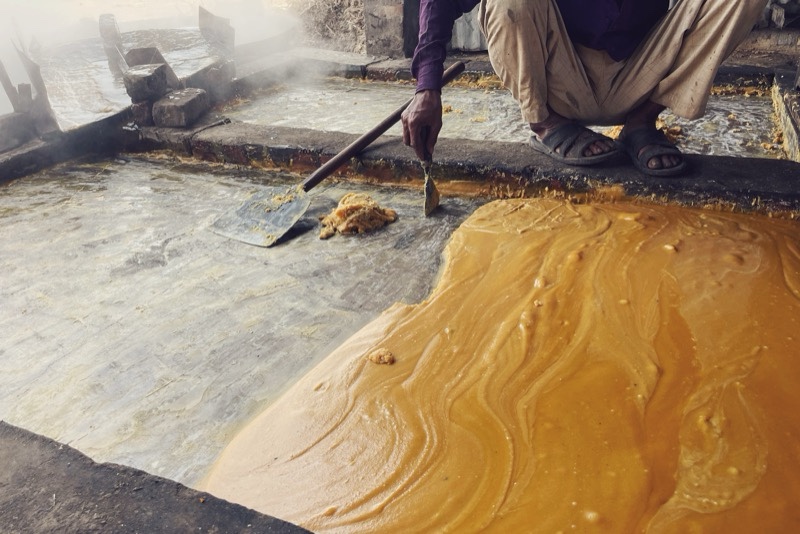
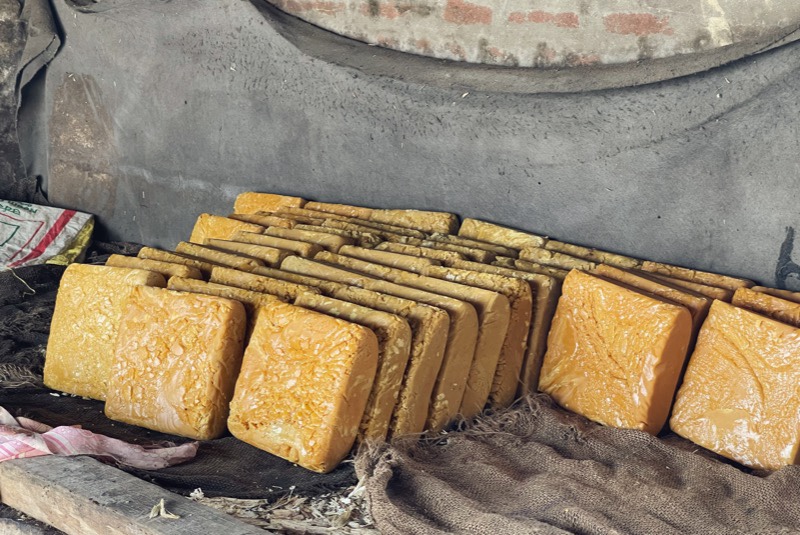
We load up again, pull a u-turn, and start off back towards the fort, about half an hour away. But, before long, we pull into a sugarcane processing area, and you’re going to have to sit down for this explanation. They’re doing a start to finish jaggery production. If you don’t know what jaggery is, look it up. Kidding, I’ll be brief. It is cane sugar that has not been refined and still contains the natural molasses and crystals. It’s traditionally a solid block but can also be bought powdered or cubed. It’s very popular throughout India, Southeast Asia, Central America, Brazil and Africa. The colour can vary from golden brown to dark brown in colour, but what we saw made was a warm golden yellow, like beeswax.
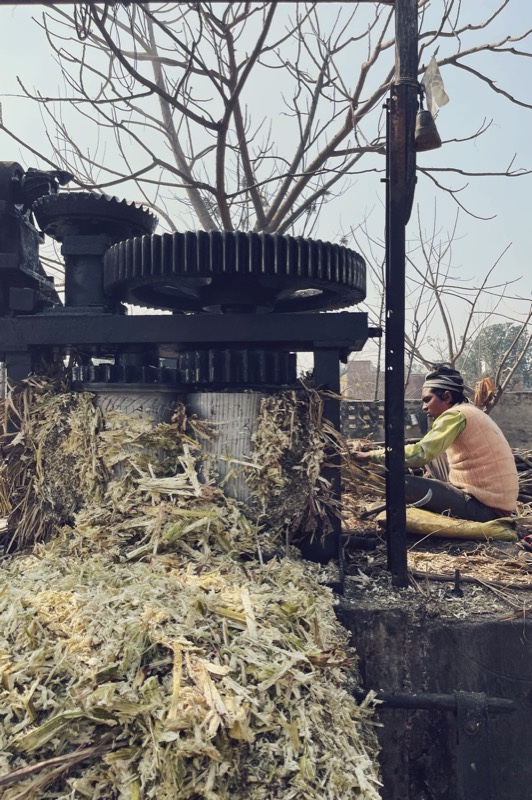
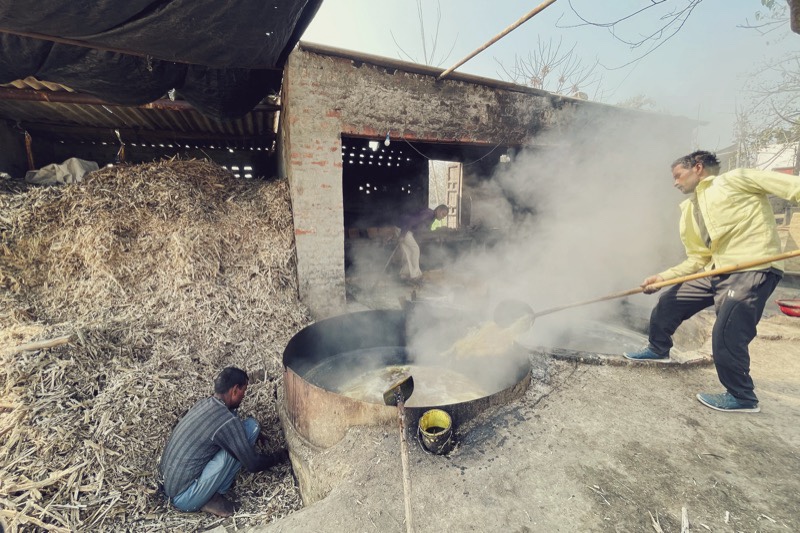
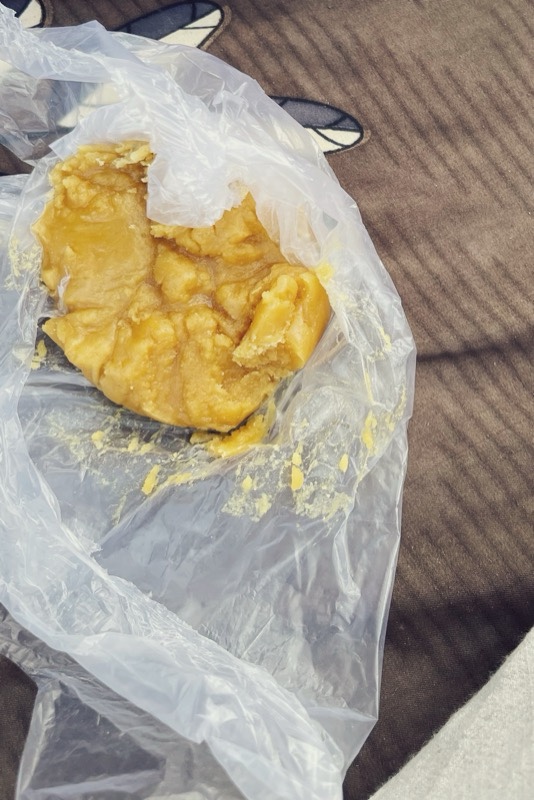
First on the production line is the machine used to crush the cane, manned by one of the crew, the juice flows down in a stream to a holding tank, presumably being filtered at one point. The holding area has a movable pipe to feed the first of three shallow pans used to concentrate the liquid. Meanwhile, under the whole cooking operation, there’s an unseen fire being constantly fed by another fellow, using the spent sugarcane debris. The three semi-connected boiling pans are constantly stirred and transferred as necessary by two fellows, and when the third and final pan has reached optimal consistency /or temperature it’s spooned to a large tray, in a connected building in the floor, also heated, to be tempered like thick fudge – by another guy. Once the mixture is slightly cooled it’s scooped into damp cloth lined moulds, packed, cooled, removed and loosely stacked to finish hardening. The whole place smells like a delicious boiling jelly pot, like making certo recipe jams & jellies with my mama. Before leaving we get a scoop to go, dolloped into a shred of plastic bag, sweet, sticks and steamy. We nibble away for the rest of our cart ride back to the fort. A complex flavour, nutty, buttery, caramelized. And of course, very sweet.


Bonus, we had some street snacks in the afternoon. Getting brave. Very delicious, would eat street samosa every day.

 bird of paradise
Are you finding cilantro used heavily in the foods?
LikeLike
I’d say so, and coriander seed as well. Are you not a fan? Tastes like soap?
LikeLike
actually quite allergic, burns leaving blisters and makes me breath 😁 funny
LikeLike