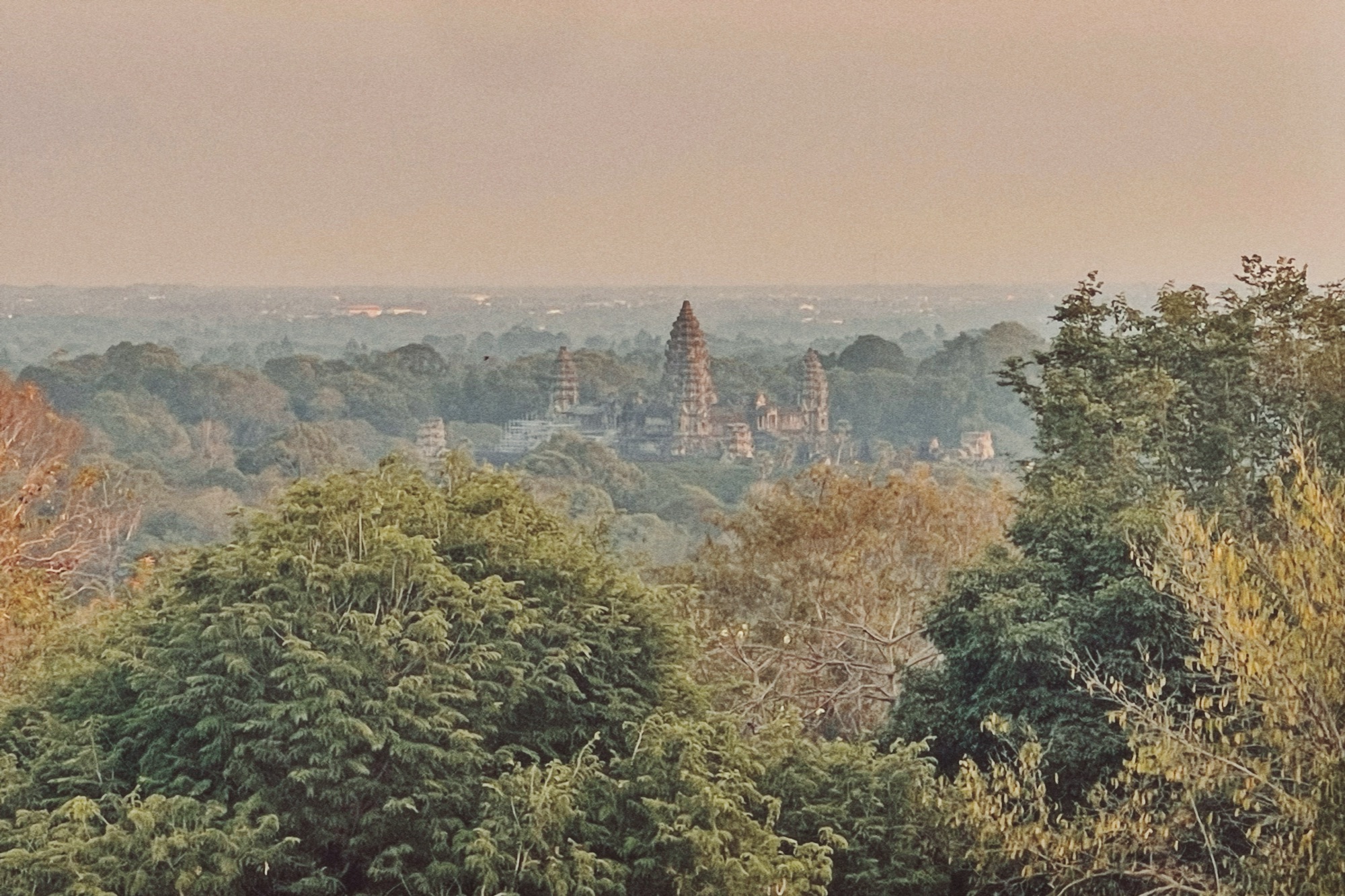
I’d wanted to visit Cambodia & Angkor Wat for ages, always within reach but not quite on the itinerary while traveling to Thailand in the past. This year was different, finally.
I’d booked a busy trip, admittedly, a couple days in Bangkok, a city I actually love, over to Siem Reap, back to Bangkok and down to Trat to hop over to Koh Kood, my love. Which I won’t bore you talking about, it’s still a perfect paradise and you should go, that’s all you need to know. Then back to Bangkok and home. I’d planned on going solo, which fell through, but turned out wonderfully. My friend Caty, whom I’d met up with on Koh Kood in the past, had been to Thailand before, and was game to join us in Cambodia, our coworker and friend Sam tagged along for her first trip to South East Asia! And of course, my new beau Michael. His first trip to Asia as well. Sam stayed in Thailand while we hopped the border and met up with us agin to head south to the island.
But that’s not what we’re here to talk about. We’re here to talk about how Cambodia exceeded my expectations in basically every aspect. I will tangent to Bangkok in a separate post possibly, as I really do love it and would love to reminisce about a few random things we did this last trip, ie the Erawan Museum.
But, to circle back, again –
When first researching Angkor Wat I figured I’d need to secure a proper driver & tour guide. It’s not a complex that is easily self guided and it’s worth it to make the most of your experience and time by having a proper personalized tour and expert guide. You could definitely stretch it out to a week or two, just in Siem Reap, but you’d go bug eyed on temples. Personally, two days was plenty. Enjoyable, a lot to take in, but you’re still soaking in the experience, history and enjoying it.
I’m not sure where I stumbled upon Barang’s recommendation, reddit, possibly instagram, but I followed some stranger on the internets advice and booked his service for basically everything. Airport pick up, Koh Ker Temples (minivan), 2 day sunrise Angkor Wat tour (tuktuk) and airport drop off (car). We were only in Cambodia for the weekend, arrive on Friday morning depart Monday morning, so every day was packed proper.
Day One
Arrival & Koh Ker Temples
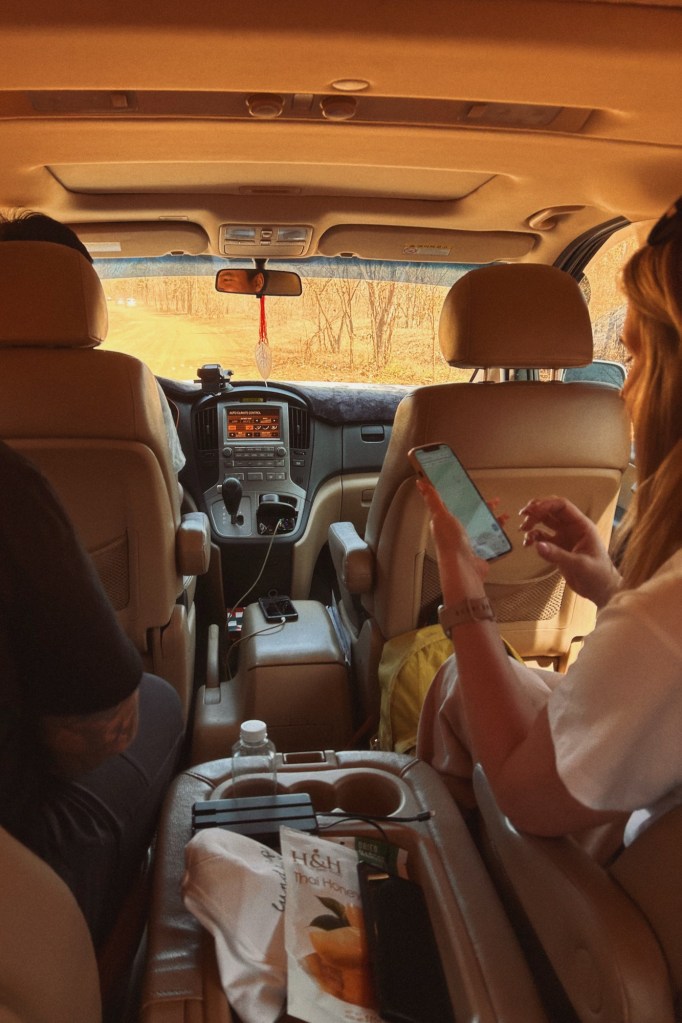
We started off leaving our hotel in the dark, not my favourite thing ever but at least the roads are quiet in the early early mornings in Bangkok. We were at BKK by 6am, flying out at 750am and arriving just before 930am. Customs was quick and easy, visas acquired, their airport is brand new, massive, well staffed and surprisingly desolate. I reactivated my e-sim and found Barang’s cousin Mr. Mom waiting, we headed north to the Koh Ker temple complex. It made sense in my mind to head to Koh Ker directly from the airport as Siem Reap is already an hour away from the airport in the other direction.
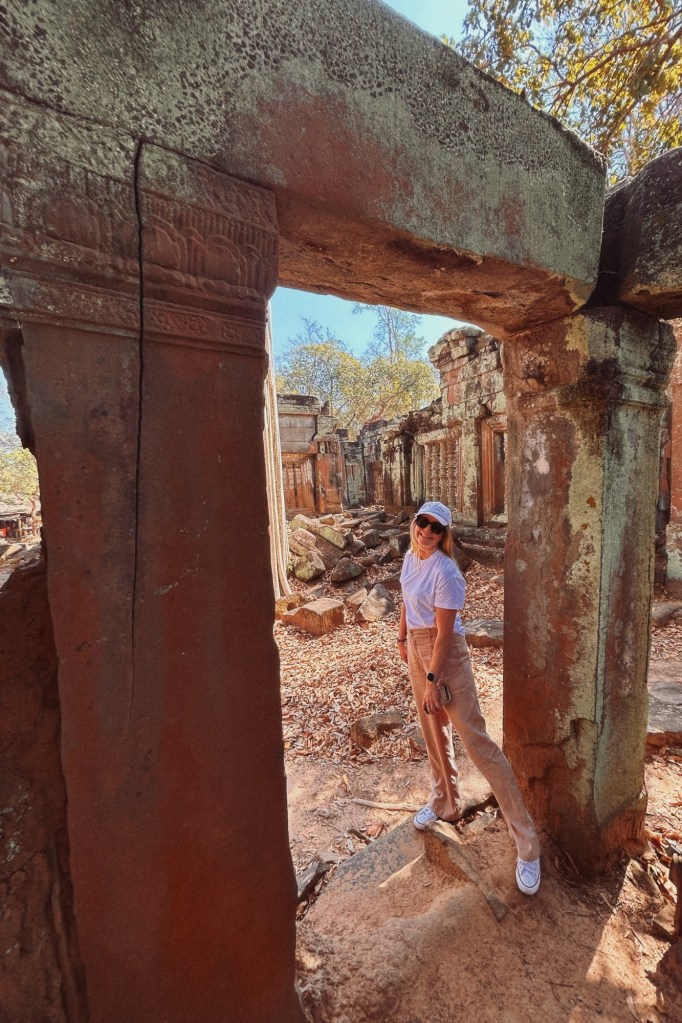
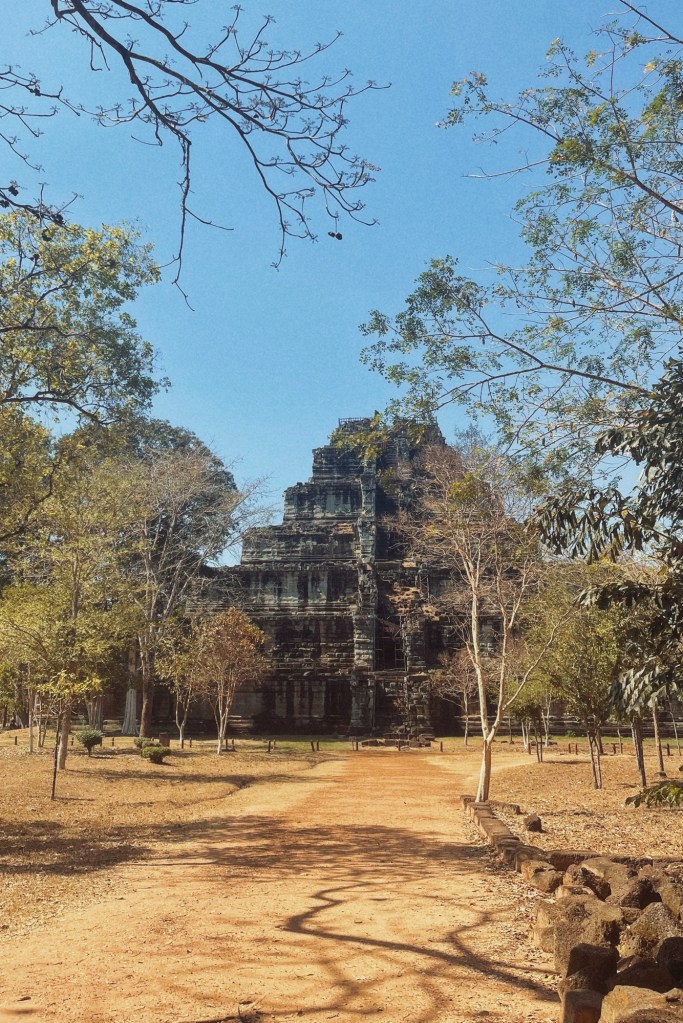
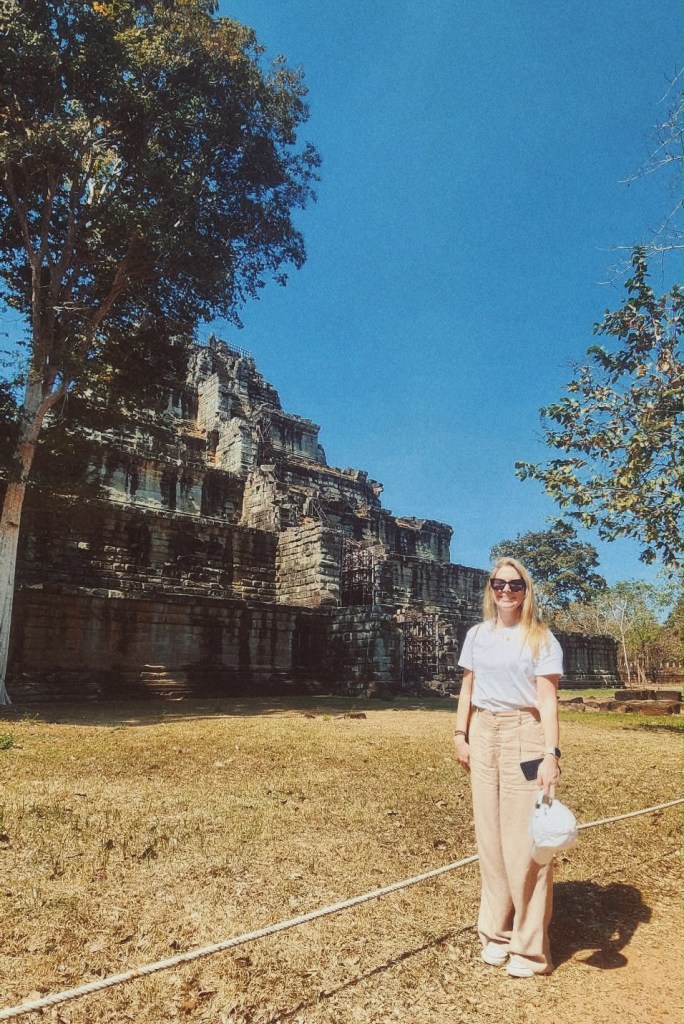
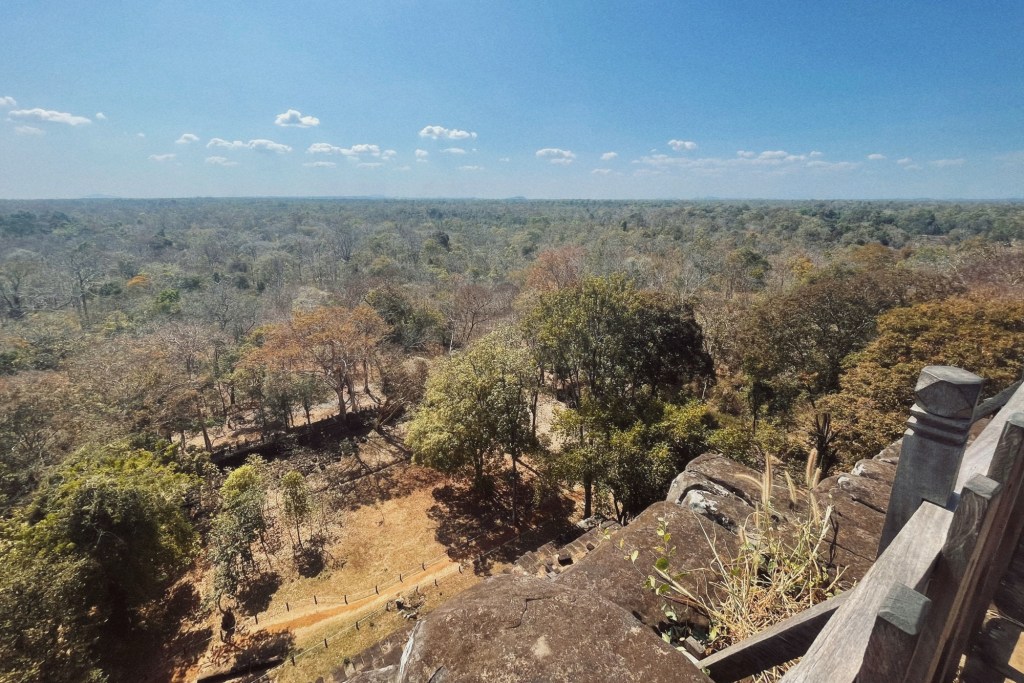
We arrived just after 11am to the striking seven tiered step pyramid, Prasat Thom, with eerie similarities to Meso-american pyramids of the Mayan. Koh Ker was, in its heyday, the capital of the Khmer Empire and officially listed as a UNESCO World Heritage Site in 2023. Koh Ker was never completely deserted, but it does feel like the jungle is attempting to swallow it back up. The pyramid is not directly climbable, but there is an added exoskeleton of stairs that makes the ascent possible, and as you climb you reach above the canopy of the jungle and truly feel the isolation of the area. We basically had the place to ourselves, due to the remoteness it’s definitely off the beaten path. Some of the pyramid and complex is under repairs, I’d assume mostly for structural soundness, possibly as a result of decades of conflict and land mines. Up until recently, 2022-2024, there had been teams using mine detecting rats to clear more of the area surrounding Koh Ker, successfully locating multiple unexploded mines.
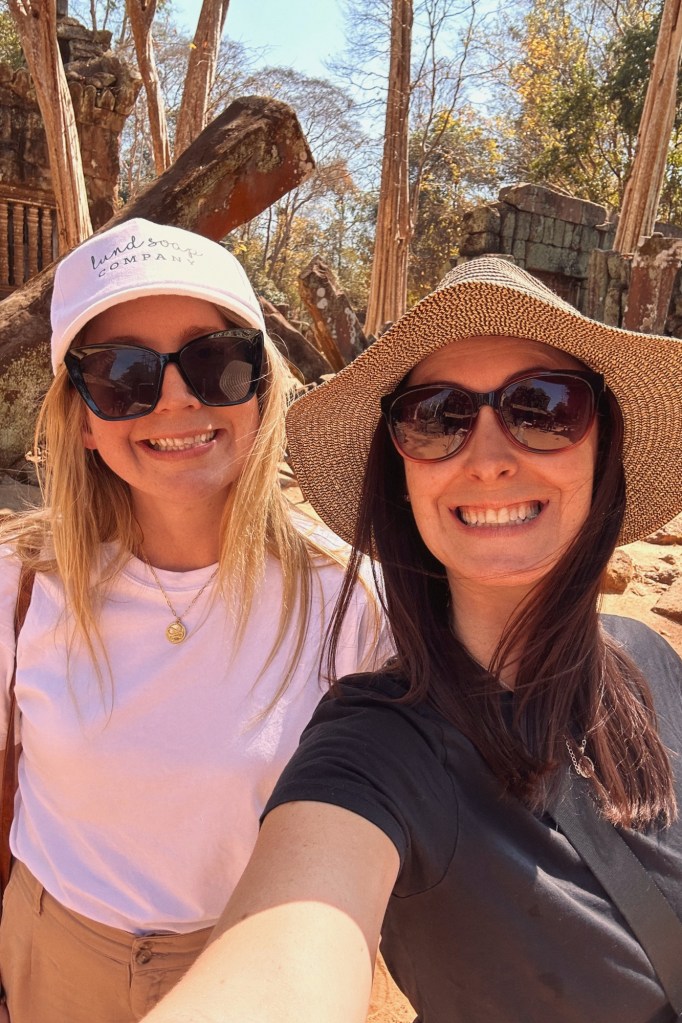
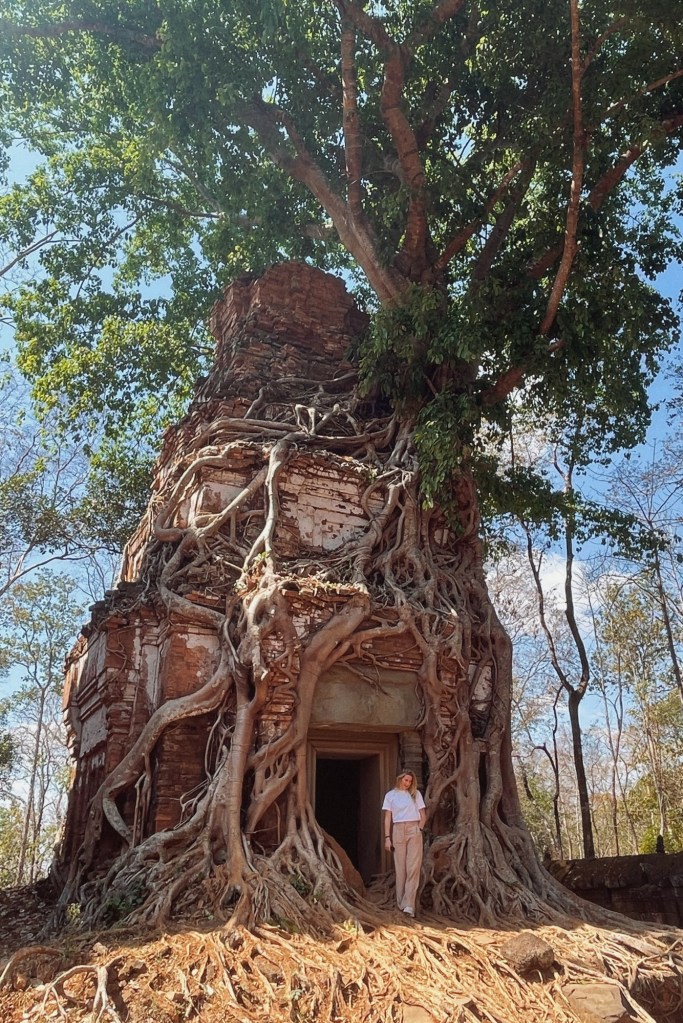
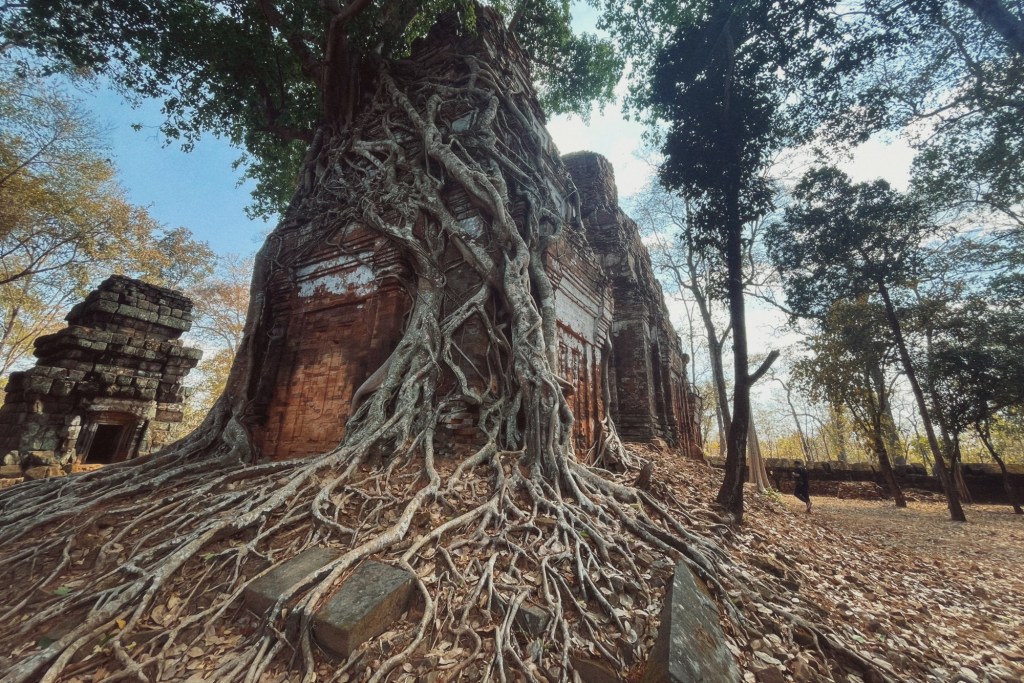
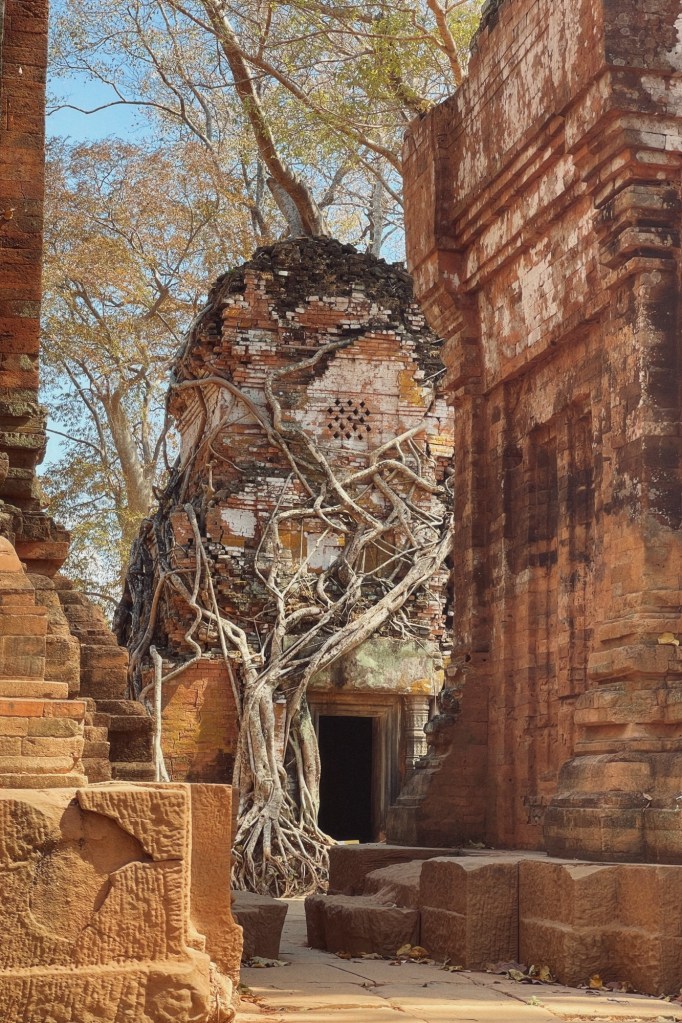
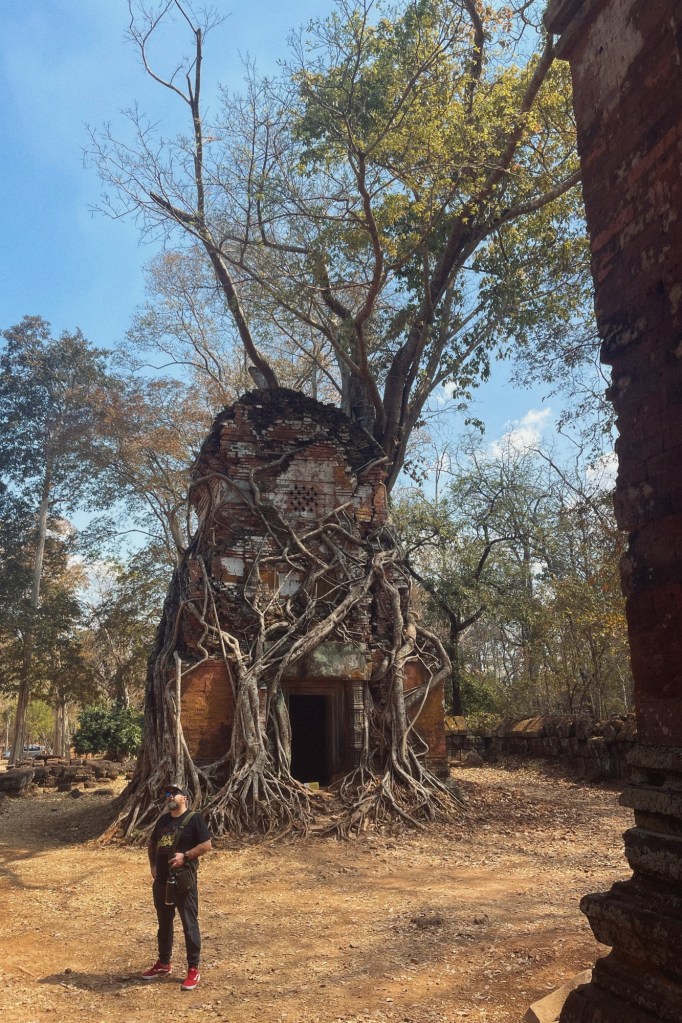
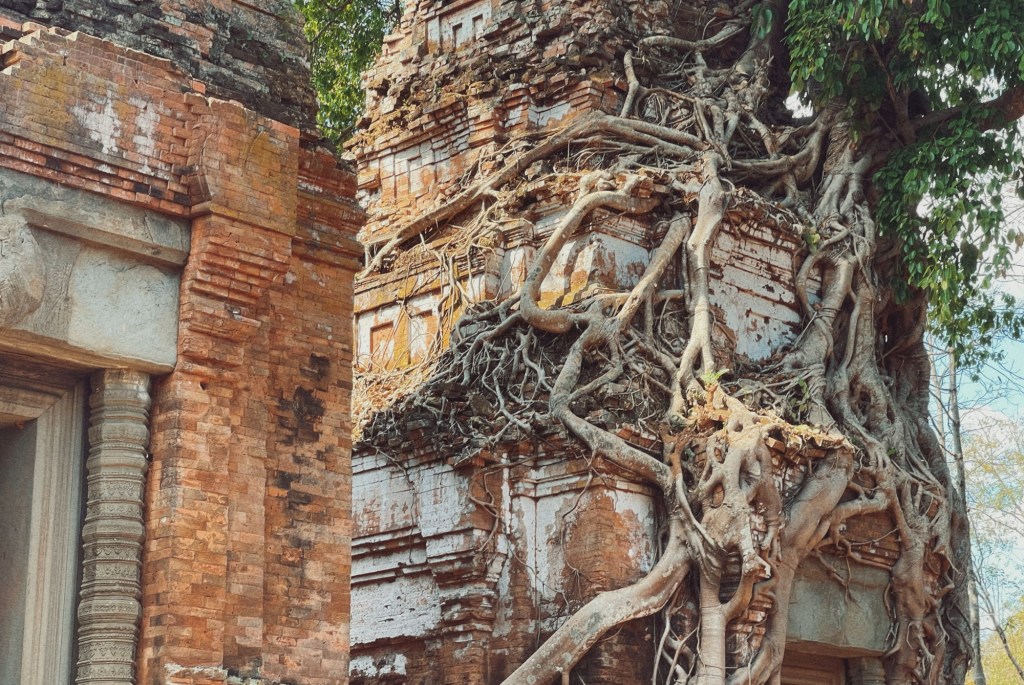
We ventured on to Prasat Pram, near the previous compound, and still within the vast Koh Ker grounds. A temple of five brick towers overtaken by strangler fig and kapok tree roots. Many of the trees are currently left in place, holding the crumbling brick and sandstone buildings together, while also in some cases, appearing to swallowing them whole.
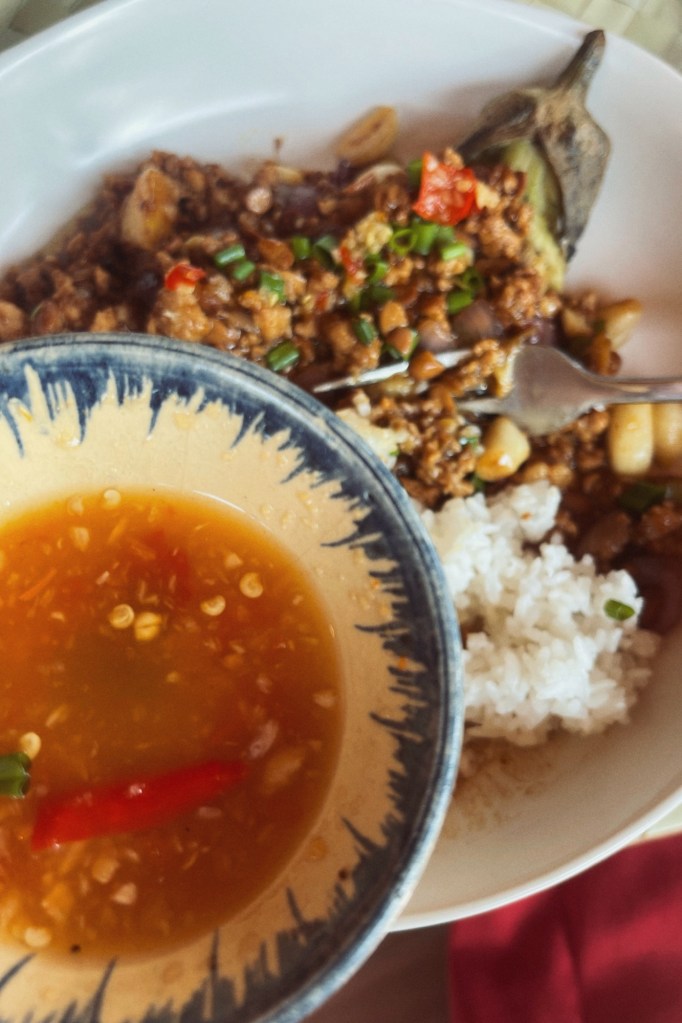
We stopped for a brief lunch before continuing on to Beng Mealea. Mr. Mom brought us to a rather sterile tourist friendly restaurant, I had cha traop, a Cambodian dish, a garlic forward grilled eggplant dish with ground pork, shallots, fish sauce and fresh herbs – loved. Served with steamed rice and I snagged some chilli sauce. The food was lovely, just the vibe was very all inclusive feeling.
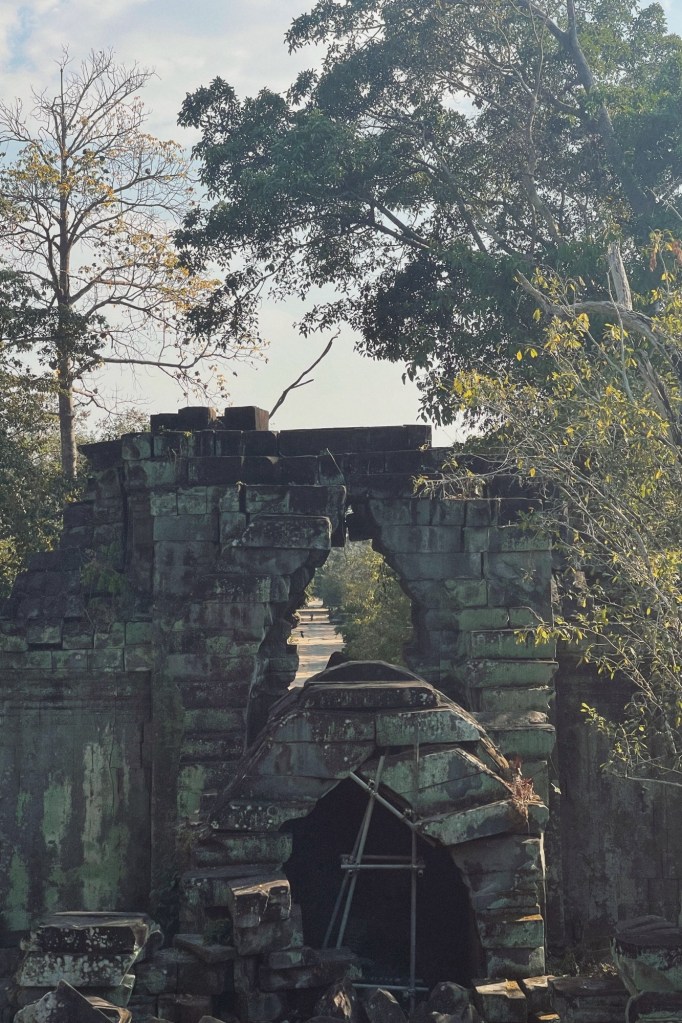
After lunch we were ready for Beng Mealea, a massive 12th century temple complex. Built in the same style as Angkor Wat – located about 40km east – during the rule of King Suryavarman II.
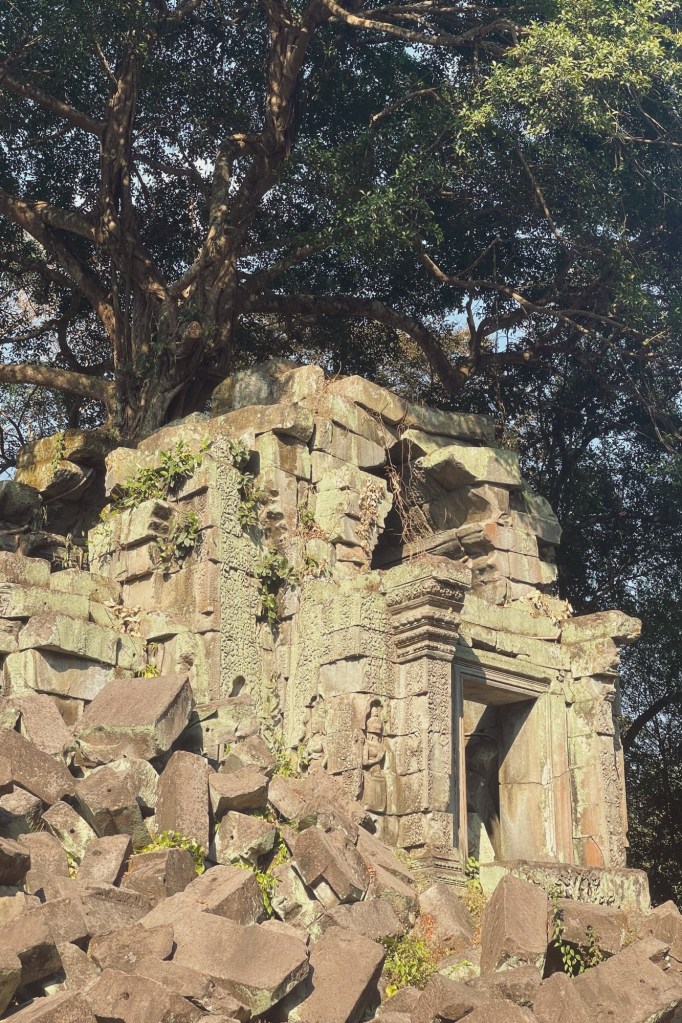
Dedicated to the Hindu god Vishnu, Beng Mealea roughly translates to “lotus pond” which likely refers to the extensive reservoirs or moats – referred to as “barays” that surround the temples. Used not only for practical irrigation, also in reference to the sacred cosmic ocean in Hindu cosmology.
To put it simply, temples were designed as physical models of the Hindu universe. In the Khmer Empire the universe was organized around Mount Meru, a sacred cosmic mountain, centre of the universe and home to the gods. A sacred mountain that was surrounded by a cosmic ocean with continents of the earth.
So as you approach a temple complex you pass over the cosmic ocean, through and over smaller towers representing sacred mountain ranges before ascending the theoretical Mount Meru main temple – the divine realm. Their temples weren’t designed to simply walk through to a place of worship, but to represent the entire structure of the cosmic universe. A ceremonial process, a symbolic journey.
One of my personal favourite symbols found at Khmer temples is the naga, a powerful supernatural being, depicted as an enormous cobra with multiple heads (3, 5, 7 or 9) associated with both Hinduism and Buddhism. In Khmer cosmology nagas are associated with bodies of water and the connection to the watery realms beneath the earths surface. Their placement is protective – they guard the causeways, entrances and staircases leading into the sacred boundary between worlds.
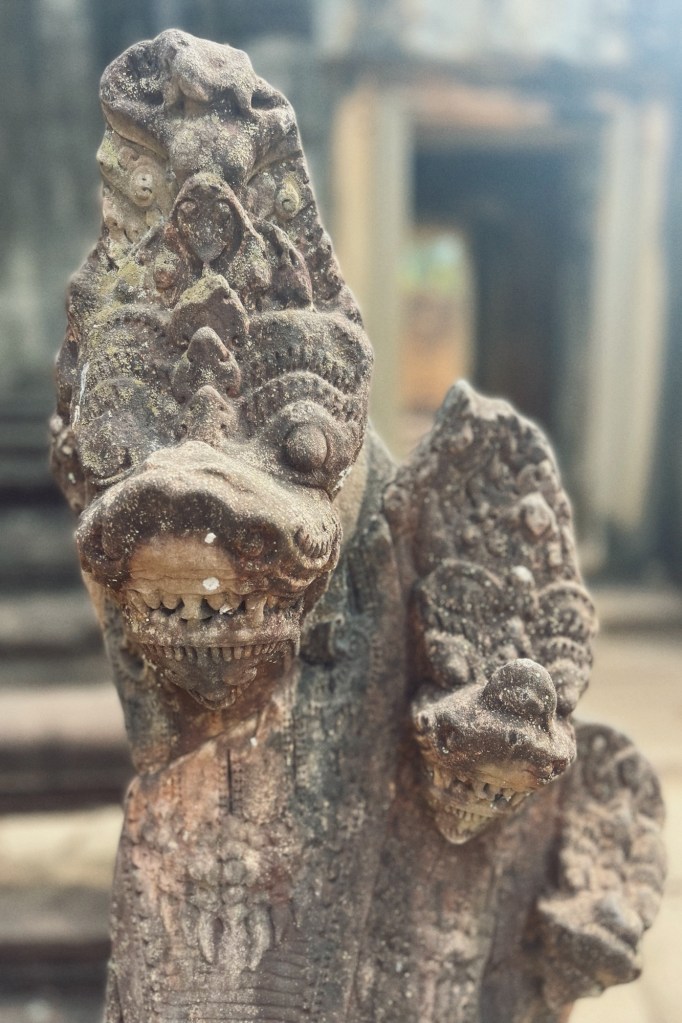
They are also an integral part of Cambodias origin mythology. There’s an old Khmer legend involving an Indian prince, Kaundinya, and a naga princess called Soma. According to legend, Kaundinya arrived in the land that would become Cambodia and encountered Soma, the daughter of the naga king. They married, and Soma’s father, the naga king, drank up the waters covering the land, creating a kingdom for the couple. As legend goes, their descendants became the ancestors of the Khmer people. Love it.
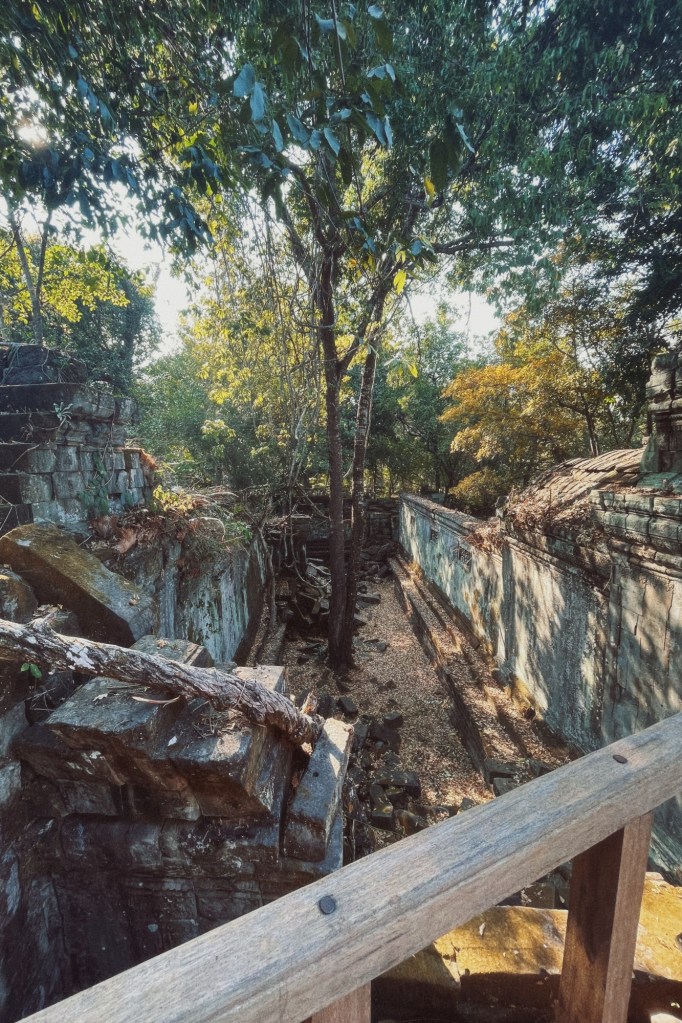
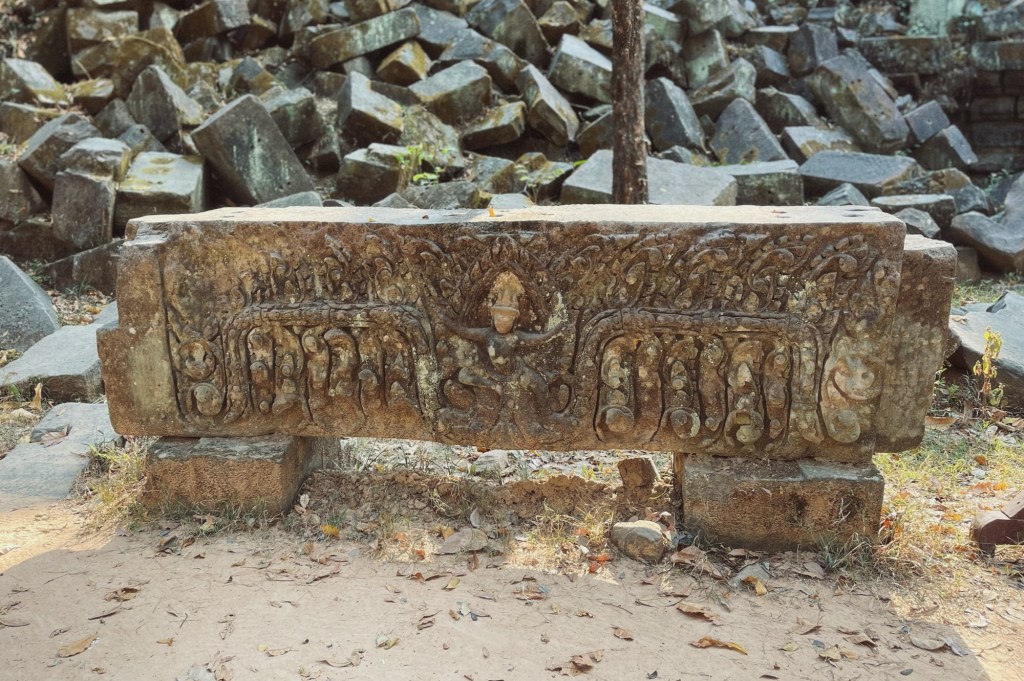
When walking into Beng Mealea, still mostly in ruins, it’s a far stretch to imagine the intended landscape. Cosmic ocean, sacred mountain, divine centre, surrounded by a functioning city filled with people, roads and activity. Ironically, the jungle has reclaimed the physical man made model of the universe. Jumbled piles of once sacred cosmos, heaps of massive stone blocks. Enormous trees. Rubble. Silence except for squawking birds residing in the lush canopy. The crunching of dry leaves on unkempt walkways. Void of tour busses and gaggles of selfie stick waving guides. Carvings still telling stories of gods, demons, creation and the cosmic order.
One integral carving to be witnessed at both Beng Mealea and again at Angkor Wat is the “Churning of the Sea of Milk”. A Hindu creation myth, long story long – the story goes – the gods had become weak and were losing their power, they needed amrita, the nectar of immortality, but they couldn’t get it on their own. The gods made a deal with the demons, to work together to churn the cosmic ocean and share the fruit of their labour. Of course, neither side truly trusted the other. They used Mount Mandara as the churning rod, but the rod sank into the ocean. Vishnu transformed into his incarnated tortoise self, Kurma and swam under the mountain to support it. The serpent Vasuki, the enormous naga serpent, wrapped around the mountain as the rope, the gods pulled one end of the serpent and the demons pulled the other. Back and forth, the mountain spun, the ocean churned, but the churning produced more than the intended amrita. Divine beings, magical objects and treasures, sacred and dangerous.
One of the first was a deadly cosmic poison, halahala – powerful enough to destroy the universe, the god Shiva drank the poison, but instead of swallowing, held it in his throat, turning it blue, which is where he gets the nickname “blue throated one”.
Then came the treasures.
Lakshmi, goddess of prosperity and fortune
Airavata, the magnificent white elephant
Kamadhenu, the wish-fulfilling divine cow
Uchchaihshravas, a divine white horse
Kaustubha, a magnificent jewel
Parijata, a heavenly flowering tree
Varuni, associated with wine/intoxicating drink
And finally… The nectar of immortality. Dhanvantari, the divine physician, emerged carrying the pot of amrita. Suddenly the agreement between gods and demons disappeared. Everybody wanted it. Vishnu took the form of Mohini, a beautiful woman, and distracted the demons while distributing the nectar only to the gods. The gods drank it and regained their immortality.
The cosmic waters contain both immortality and poison, creation and destruction. Just as water on earth, the rains bring fertile grounds for harvest, giving life, while floods and storms can destroy crops and settlements.
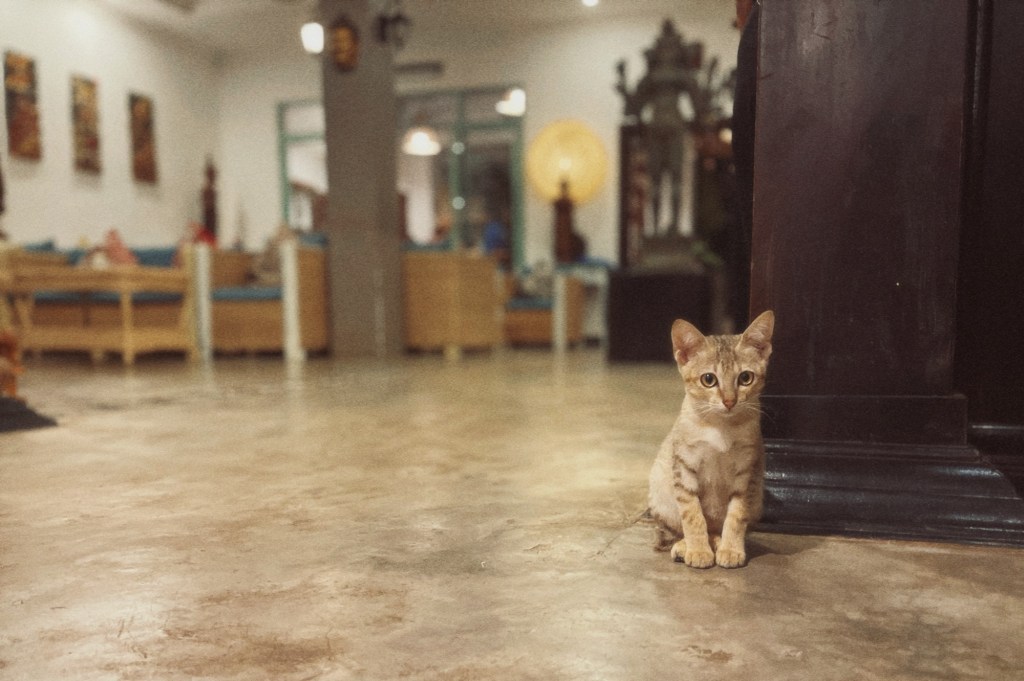
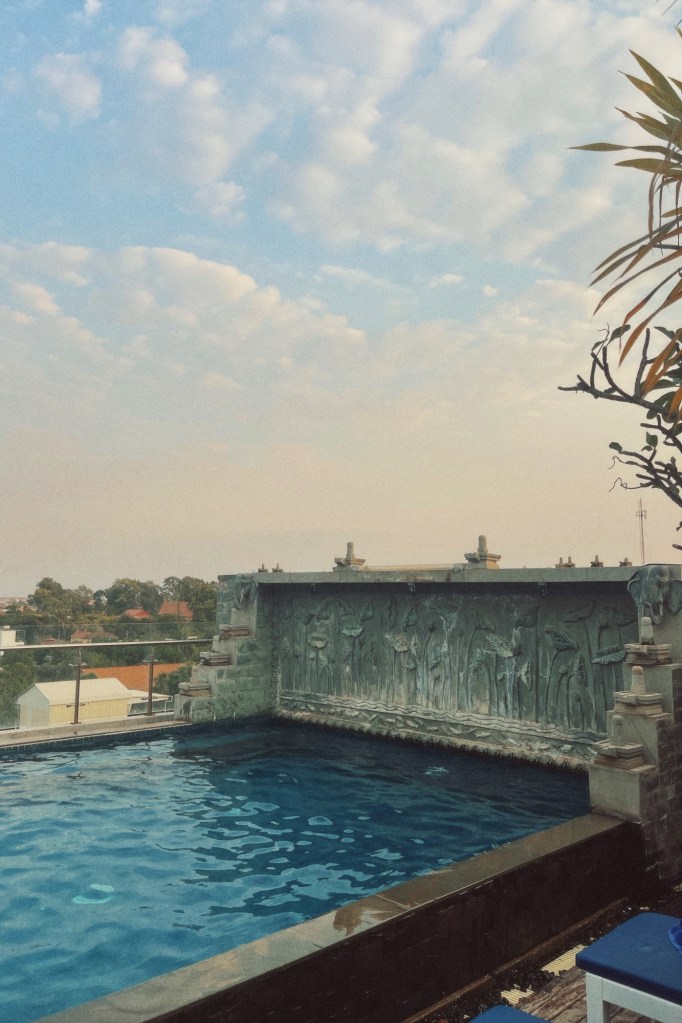
We wrap at Beng Mealea just after 4 and are checked into the hotel by 530. I’d found The Community and fell in love with its humble roots, genuine community focus and location. Set directly on the road to Angkor Wat, perfect, $1 tuk tuks to pub street, love, two pools – one on the roof, and daily Cambodian afternoon tea! They also have reusable water bottles in the rooms, a filtered water filling station – an emphasis on sustainability – not just greenwashing. Local food in their Khmer restaurant, local artisans in their gift shop. Attentive friendly staff, and kittens! I don’t think they always have kittens, but there was an adorable bunch there when we were there, some hiding in the left luggage, some being brave and following us into our room.
It’s the little things in life, like kittens.
It was also under $150 for 3 nights.
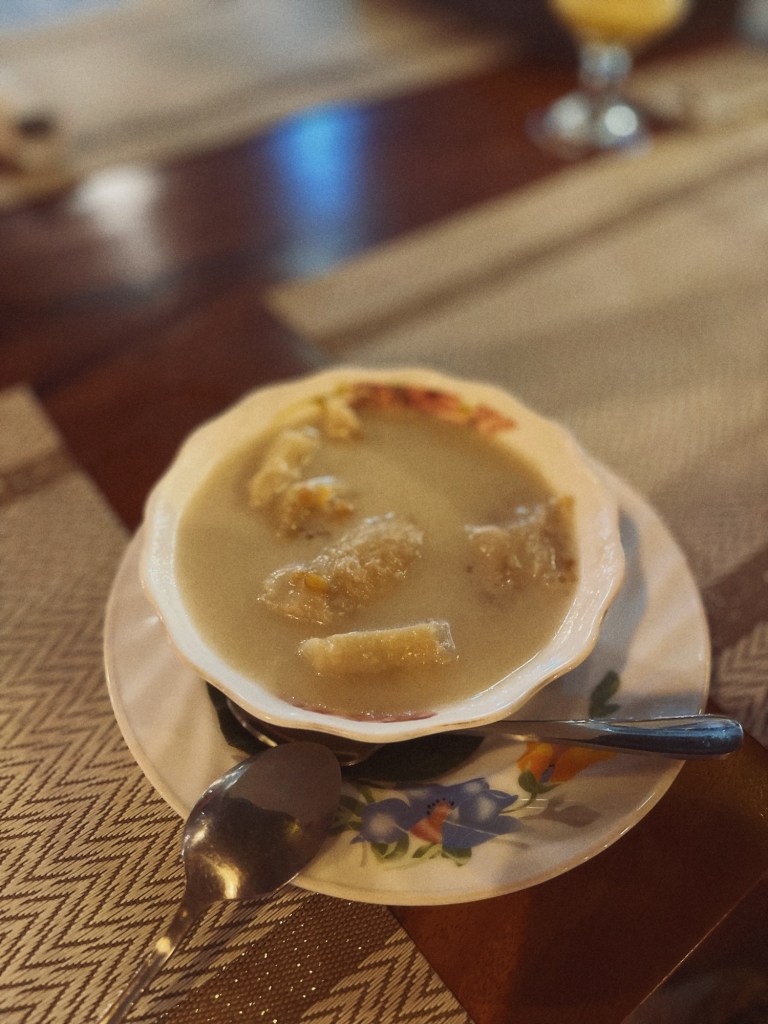
We popped upstairs to check out the pool, it was burning season so the skies had a haze on the horizon, but were mostly clear. We changed and headed out to dinner at Madam Moch Khmer Restaurant, taking a $1 tuk tuk 5 minutes to town, the fellow even offered to pick up us at a designated time. Five star service. We had banana blossom salad ($2.5), fresh spring rolls ($1.5), beef noodles ($2.5), smoothies (1.5) and – my personal favourite – chek ktiss ($1). Insane prices. Dessert though, deserves a walk through. Sweet creamy and aromatic, made by simmering small plump ripe nam wa bananas in fresh coconut milk with tapioca pearls, sweetened with palm sugar, balanced with salt, perfumed with star anise and topped with sesame seeds.
Warm banana soup may sound off-putting to many of you, which it would be if made with bland gag inducing Cavendish bananas, but the local nam wa and lady finger bananas are perfection. Southeast Asia has been cultivating and selectively breeding bananas for thousands of years, achieving creamy bananas with a pure rounded flavour. A highlight for this nerd for sure.
We made our way back to the hotel, tucked into bed by 10 and request Barang not fetch us until after 9, opting to have an easy morning and breakfast at the hotel.

