Day Two
Outliers
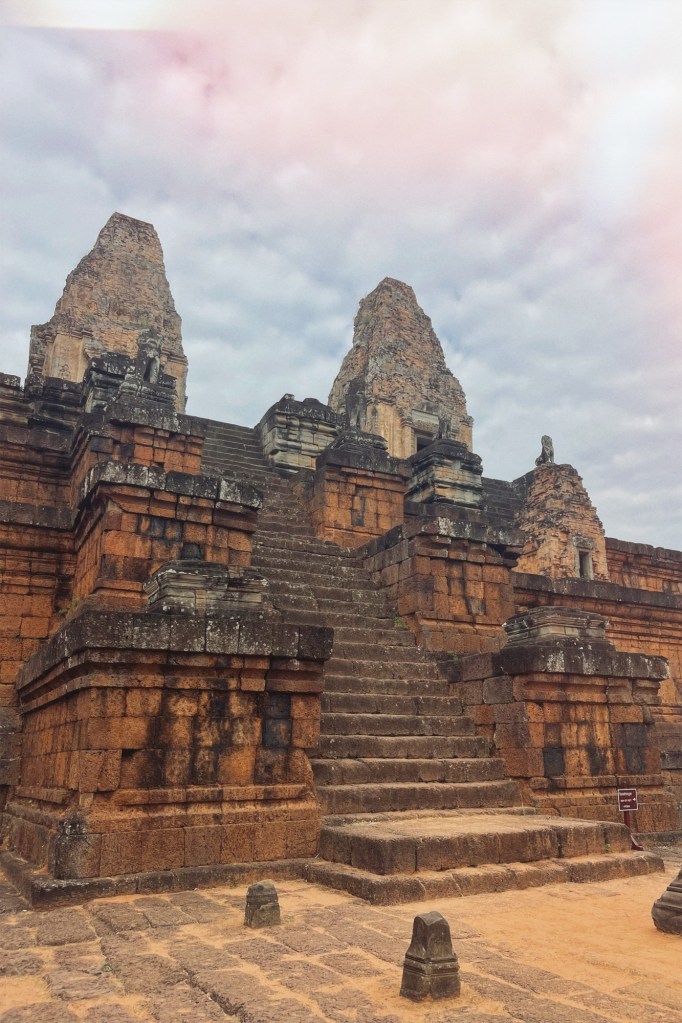
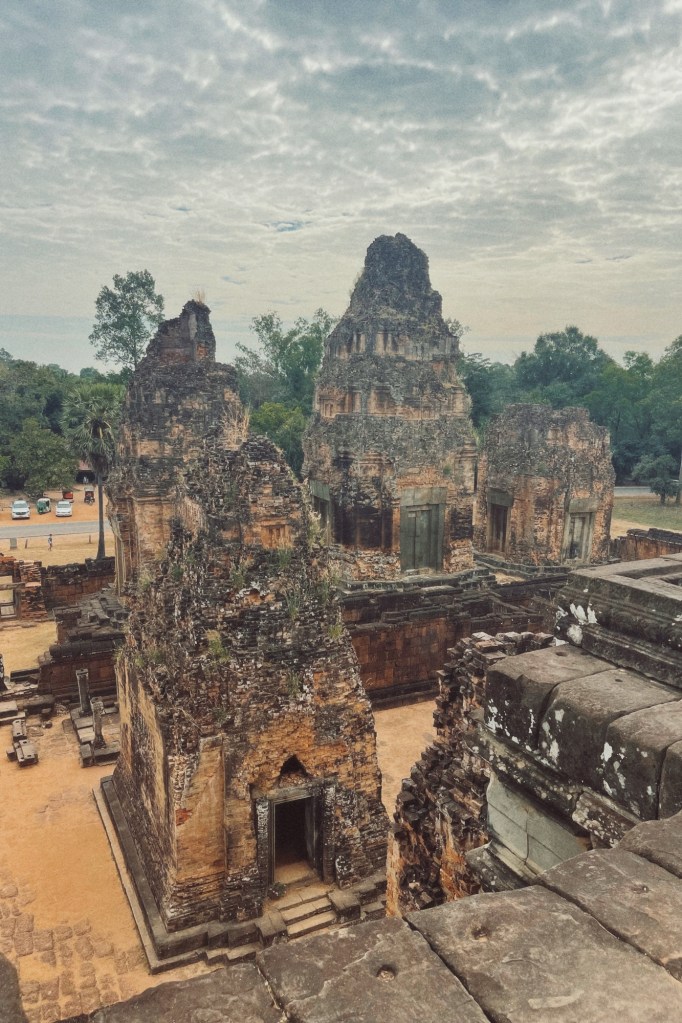
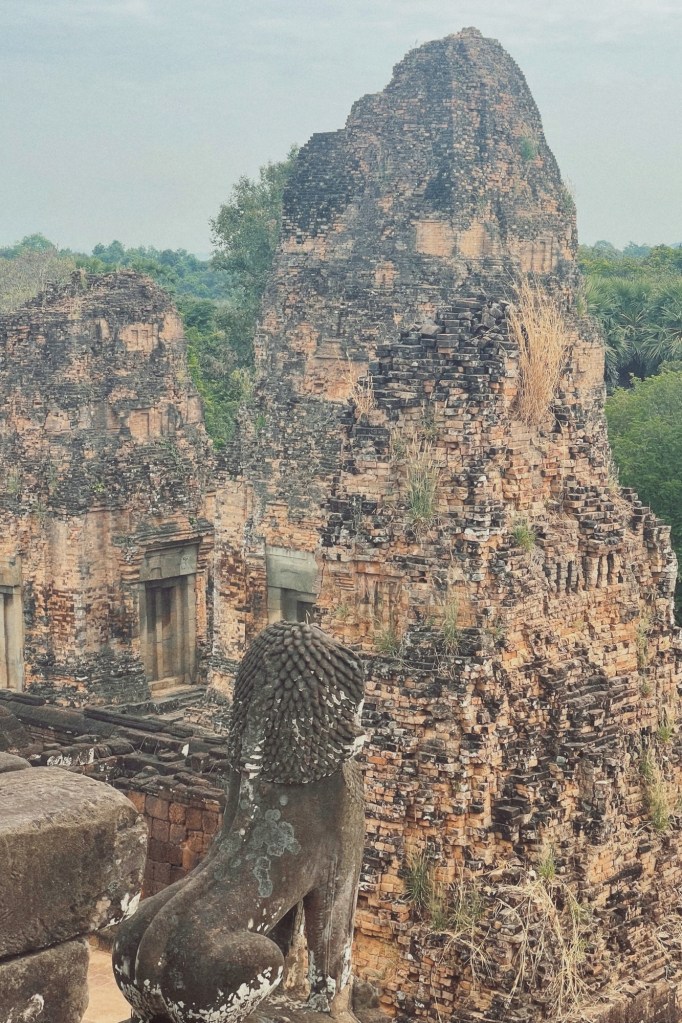
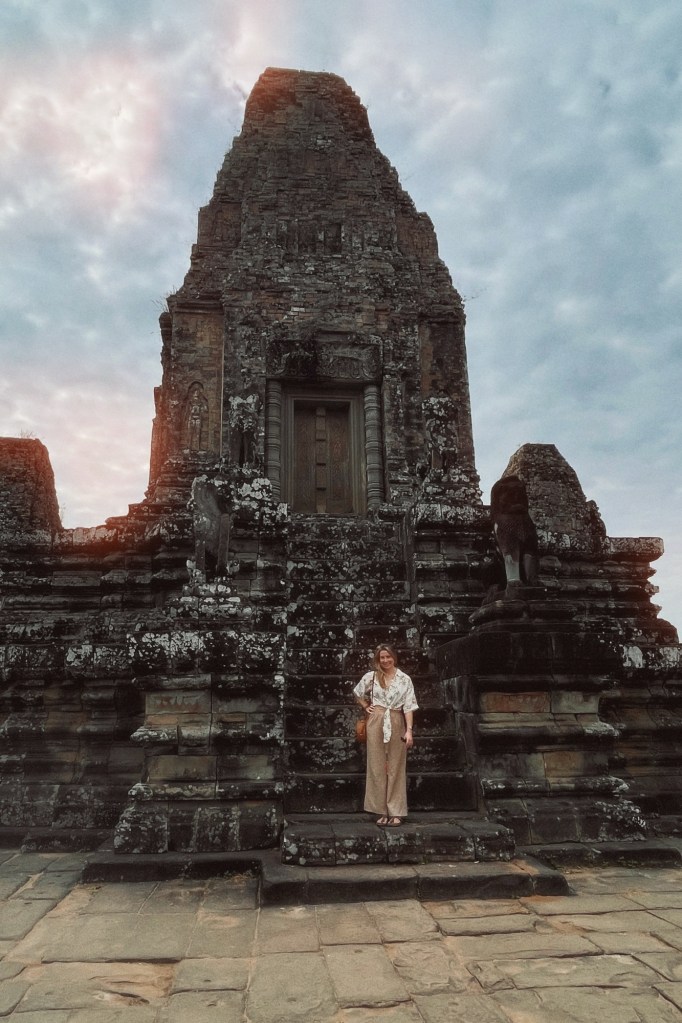
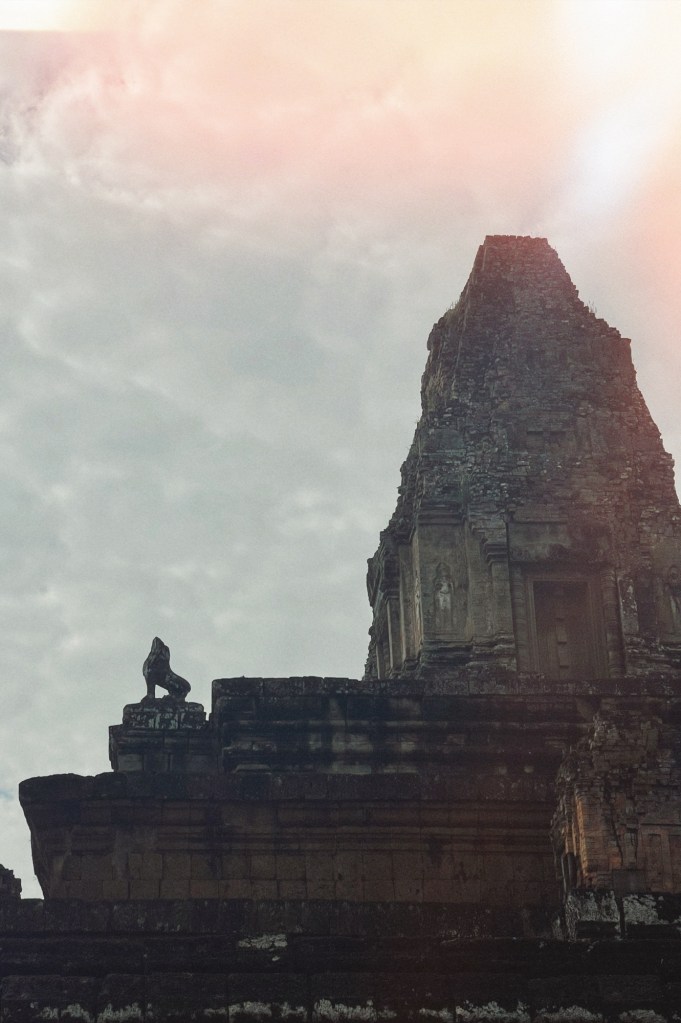
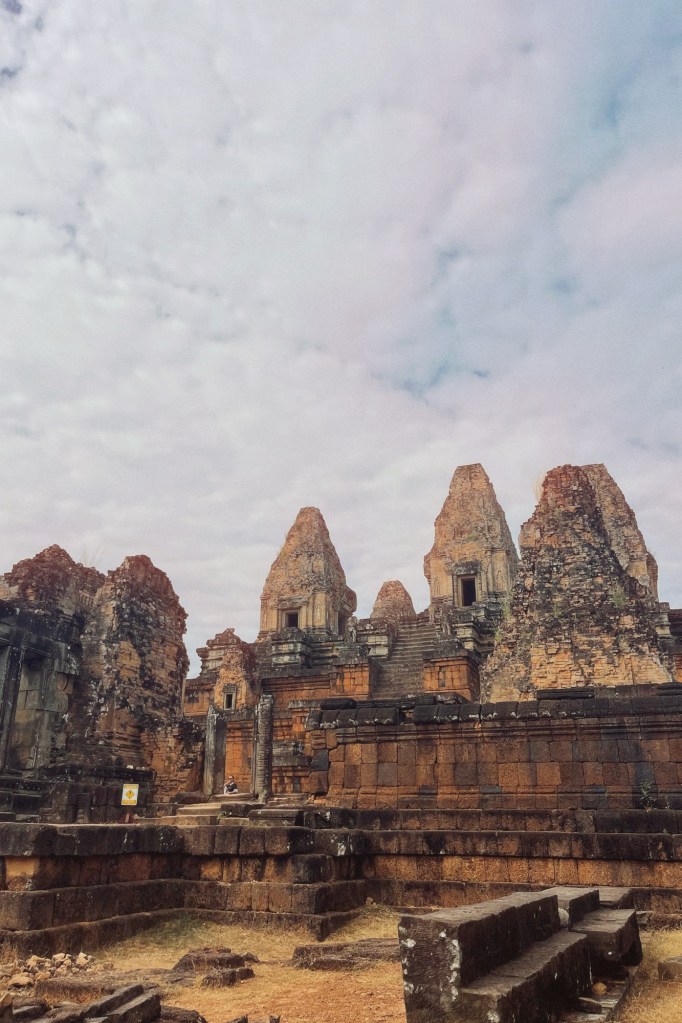
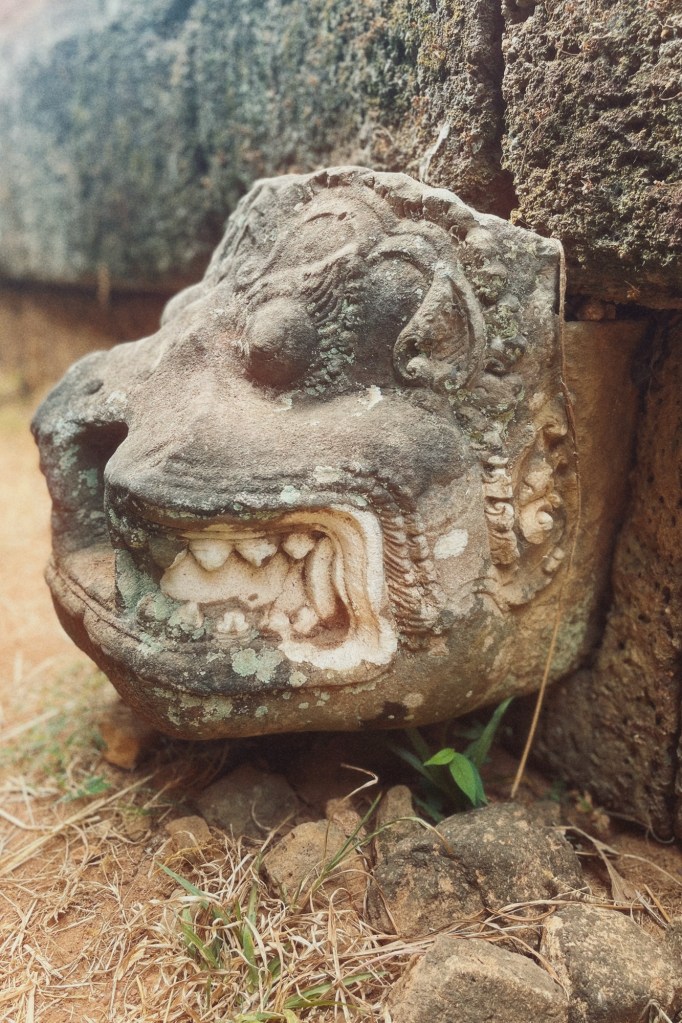
Barang was waiting out front, high grade tuk tuk on hand, cooler of cold beverages, and we were on the road. We were to begin our journey exploring temples outside the main Angkor complex, on the outskirts. We arrived at our first stop, Pre Rup, a temple built shortly after the capital moved to the Angkor area from Koh Ker. By 930 we had set off to explore, up and around the red brick and laterite stone towers surrounding the central tower. From the highest vantage point the lay of the land sprawls, rice fields and distant jungle. A carefully designed sacred map of the cosmic universe.
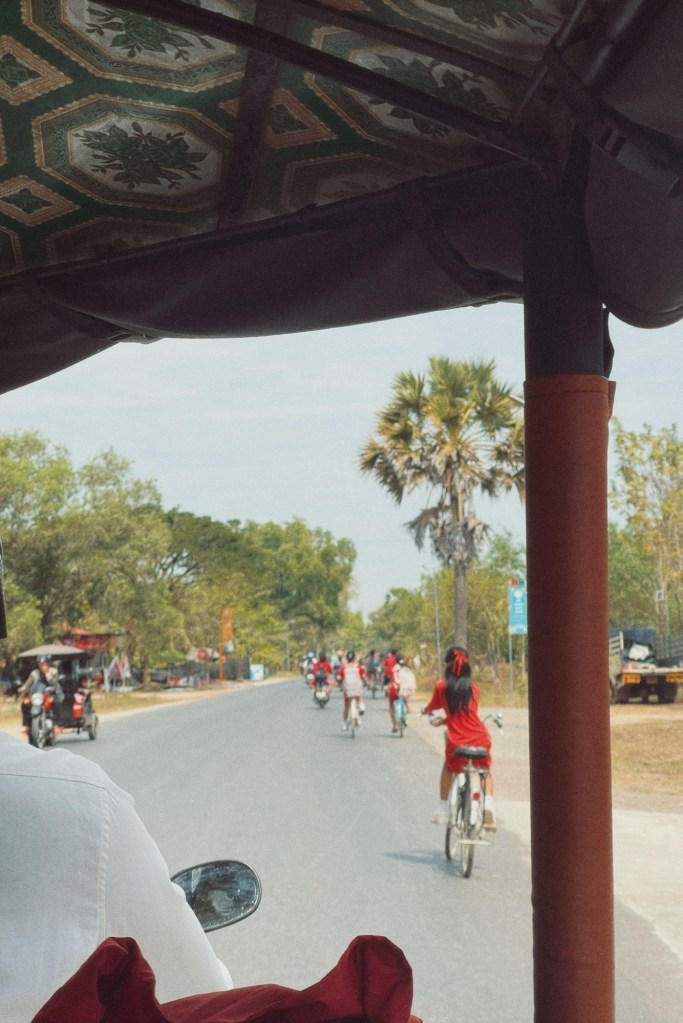
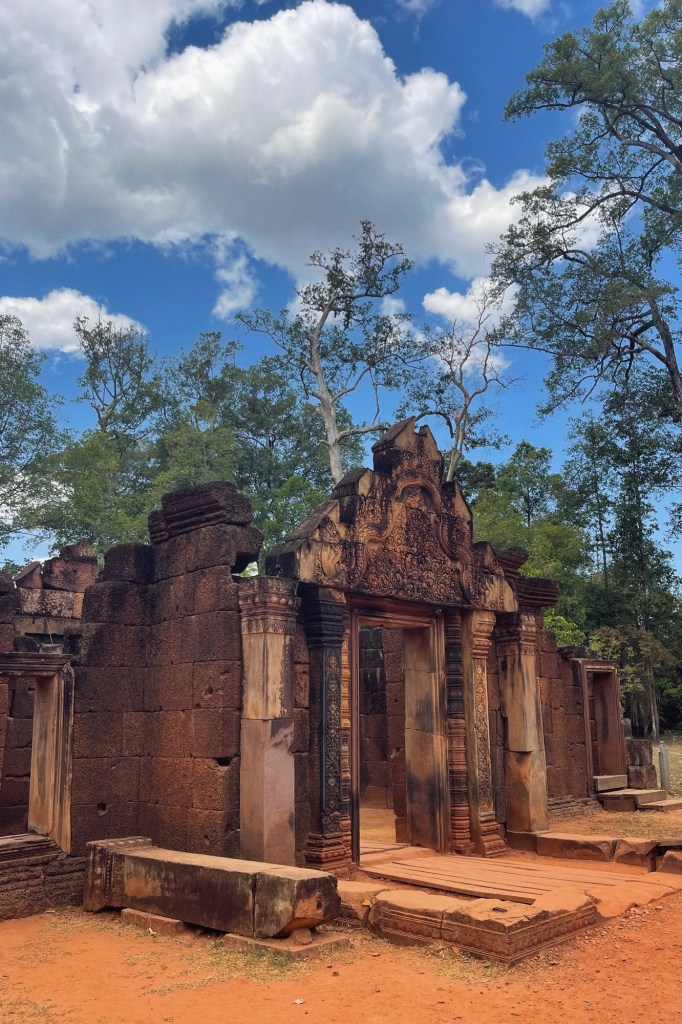
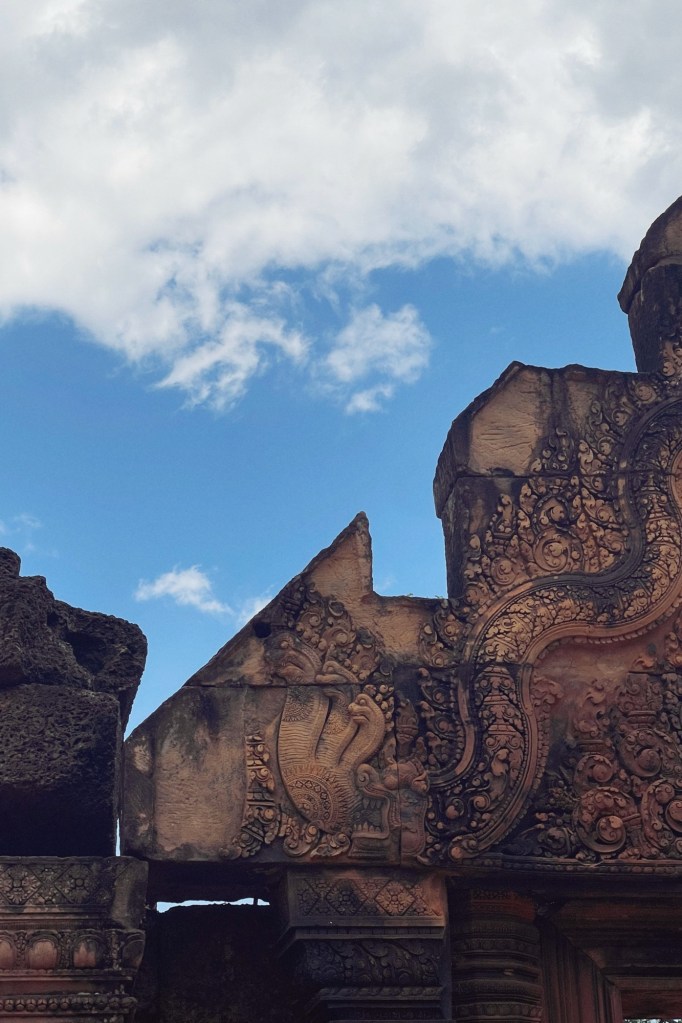
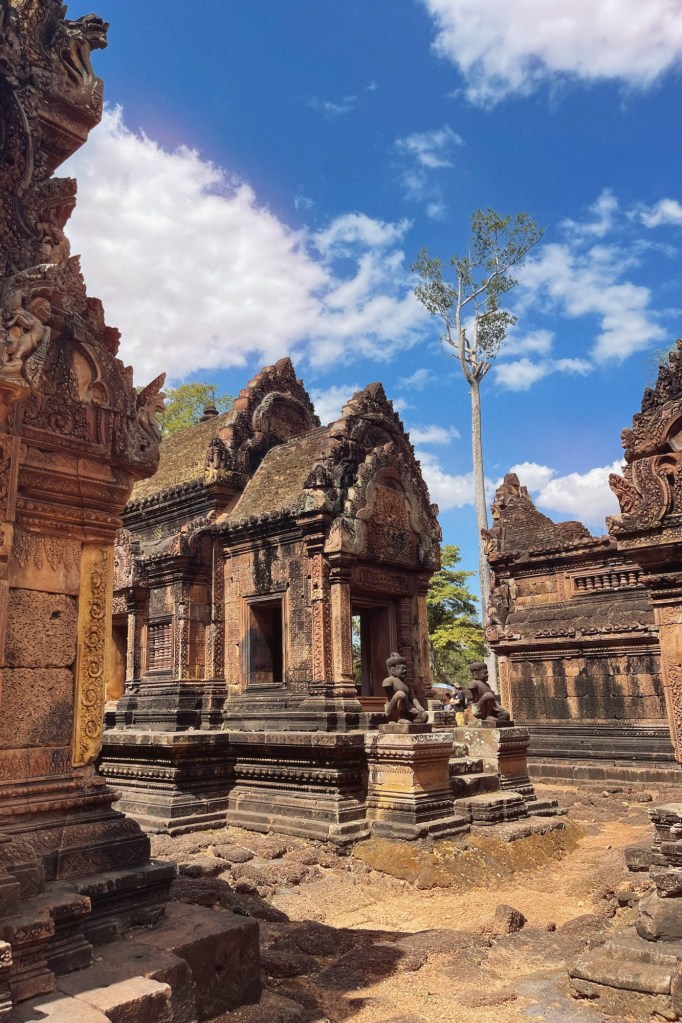
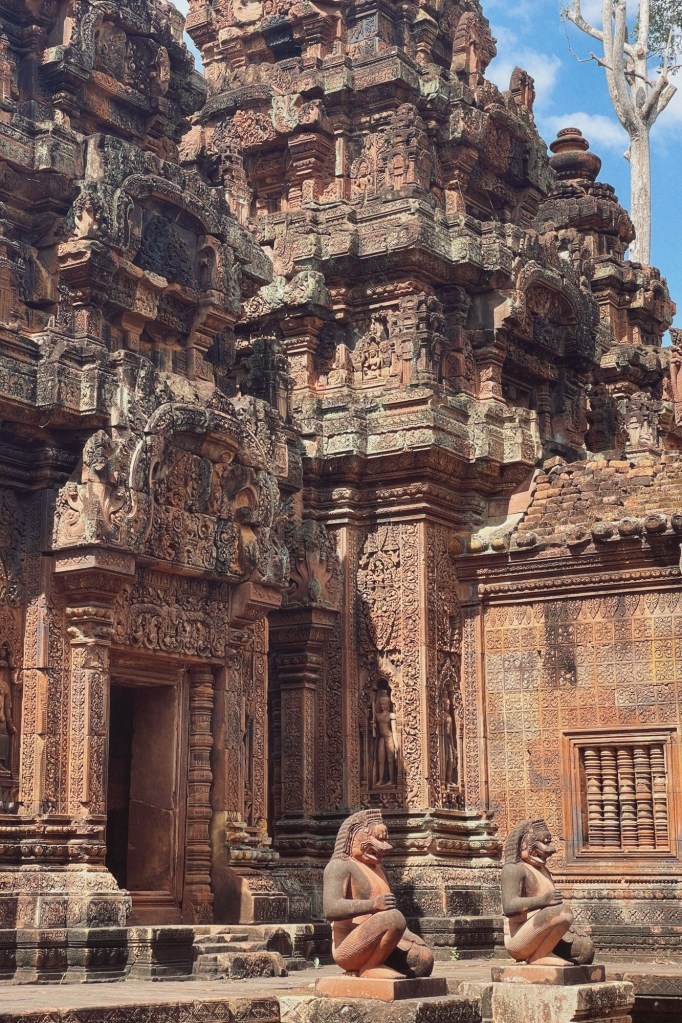
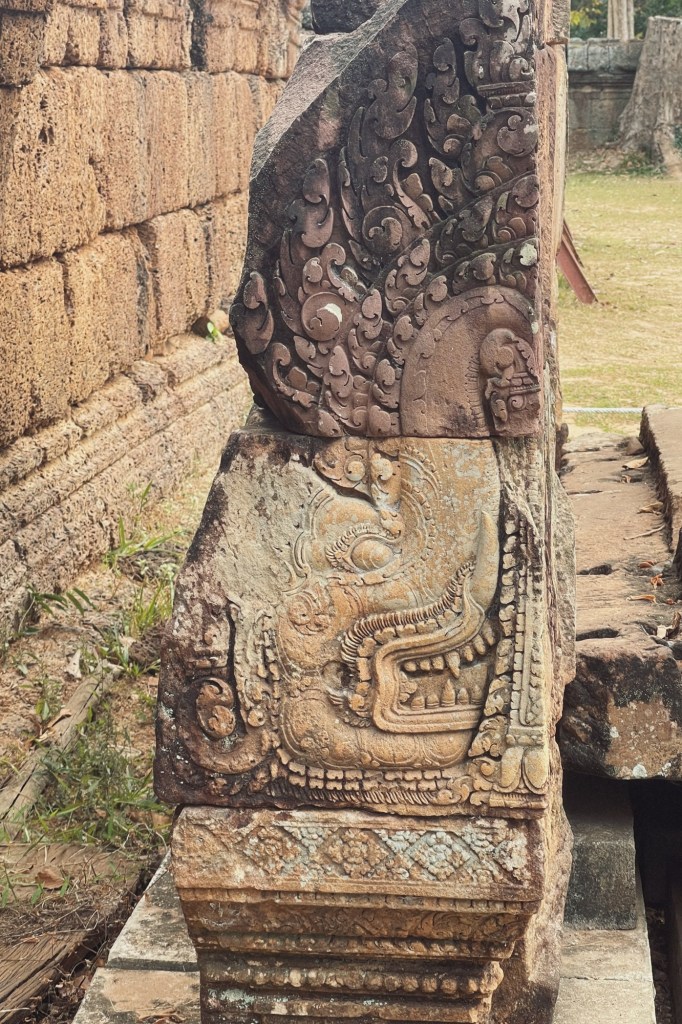
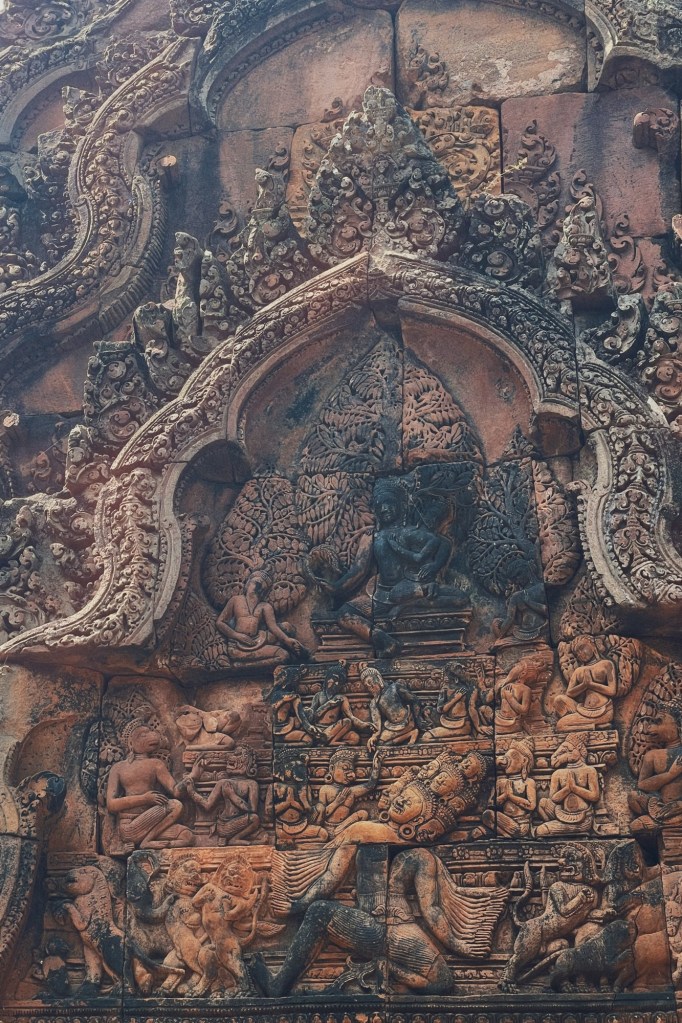
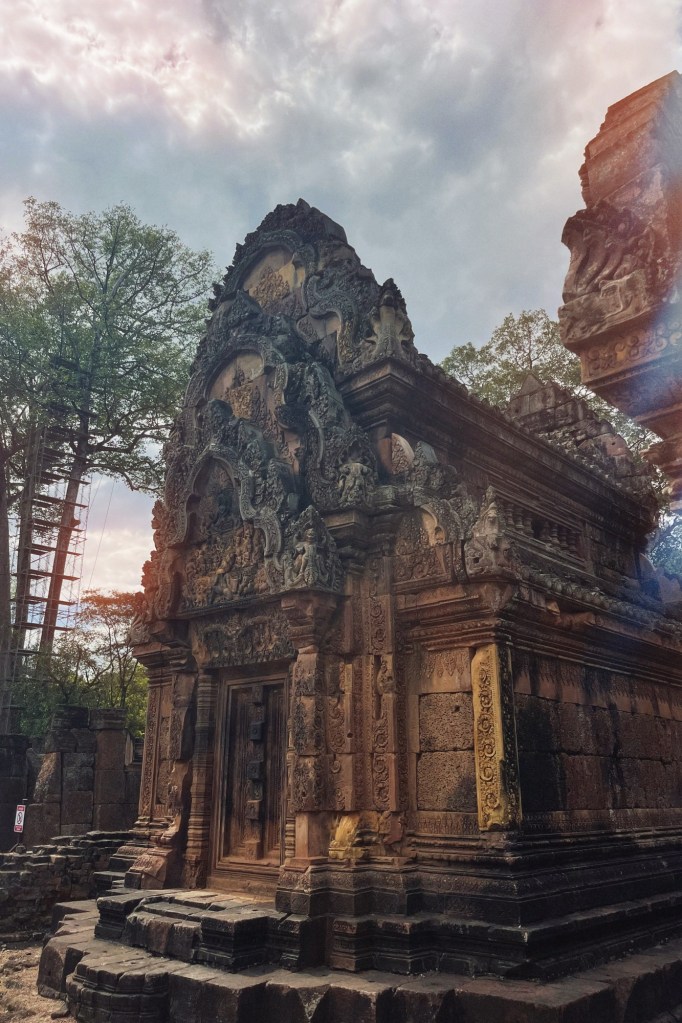
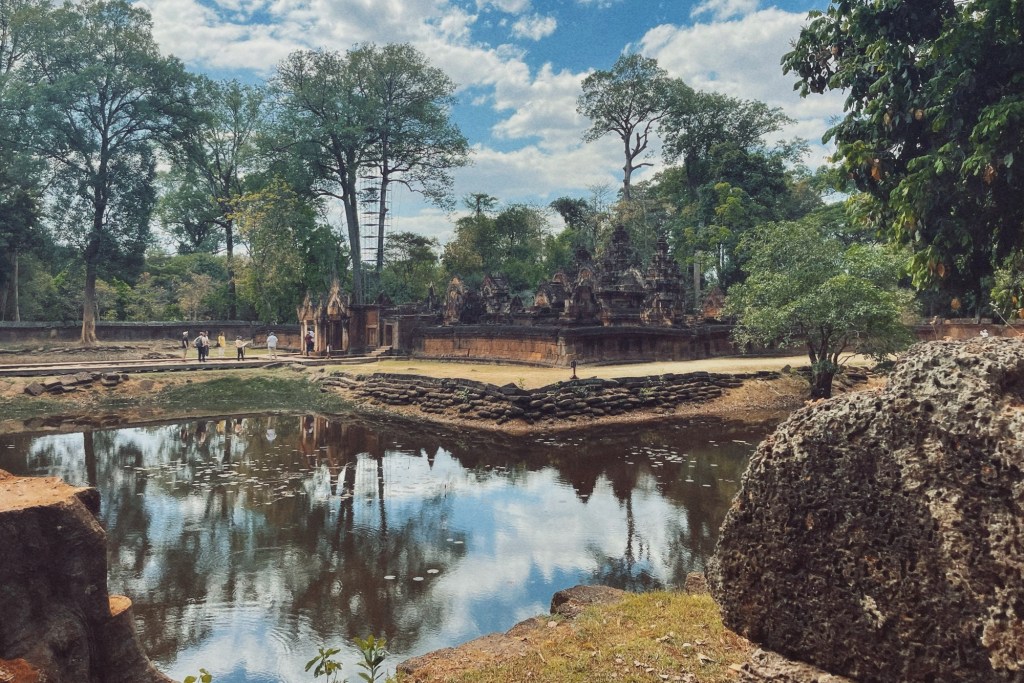
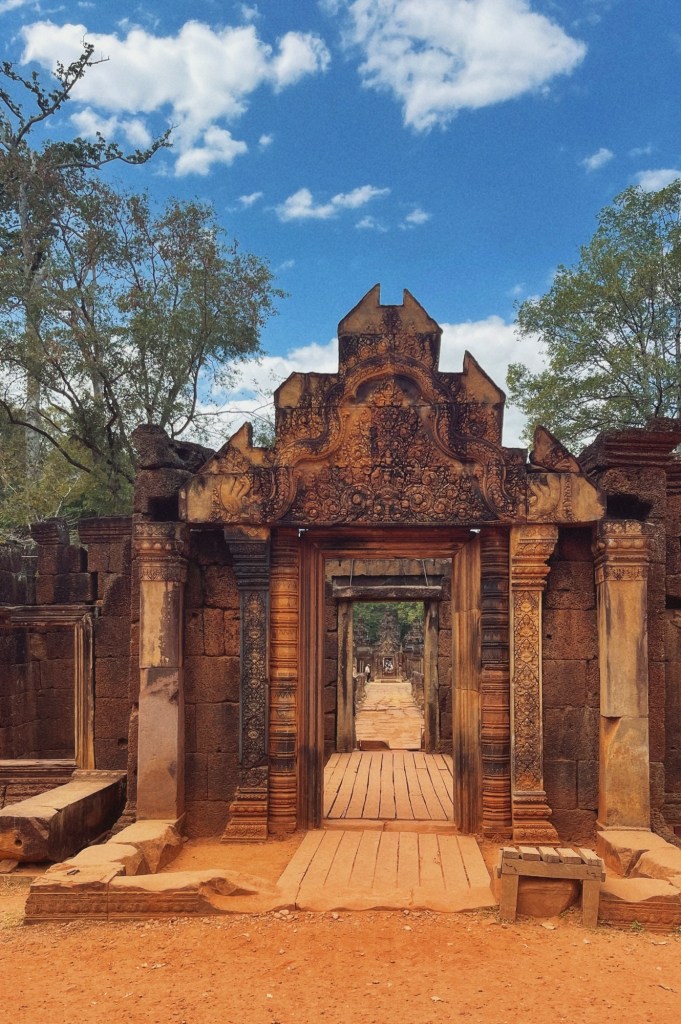
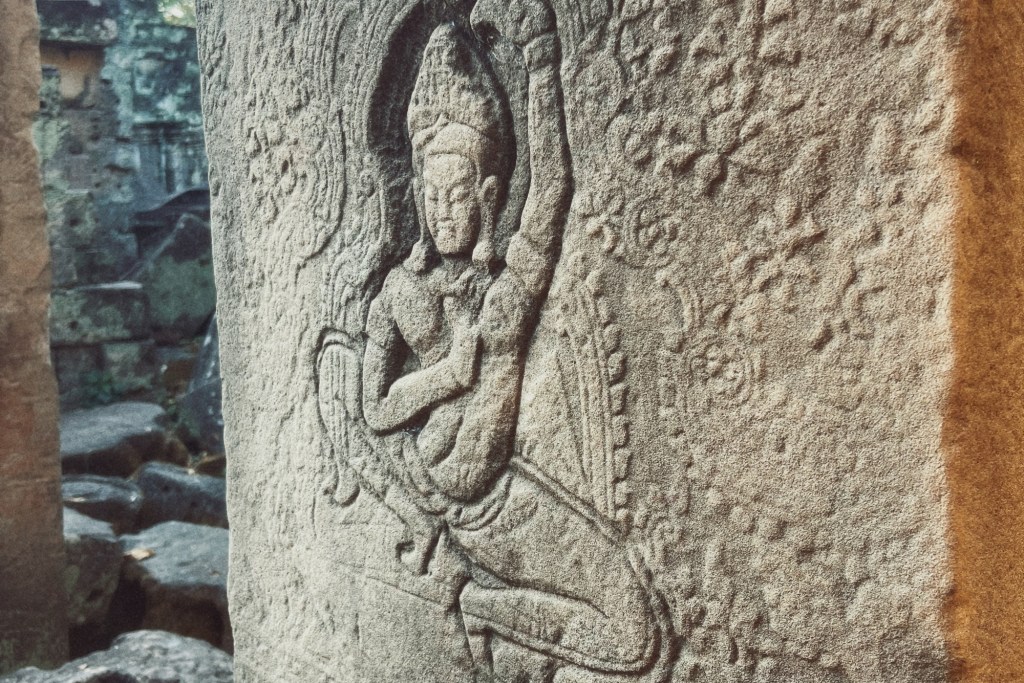
We continued on through the countryside and local villages, alongside kids heading to school on their bikes, tuk-tuking through wafts of charcoal smoke, eyeing pork bbq for a later lunch stop. Our next destination was Banteay Srei, with incredible carvings in pinkish-red sandstone, its name roughly translating to “Citadel of Women/Beauty”. The sandstone selected allowed for fine incredibly intricate details to be carved, from floral patterns, mythical creatures and the gods. Part of the charm of Banteay Srei is the compact layout, akin to a miniature Angkor Wat, highlighting fine detail over sheer scale. Very deserving of its title “Jewel of Khmer Art”, a true masterpiece.
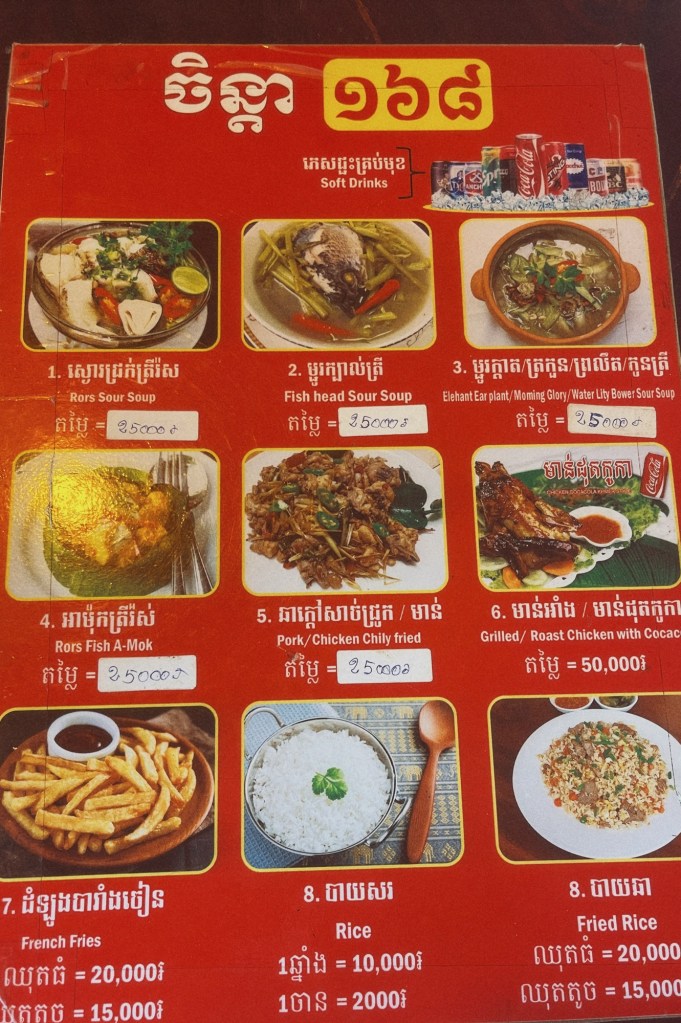
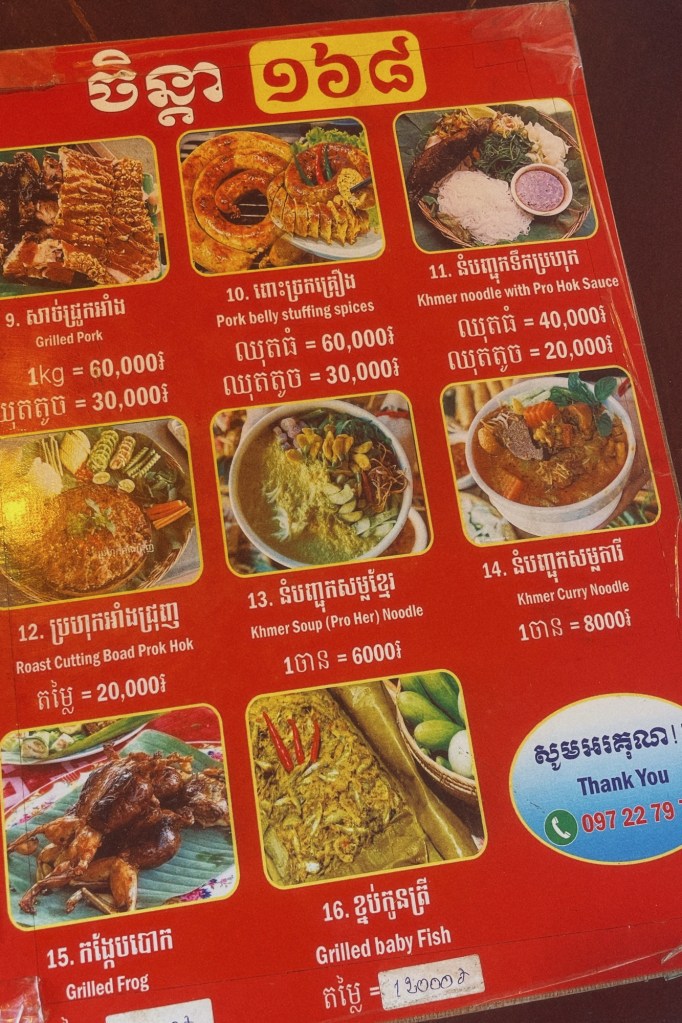
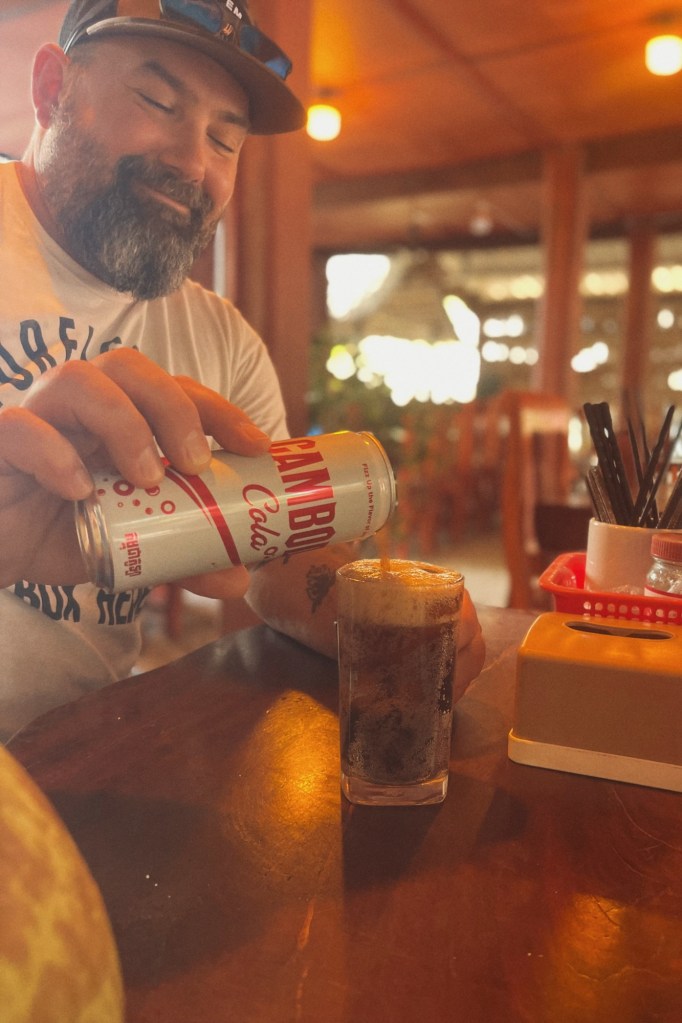
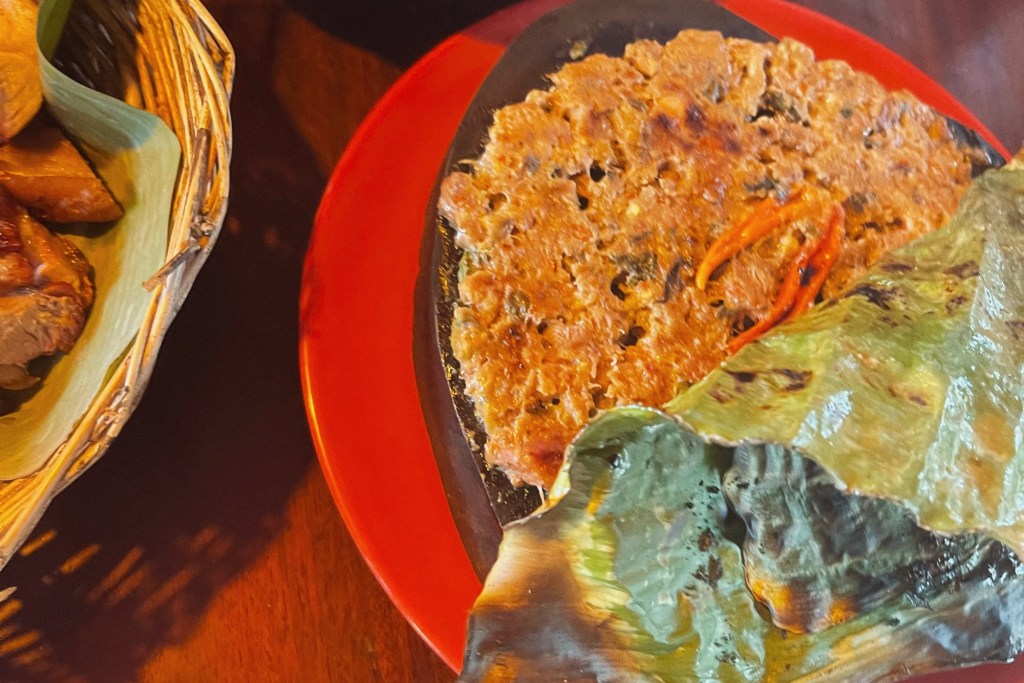
Wrapping up took us to 1230, and before Barang could take us to another tourist spot we requested a spot we drove past in Preah Dak Village en route to temples and Barang gladly obliged. We opted for a spread of pork sausage, prahok, roast pork – of course, rice. Some fresh coconuts and crispy cold Cambodia Cola’s, their tagline – “fizz up the flavour of joy”. The prahok, which, on the menu was listed as “roast cutting boad prok hok”, we were thinking pork, no, no, no, so far. Prahok is a strong fermented fish paste. Intense, salty, spicy, pungent, in this case cooked on a block of wood, covered with a piece of banana leaf and baked to charred perfection. Served alongside a spread of fresh vegetables – sliced carrot, cucumber, long bean, eggplant and herbs.
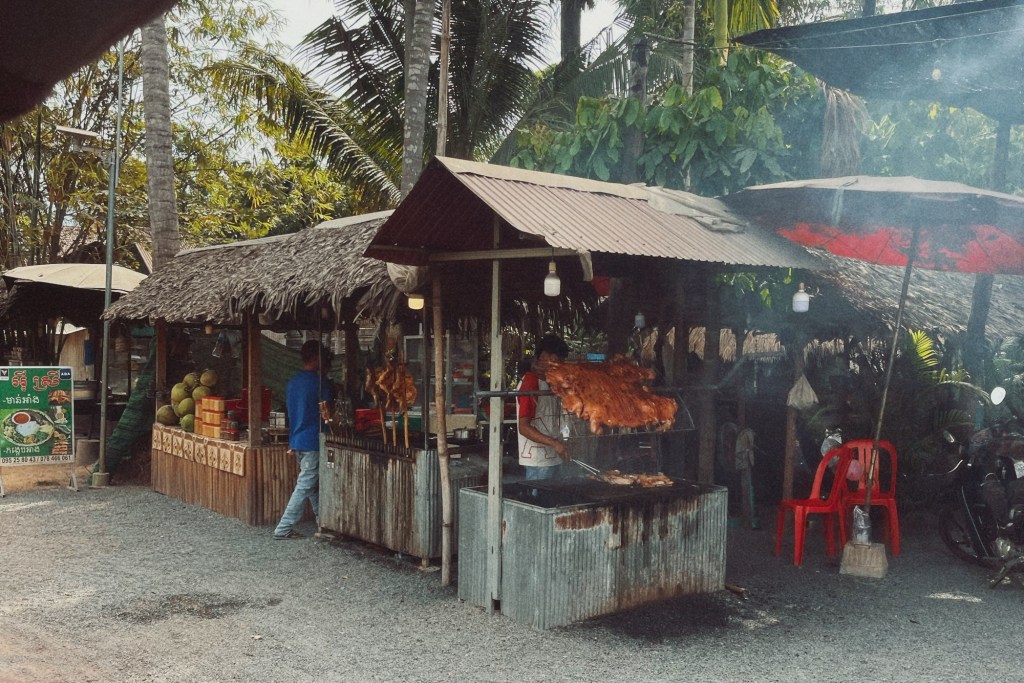
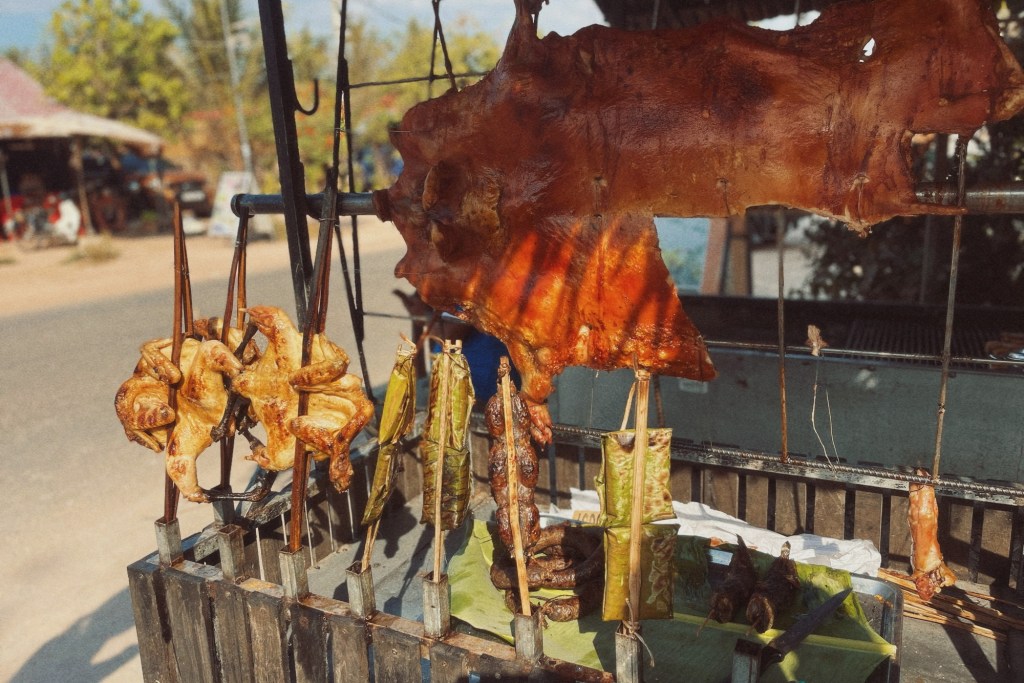
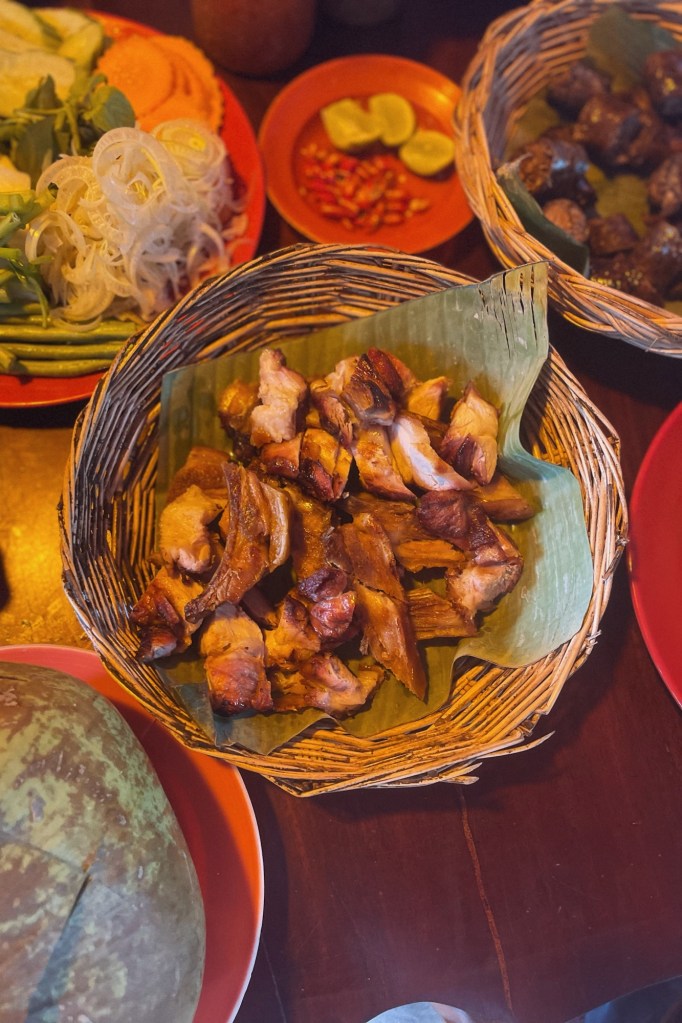
The meal was a representation of unapologetic Cambodian flavours, not altered or adjusted to Western expectations. A fine balancing act of salty + sour + spicy + crunchy.
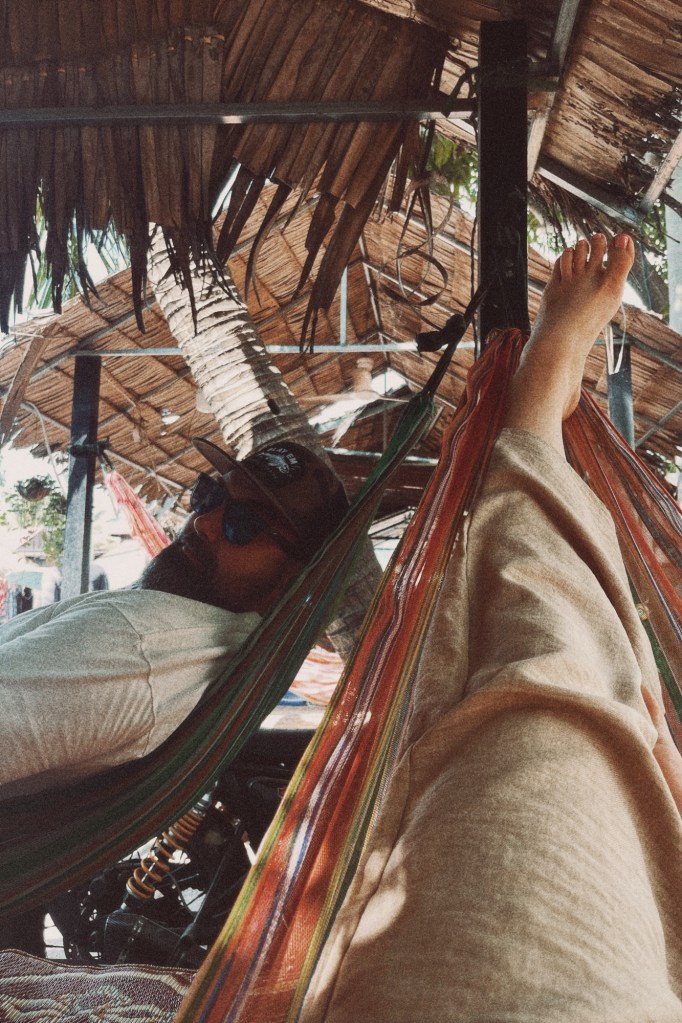
We ate at leisure, had a rest in the hammocks out front afterwards, Barang had a little nap. We are on vacation after all. There were still a couple afternoon temple visits scheduled before the sunset stop, so no rush. We mounted up at 3 and headed towards Ta Som, just 15 minutes away.
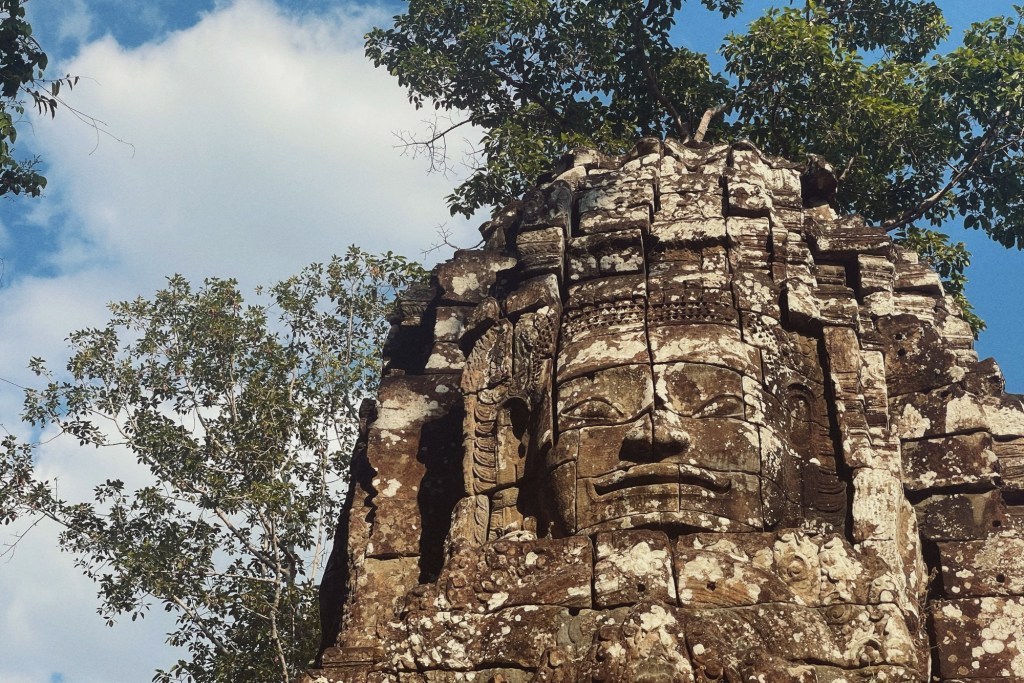
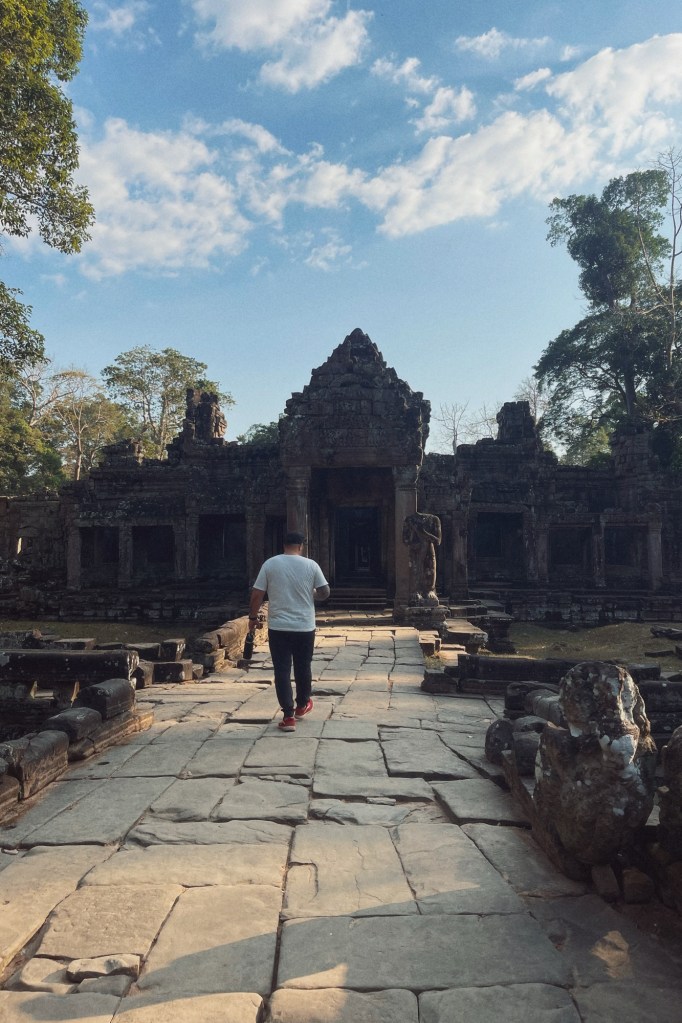
Ta Som, built during the late 12th century, is the first temple for us to visit constructed in the Bayon style – known for the large carved Bayon-style faces looking toward the four cardinal directions. Thought of as “the sacred power sees everywhere”, the outside world, along the sacred enclosure and towards the sanctuary. The cosmic guardian standing between the ordinary world and the sacred. The eastern outer gate of Ta Som presents another wonderful scene, where the jungle has taken hold and become part of the structure as a massive fig tree flanks the entryway. The temple was largely deserted by other visitors, so it was a peaceful experience as the sun was getting lower on the horizon.
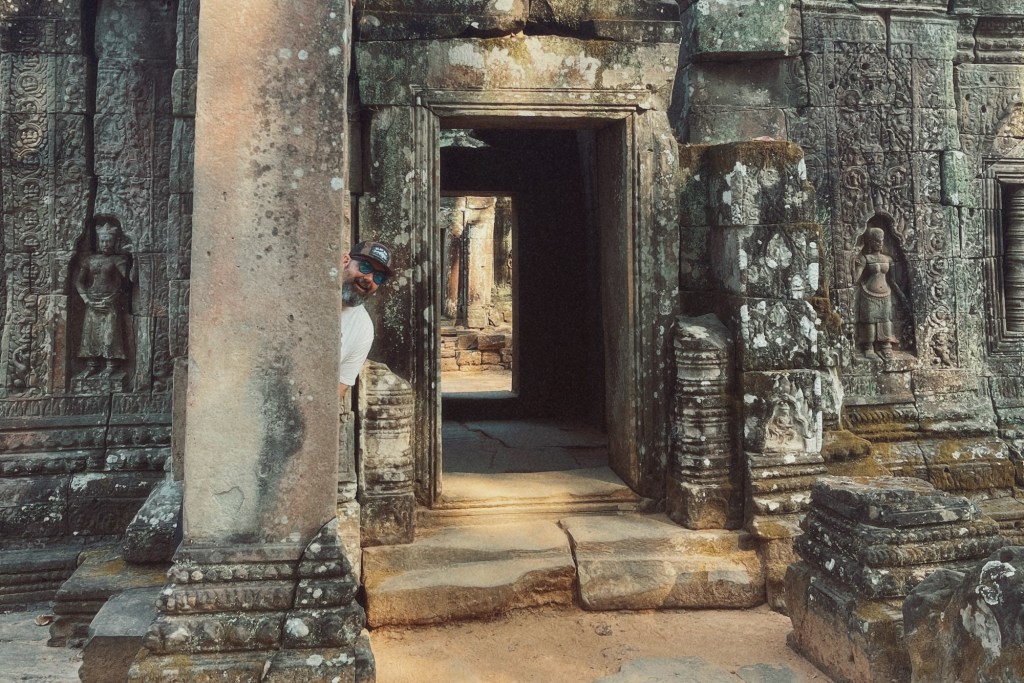
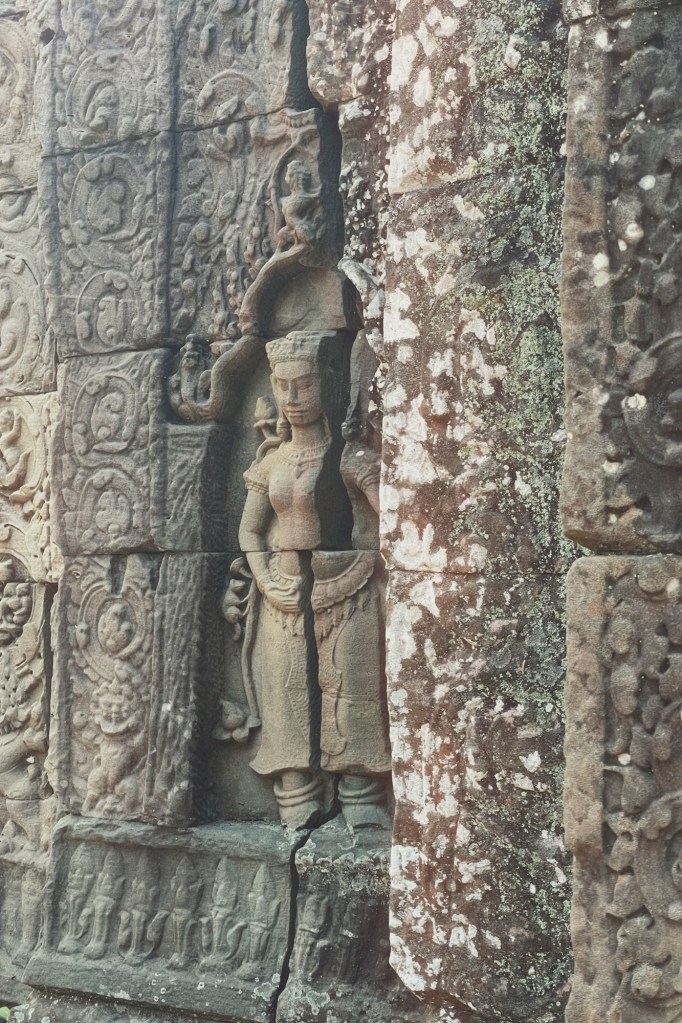
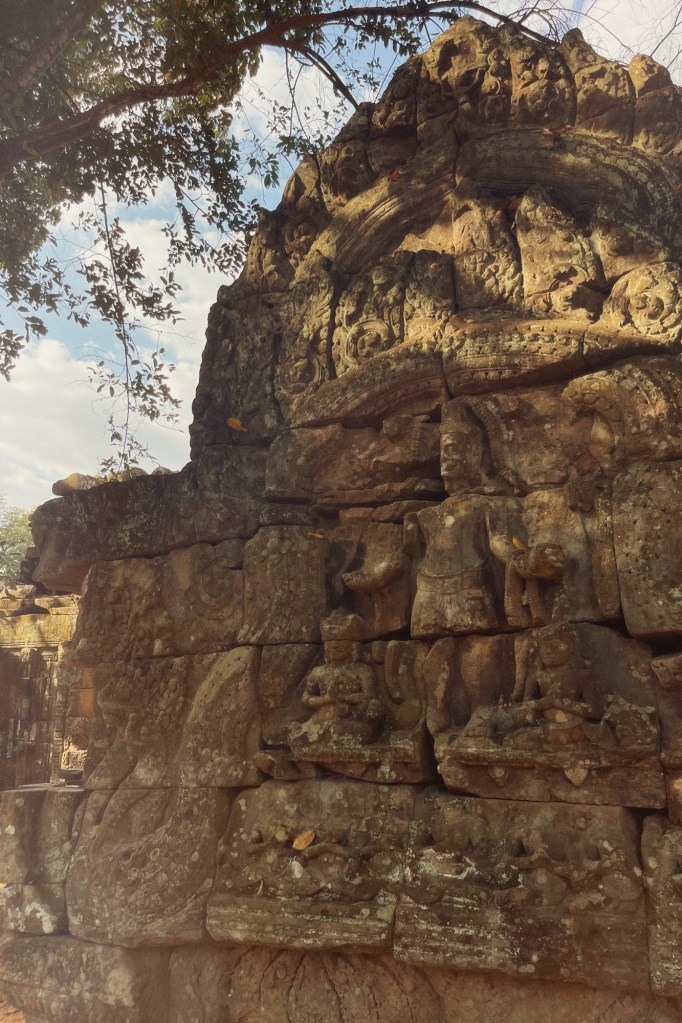
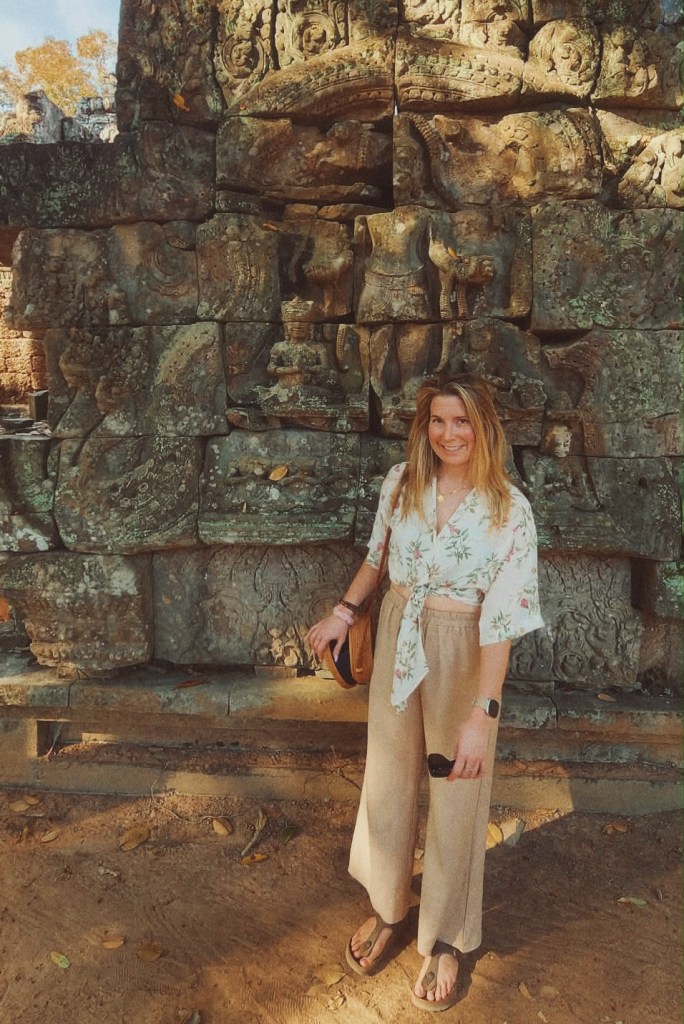
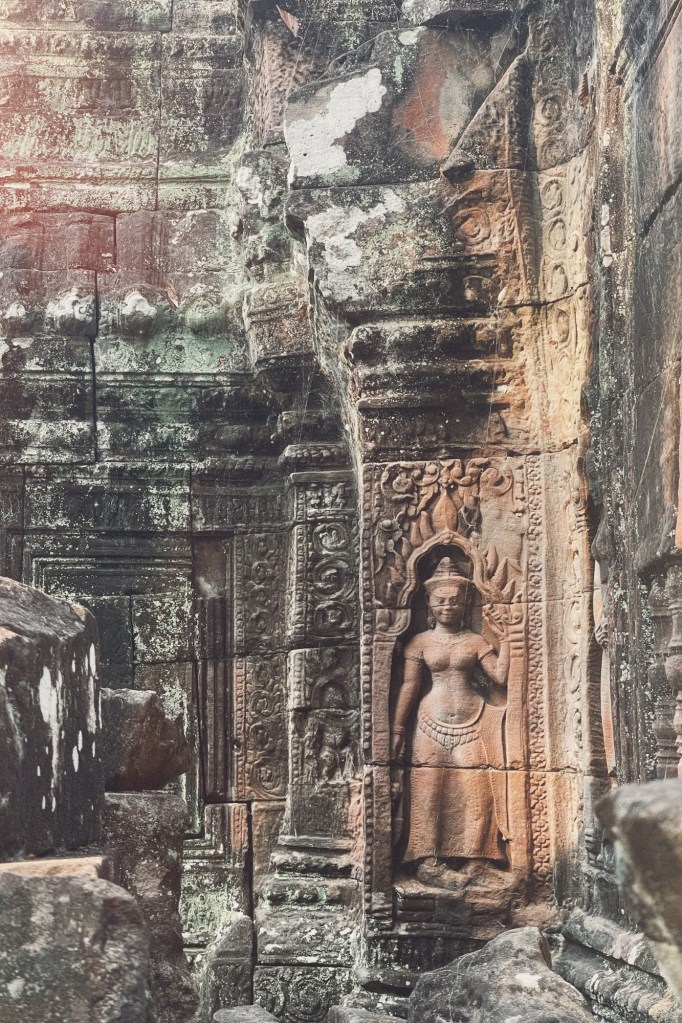
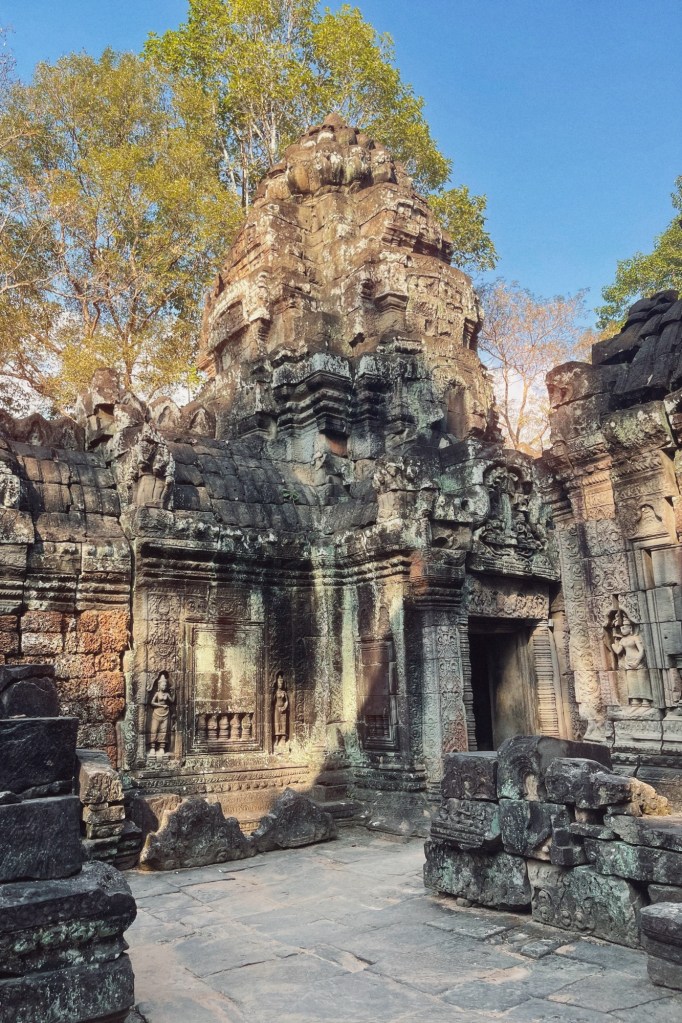
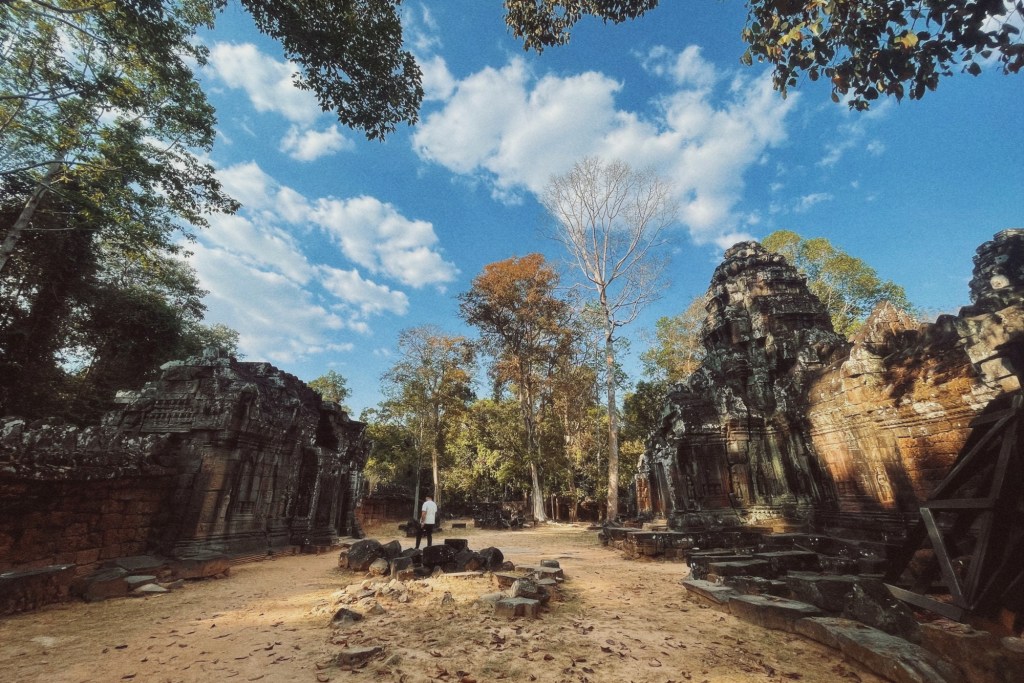
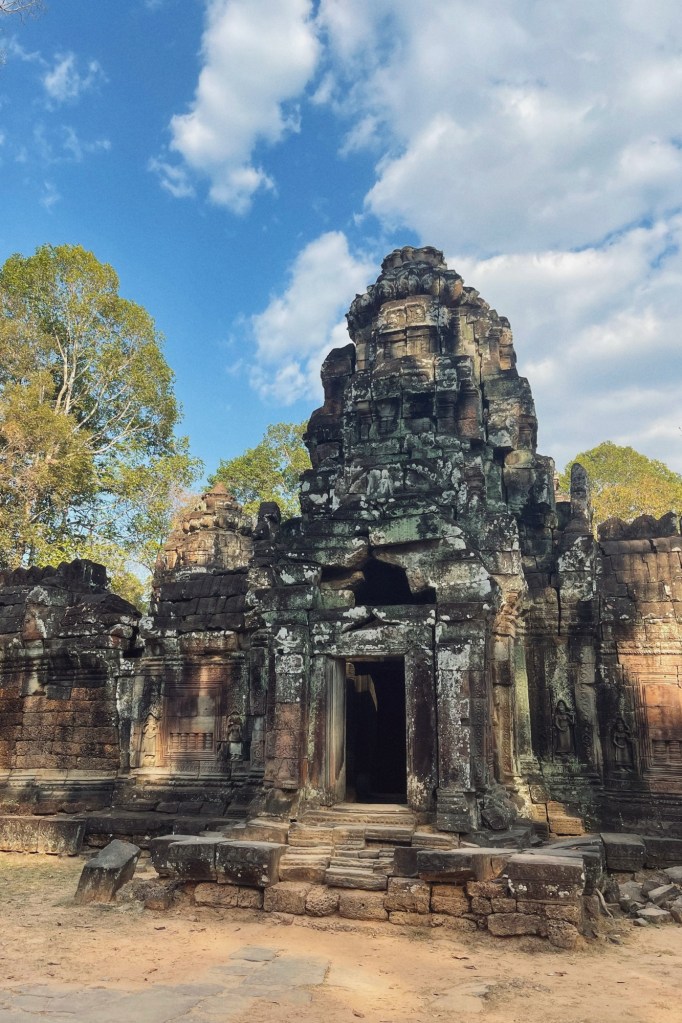
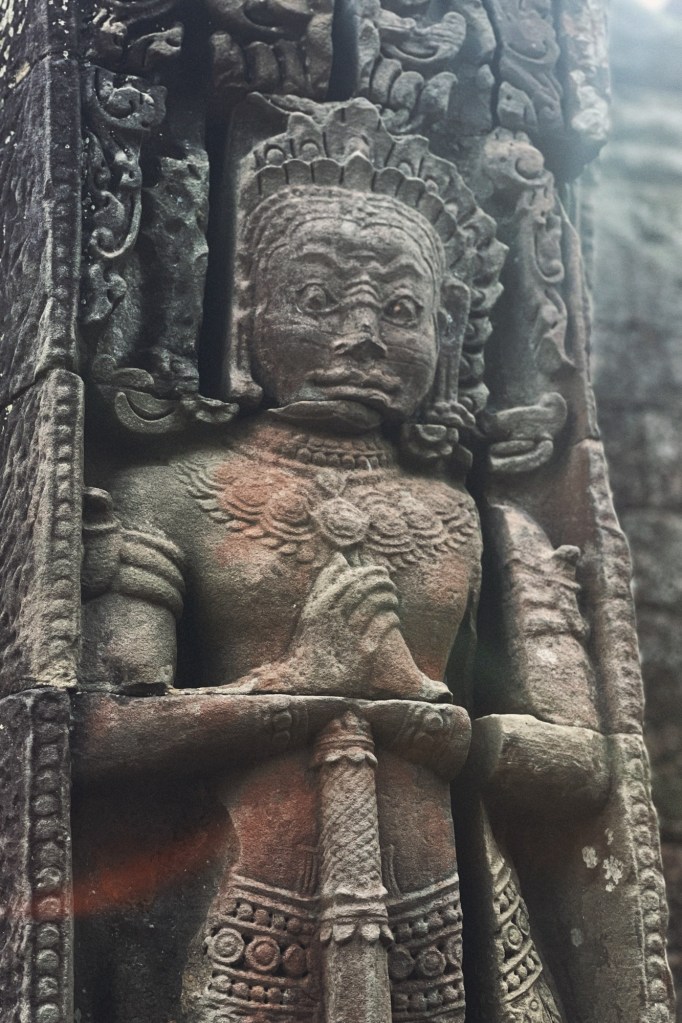
Our next stop for the day was Preah Khan – a very large, atmospheric complex with long corridors, overgrown trees, and rich history. More than a solely a temple, it was an educational and religious complex, bustling with thousands of people. A sacred city compressed. As you move into the complex you pass through doorways and lintels, you’re swallowed into an almost maze-like collection of galleries, courtyards and shrines. The carvings show both Buddhist and Hindu imagery, a fluid Khmer conception of the universe, brought to life by Jayavarman VII, a Mahayana Buddhist King.
The main shrine at the central sanctuary, deep in the heart of the complex, features a carved image with the likeness of the kings own mother, the image of “Prajnaparamita”, the Buddhist personification of the “Perfection of Wisdom”.
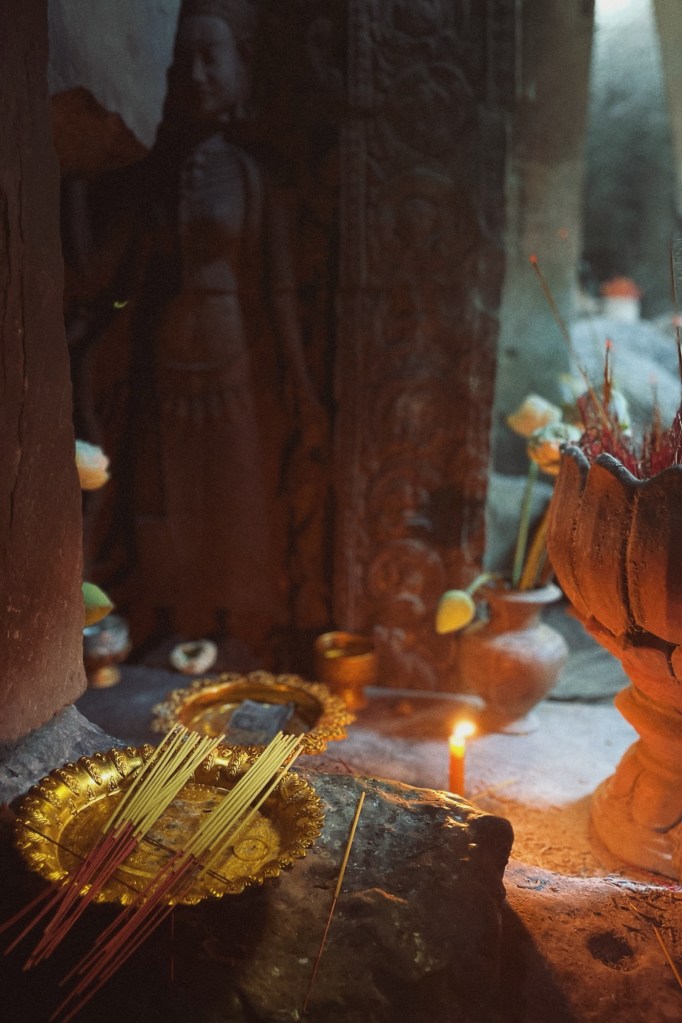
In many of the shrines offerings are left as a way of showing respect. Commonly, flowers, and soon after wilting flowers, beautiful but temporary, a reminder to not become too attached to worldly things – everything that exists eventually fades and dies. Incense is often associated with prayer, as the fragrance spreads as do the prayers, communicating with the divine realm. Offerings of fruit, rice, money and lit candles can be offerings of respect, gratitude, or prayers – depending on the tradition. Religious traditions continue in these spiritually important spaces, creating a connection between the ancient temples and living traditions of life today.
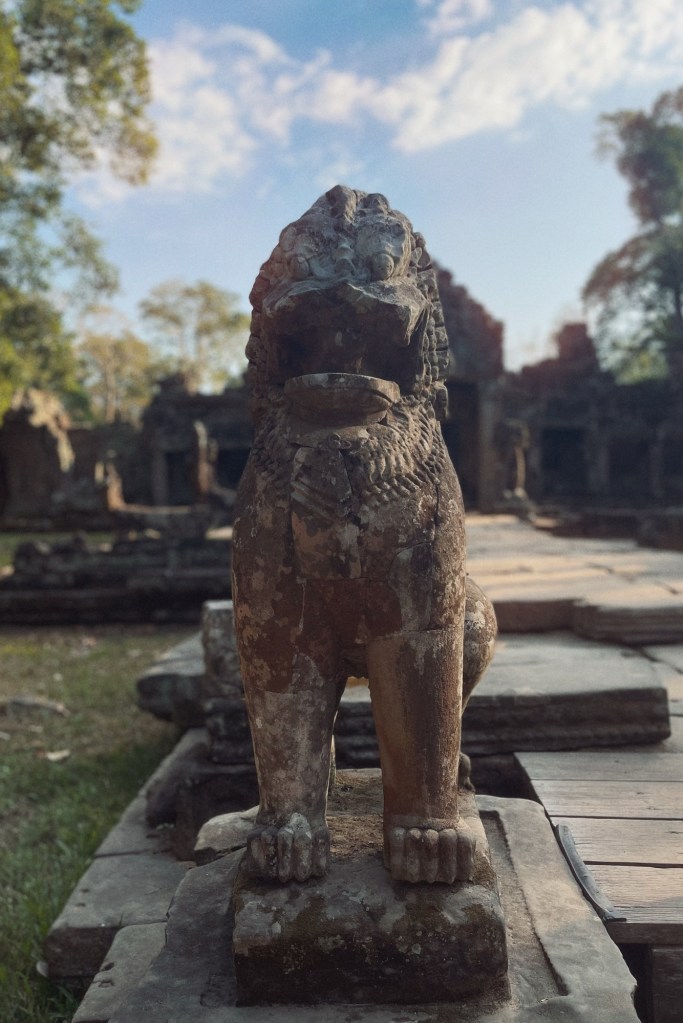
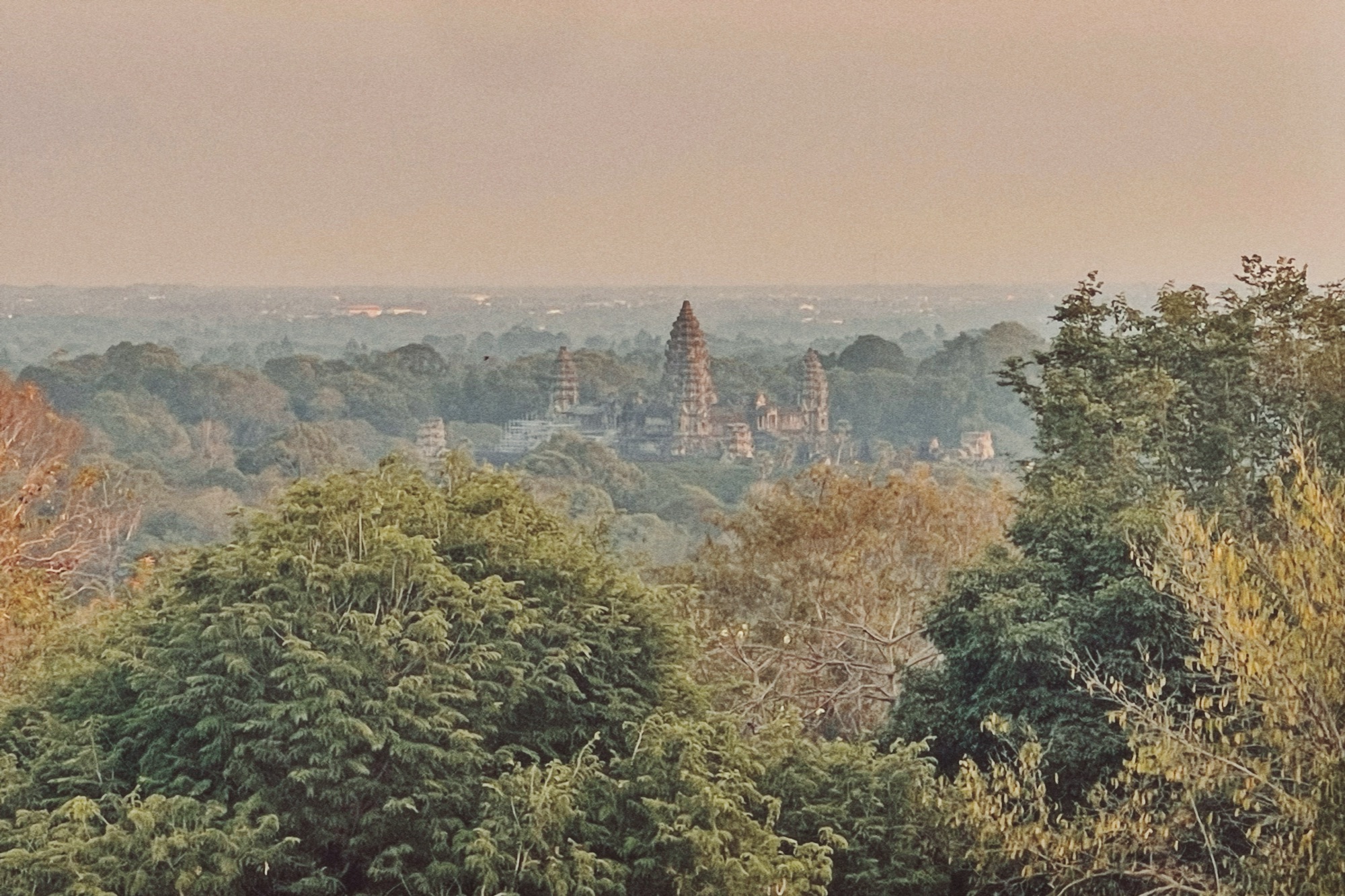
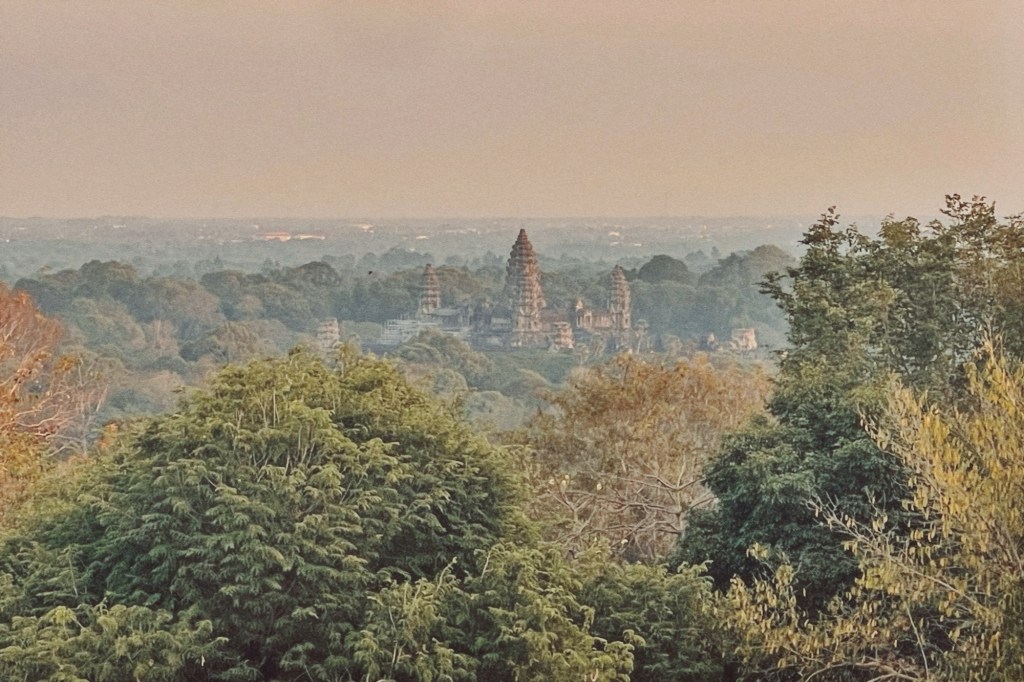
We finished off the days at Phnom Bakheng, a temple mountain atop a natural hill with a beautiful sunset view overlooking Angkor Wat and the surrounding jungle. A magnificent view, don’t get me wrong – but incredibly crowded, and the mass exodus traffic that followed.
We were dropped off back at the hotel, and headed out for a bite, we oped for Indian as it was the busiest place on the street and weren’t disappointed. Early to bed as the next day was starting bright and early!

