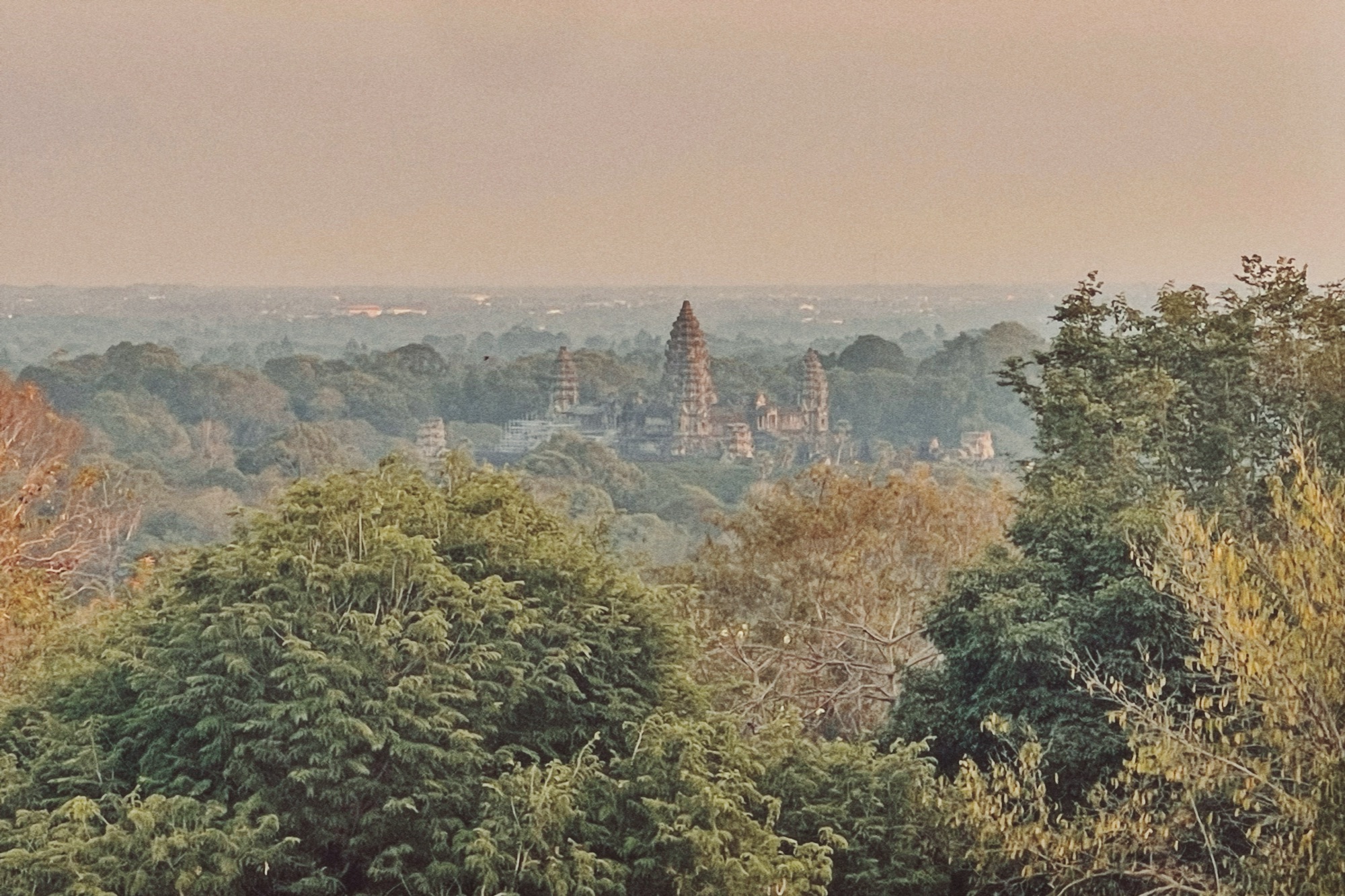
Day Three
Sunrise at Angkor +
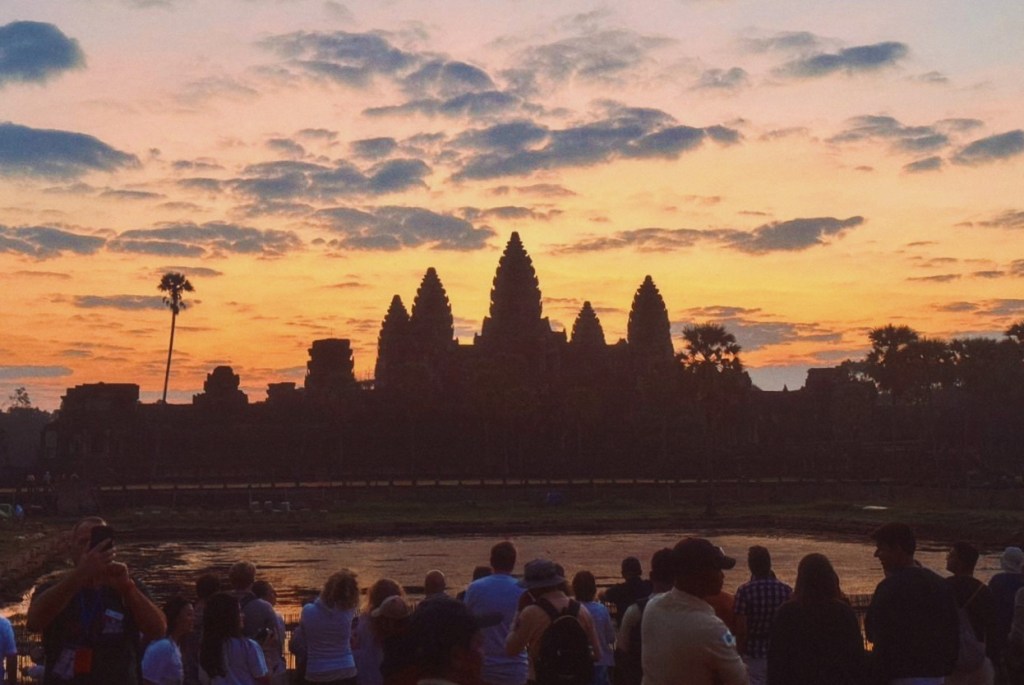
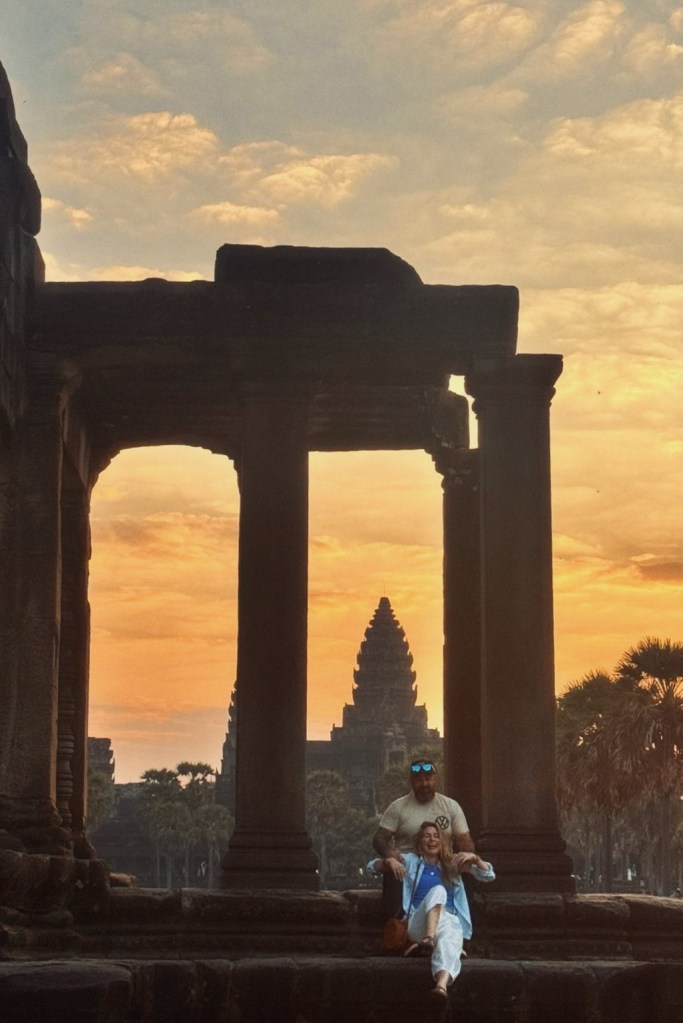
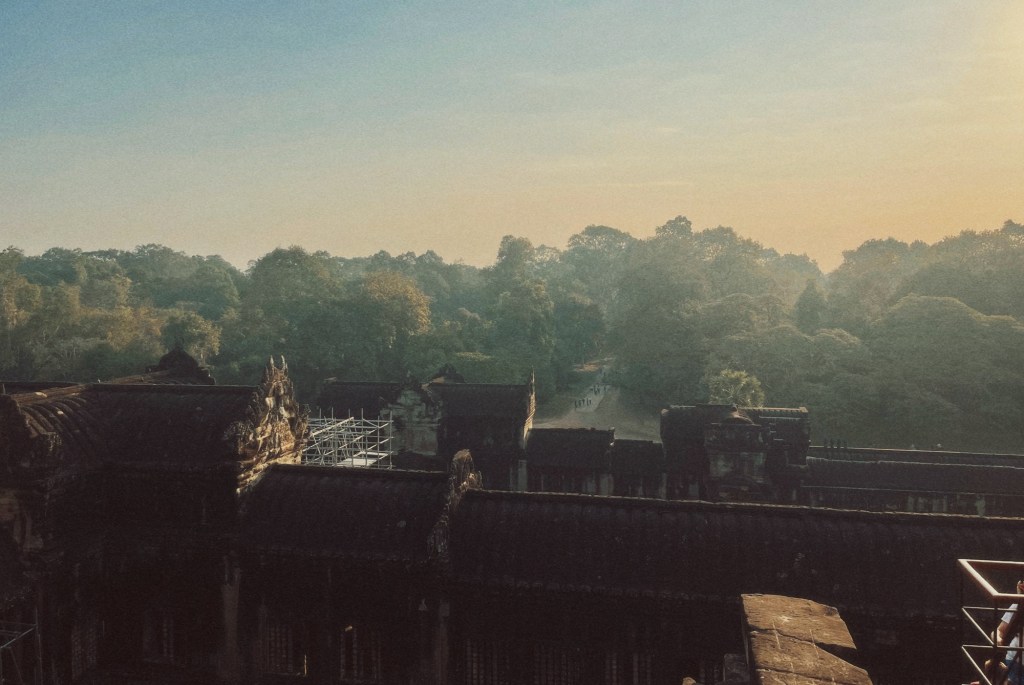
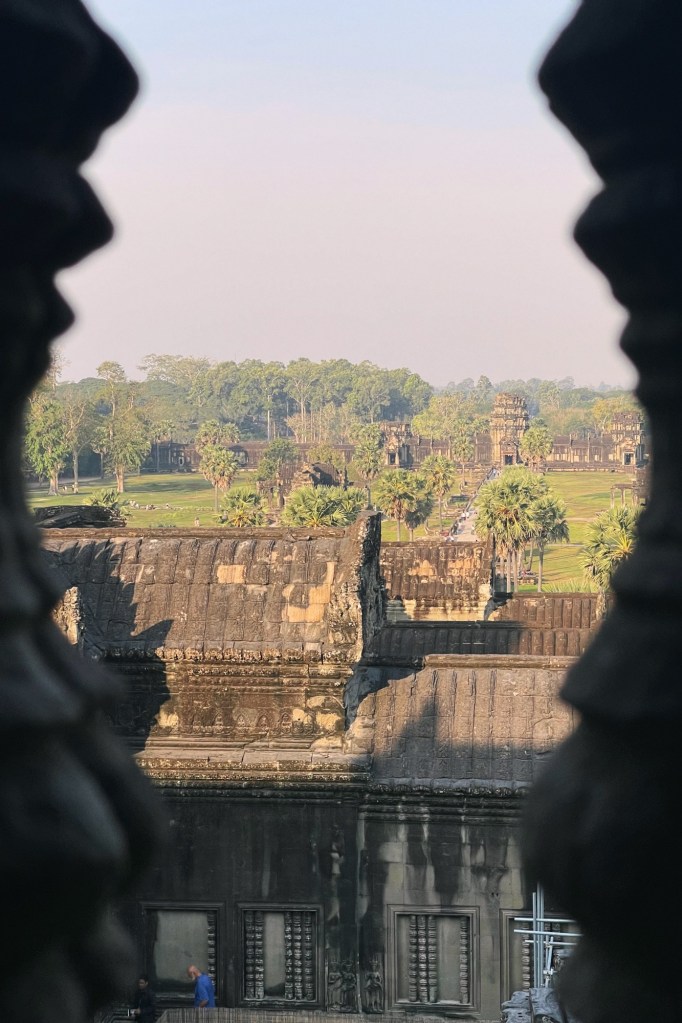
Day three was to cover the main temples and the grand Angkor Wat itself. Sunrise, in my opinion, over rated. We were up in the dark, 5am, on the road, situated at the viewing area, and while it was lovely it didn’t really do much for me. It was still pitch black, sunrise was at roughly 620am, golden hour continued well until 7. Arriving at 7 would’ve been wonderful for me, personally. Watching the sun rise behind the world’s largest religious monument, still amazing.
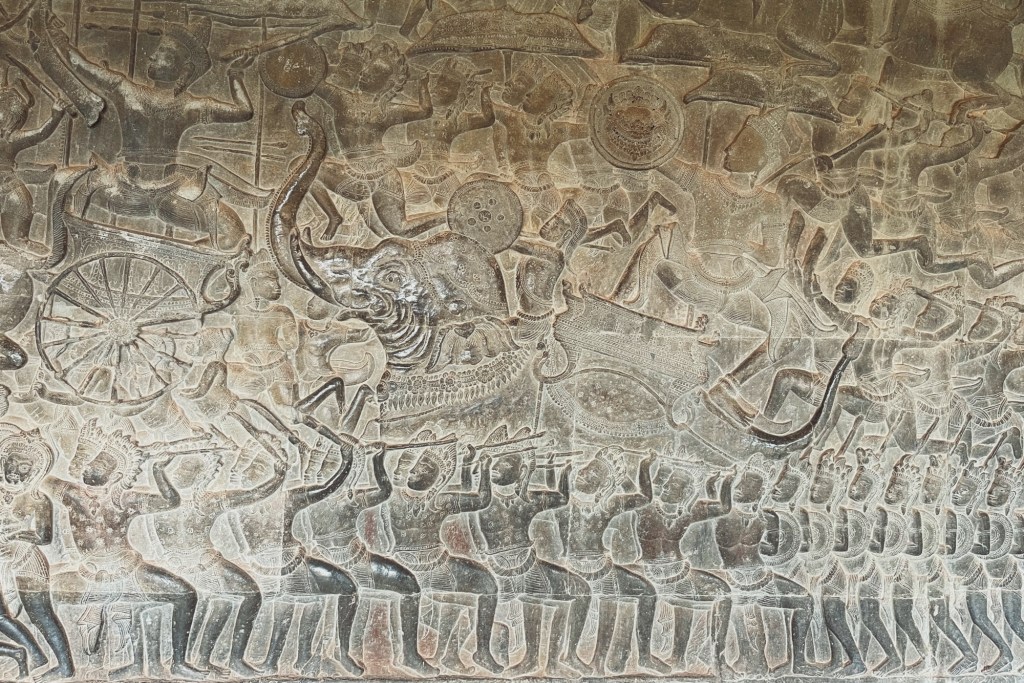
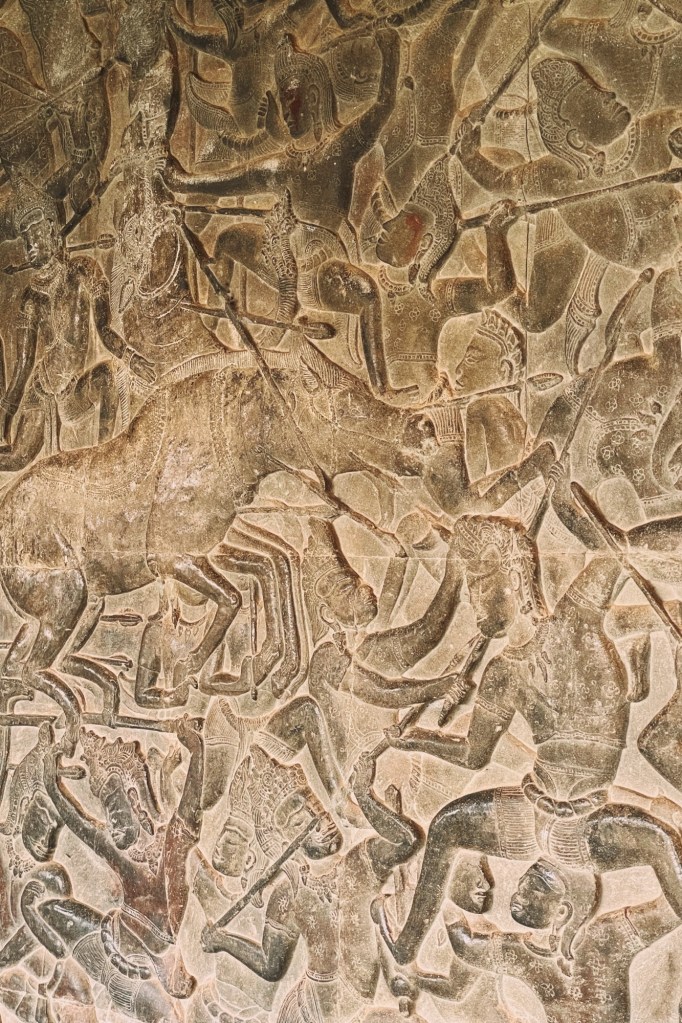
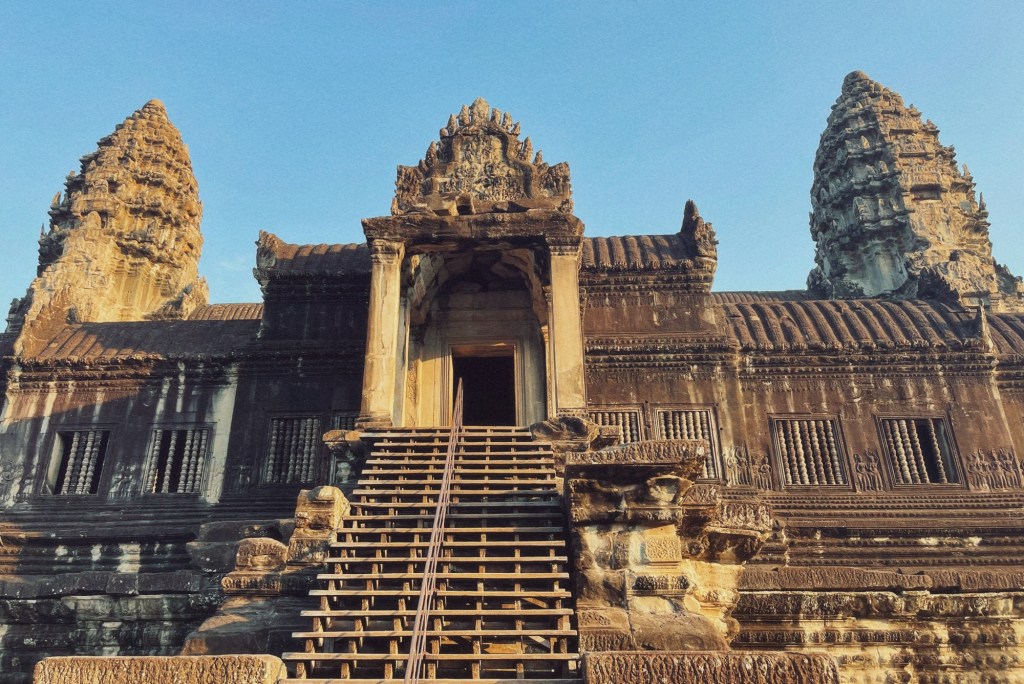
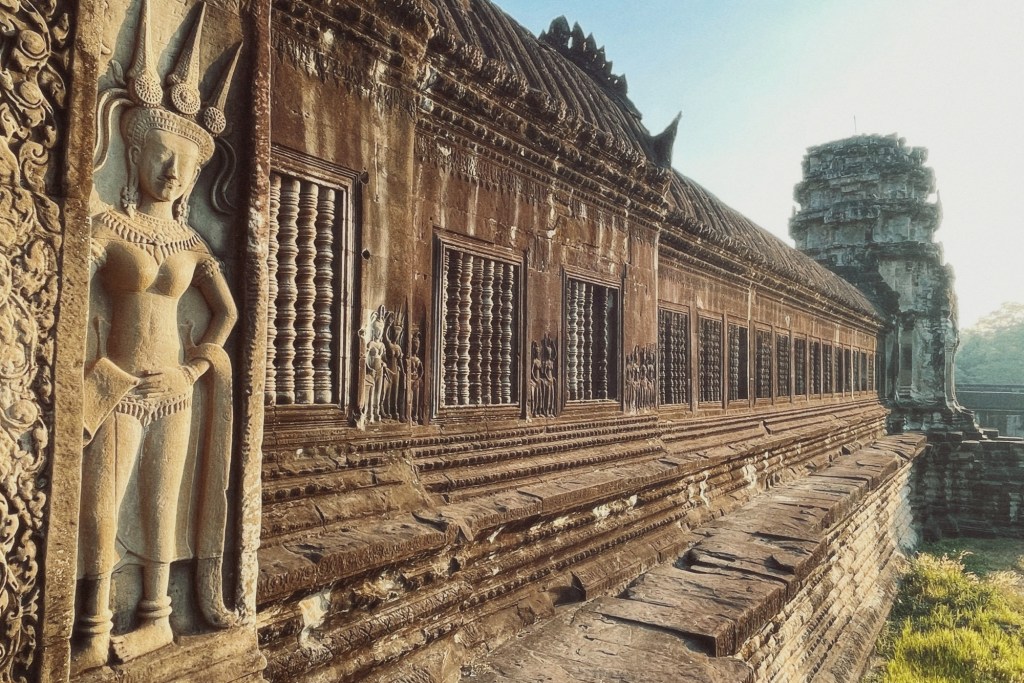
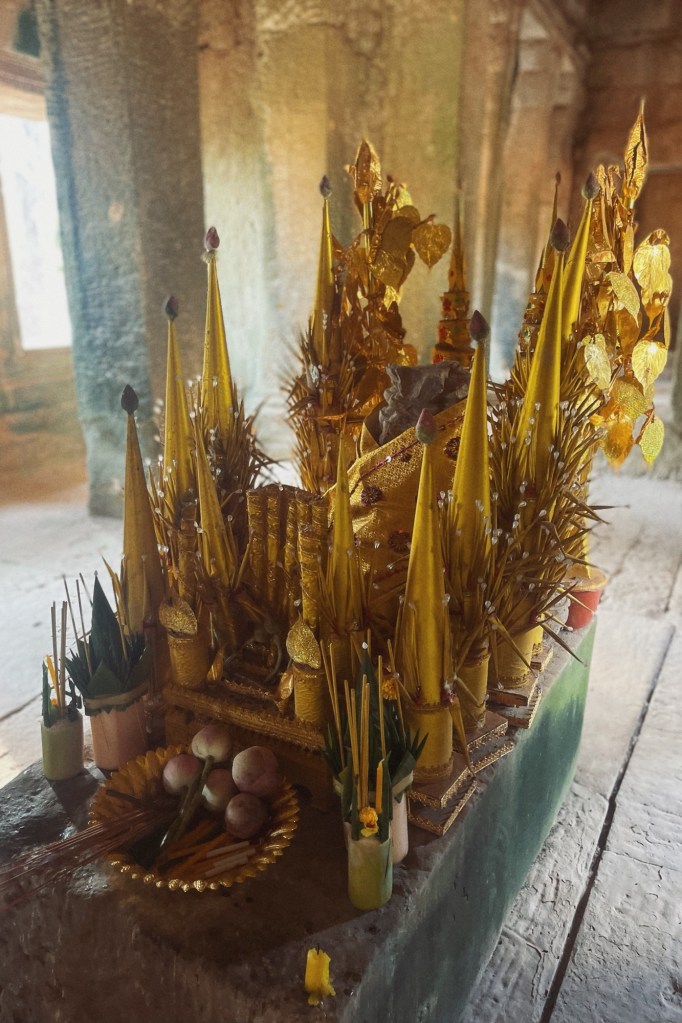
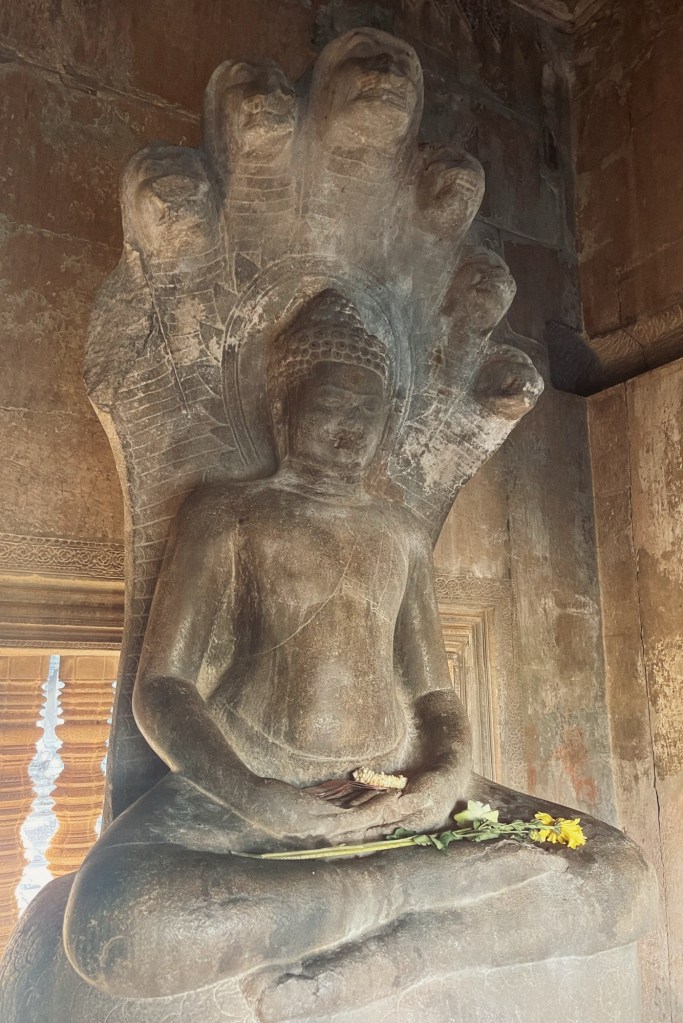
After a blur of pictures we set off to enjoy the main temple galleries, carvings, and history. An enormous sacred complex, a three dimensional model of the cosmic universe. Originally a Hindu temple dedicated to Vishnu built during the reign of King Suryavarman II, surrounded by a huge moat, outer enclosure, causeways and the immense central tower. The walls tell stories, and are remarkably well preserved. Angkor Wat was never abandoned or altered even as religious landscapes shifted from Hinduism to Buddhism in the Khmer Empire. Even as the Angkor region slowed and the political centre moved after the 15th century Angkor Wat continued to be maintained as a Buddhist sanctuary.
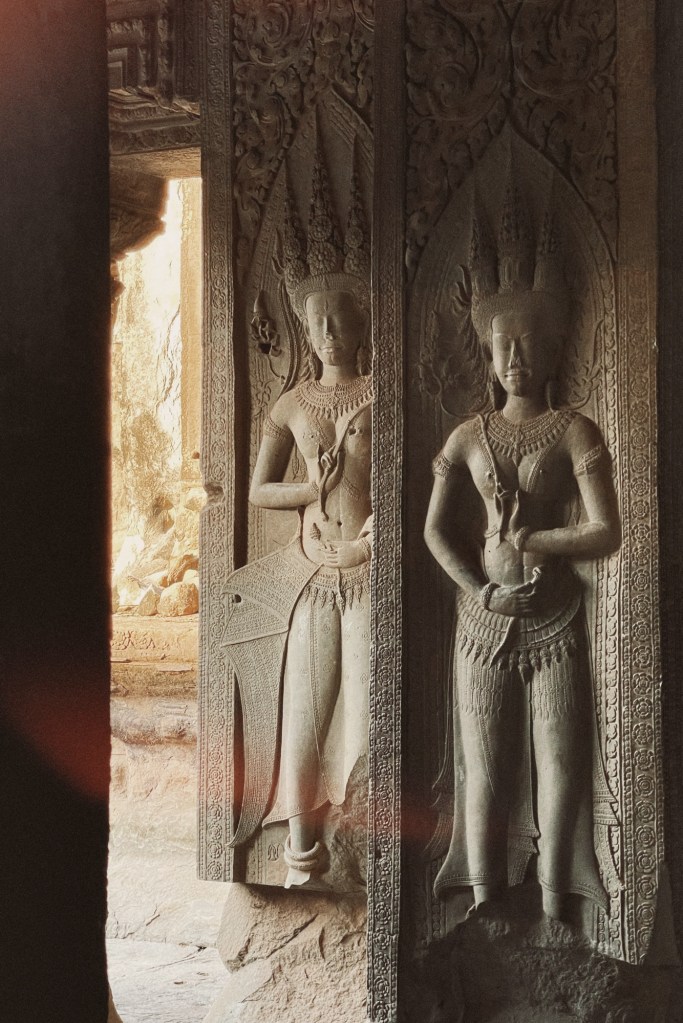
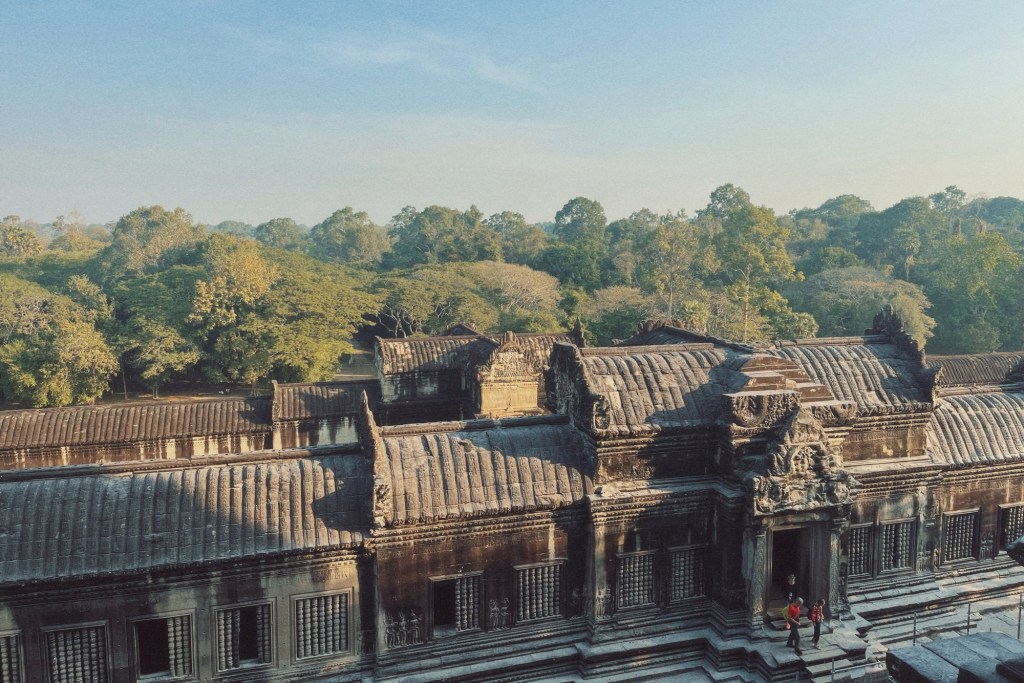
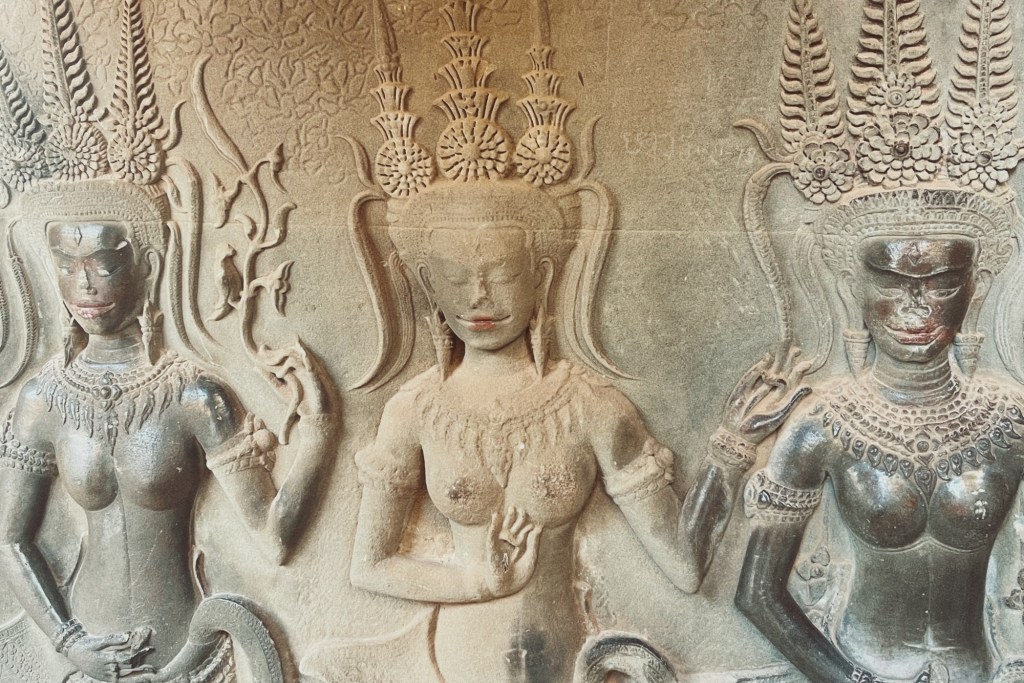
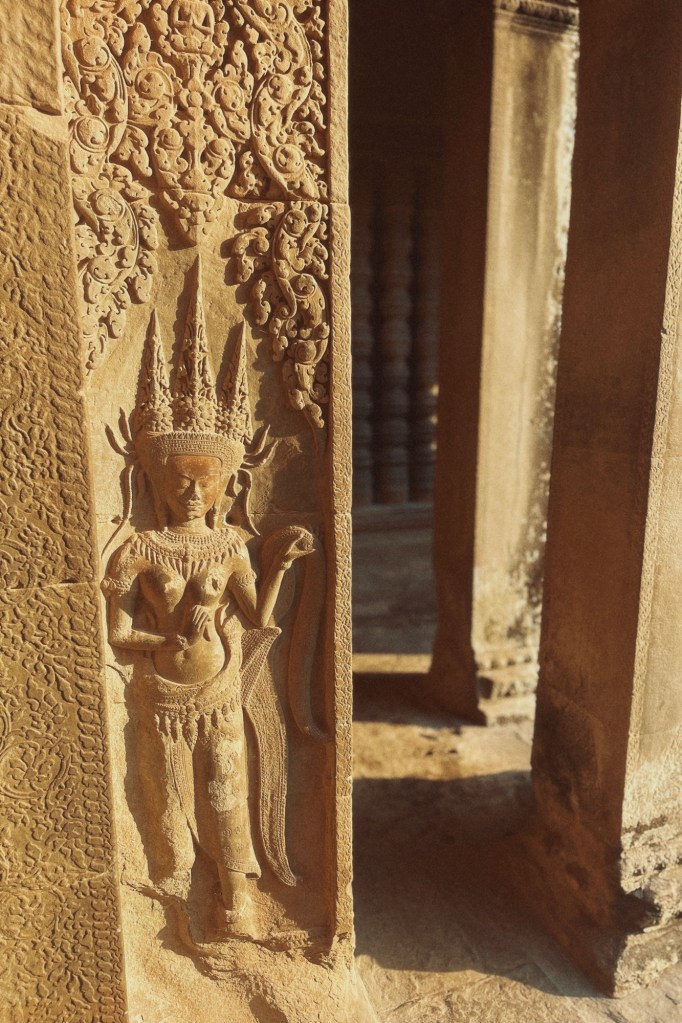
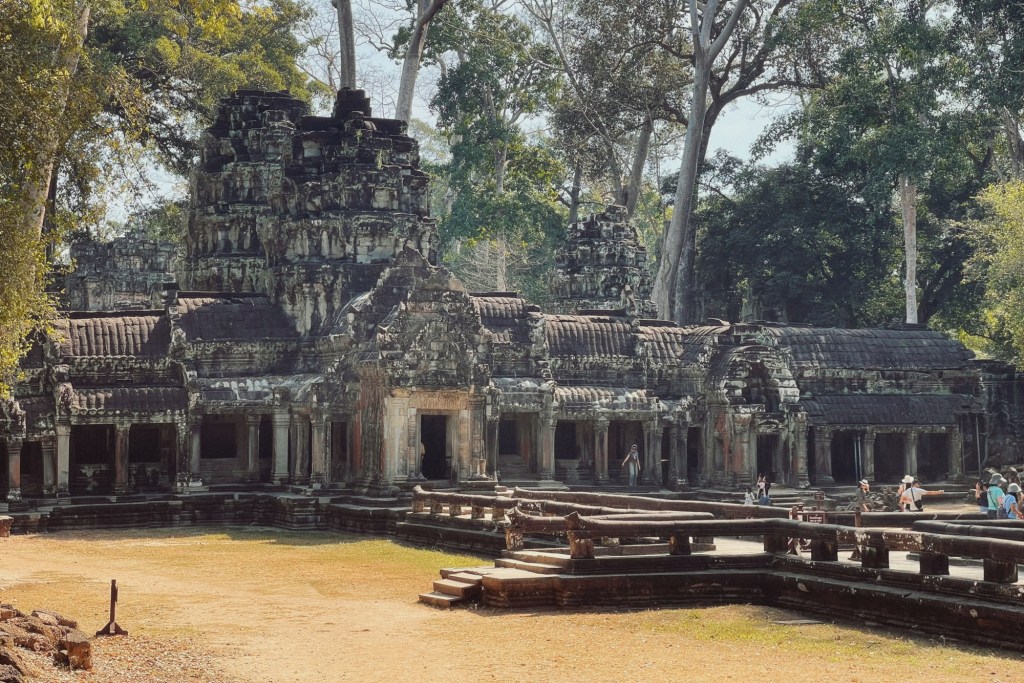
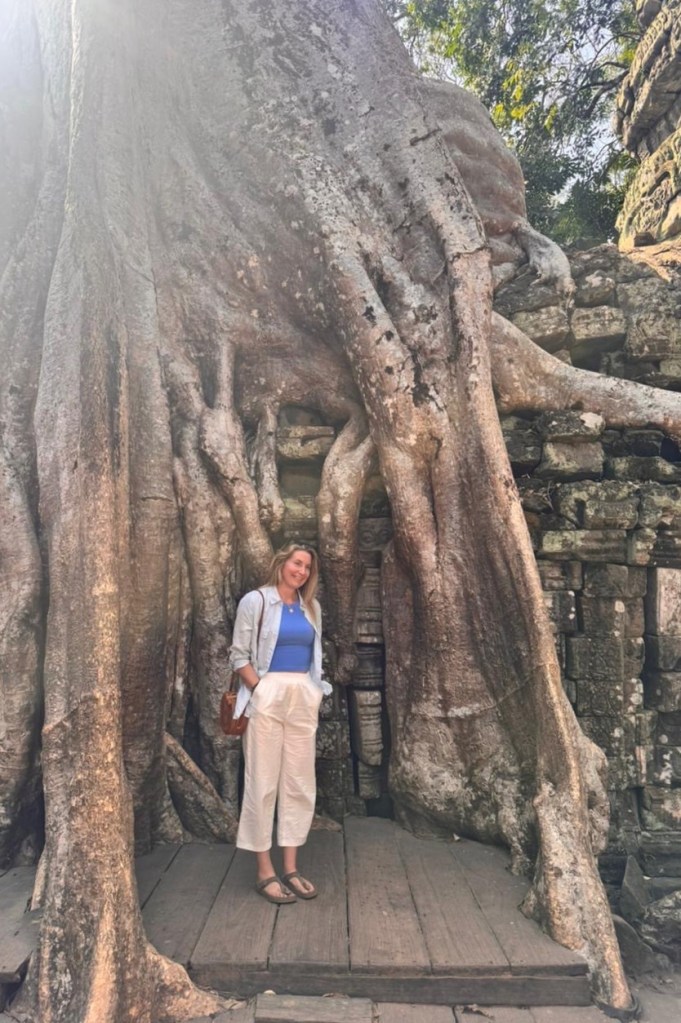
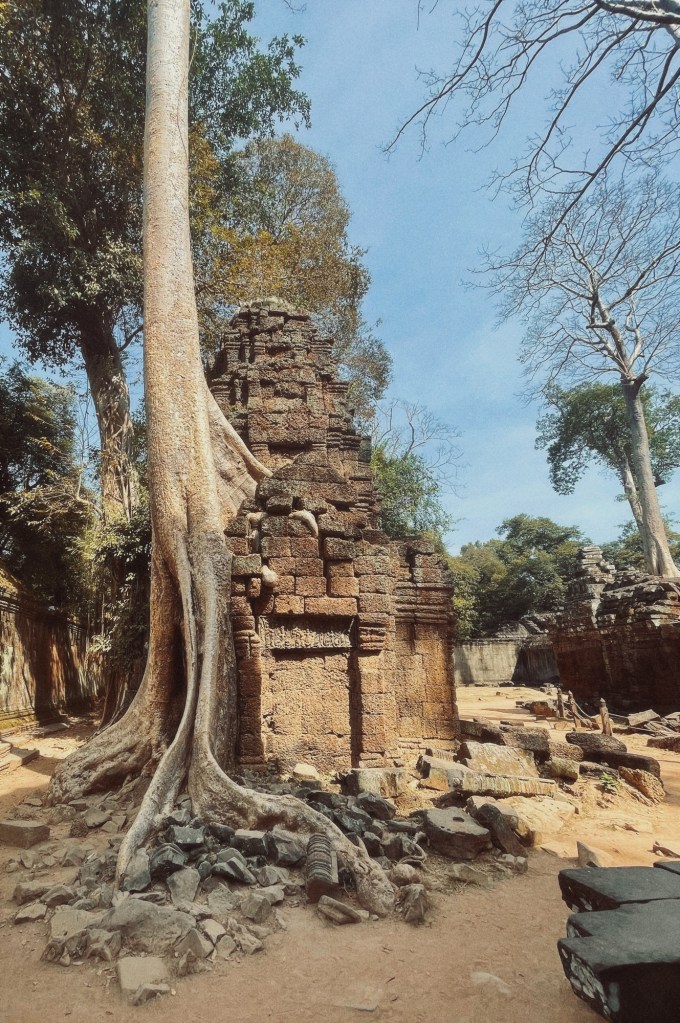
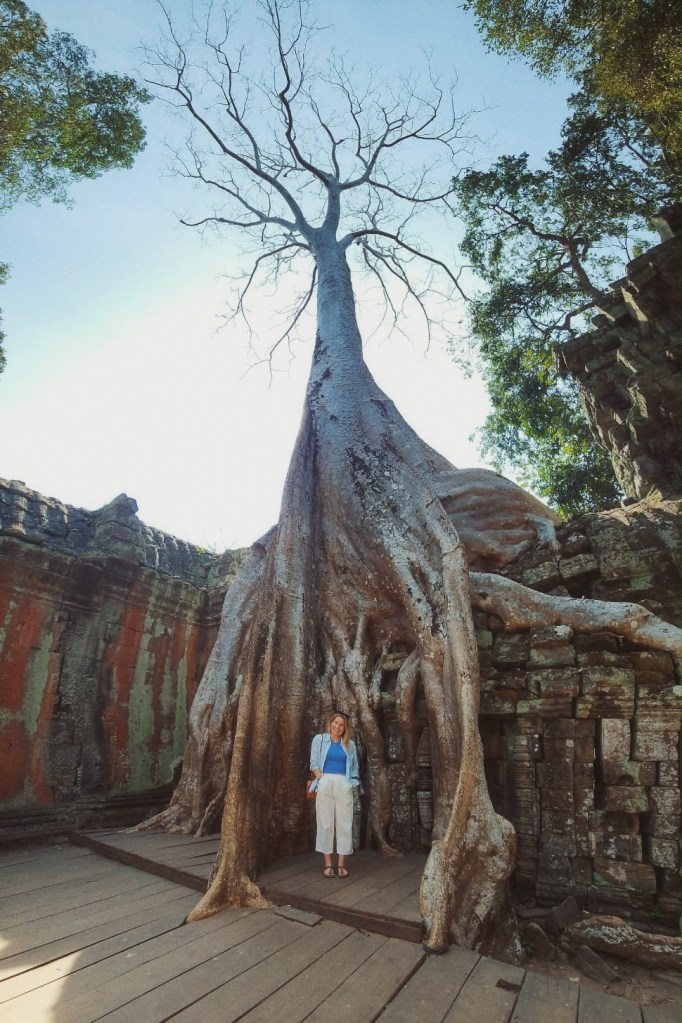
By 830am we wrapped at Angkor Wat and headed to a cafe for a bite to eat, we had a spread of noodles, soup and salad rolls, iced coffees, and an avocado smoothie for myself. After breakfast we headed to Ta Prohm known as Tomb Raider Temple, where filming took place in 2001. In stark contrast to Angkor Wat’s well kept facade and grounds, Ta Prohm wasn’t maintained and the jungle vegetation took over, growing through walls and galleries for hundreds of years. When the temple started being conserved by archeologists in the 1900’s, decisions were made to leave the trees and roots, when possible, rather than clearing them. A balancing act between collapse and the roots holding pieces together. There are still some walls and corridors being stabilized, and pruning takes place when needed, of course. But for the most part, Ta Prohm wasn’t frozen in time when the Khmer Empire shifted, the jungle encroached, became one with the temple. It was also one of the busiest stop on our tour, by far.
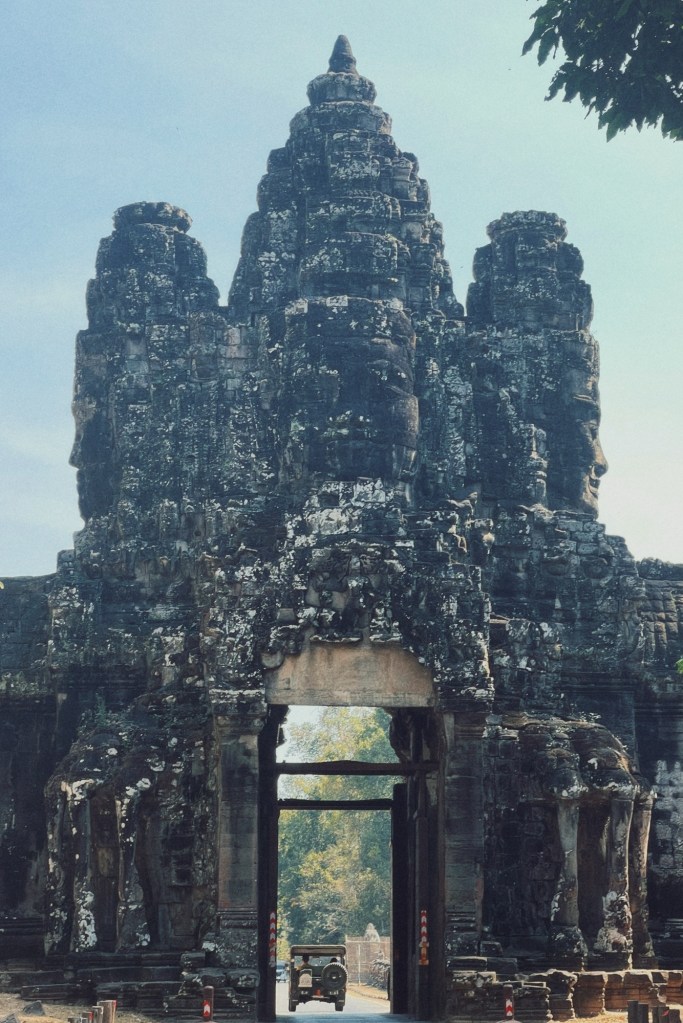
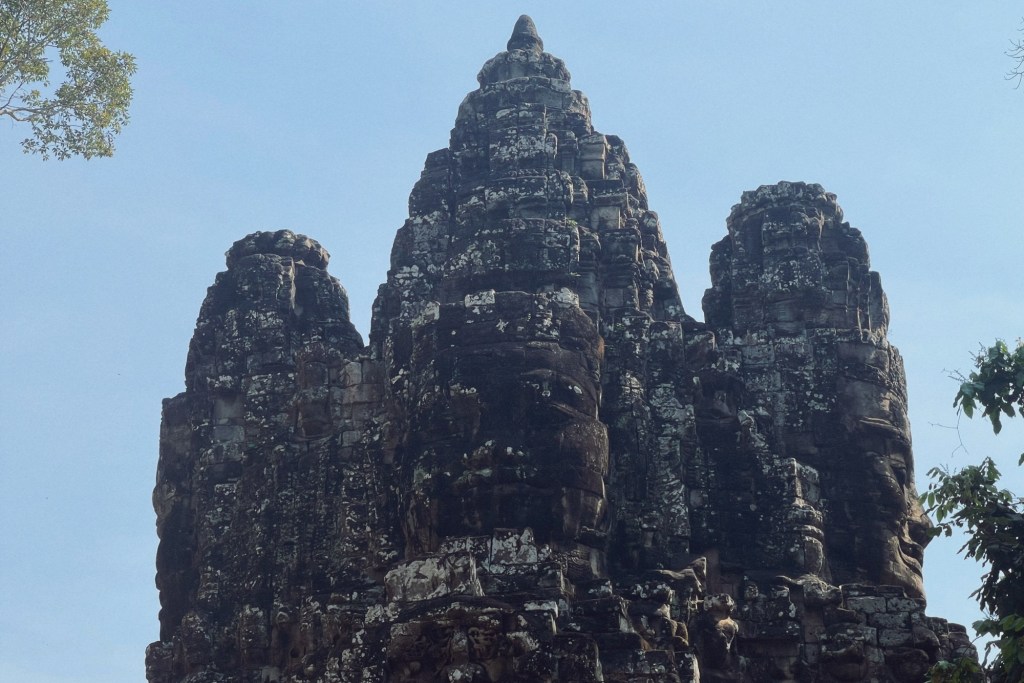
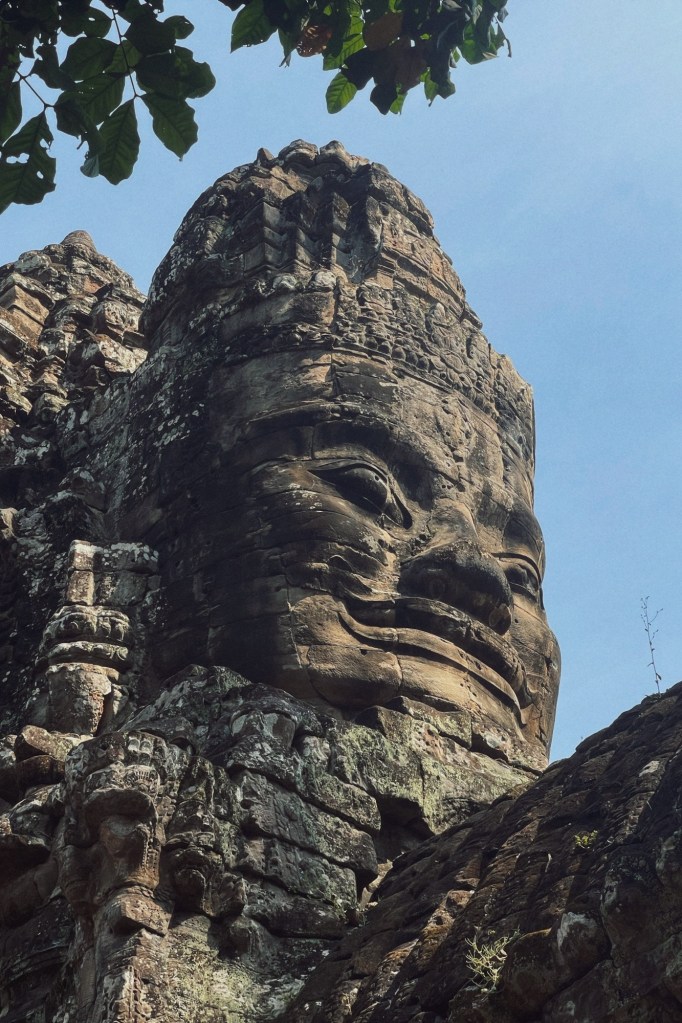
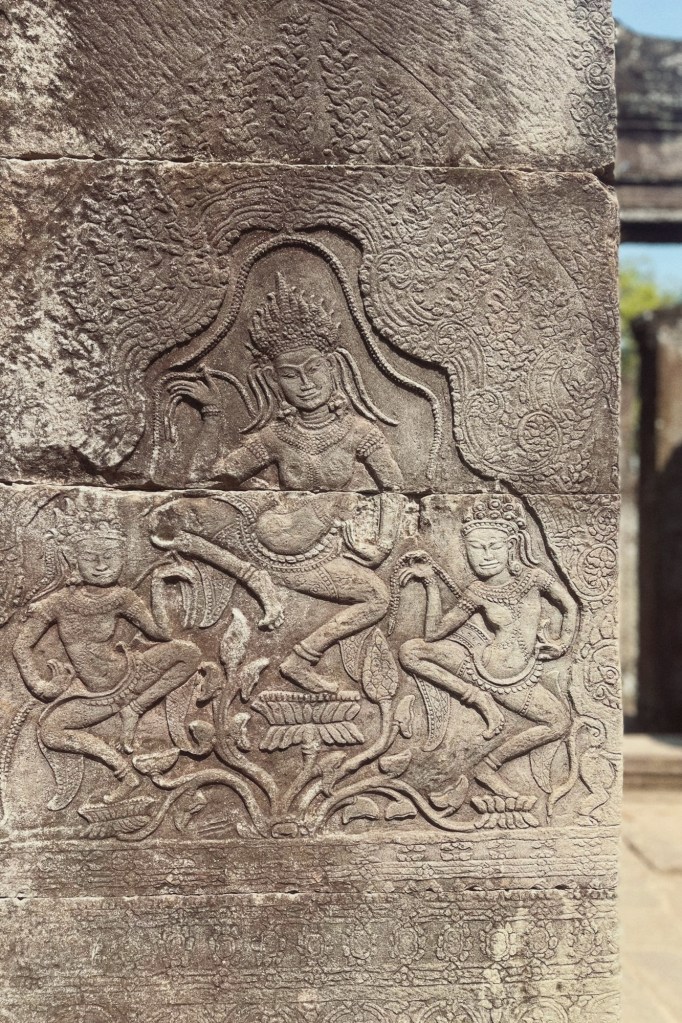
Next we head towards Angkor Thom – Bayon Temple, the royal palace. We entered through Victory Gate, which gets its name from the victorious royal processions it was used for. What might’ve that involved? A public display of royal authority – war elephants, the king, court officials, musicians, nobles, troops and perhaps returning armies? A modern day theoretical interpretation. Sounds boisterous though. Like the arrival parade in Aladdin. We headed in to explore. A massive structure, and under quite a bit of restoration work at the time of my visit. Many smiling faces adorned towers. A temple to behold, and a very busy site coming up to mid day. My personal favourite, the 300m long terrace of the elephants, a huge royal viewing platform covered with spectacular elephant carvings. Elephants were extremely important in Khmer society, from military strength to religious symbolism. Look closely and you’ll also notice the three-headed elephants – Airavata, the celestial elephant associated with Indra, the Hindu god of the heavens and storms, Erawan in Thai. The god of the heavens, rain and storms. Their carvings flank the staircase leading onto the terrace, with their long trunks descending like stone columns.
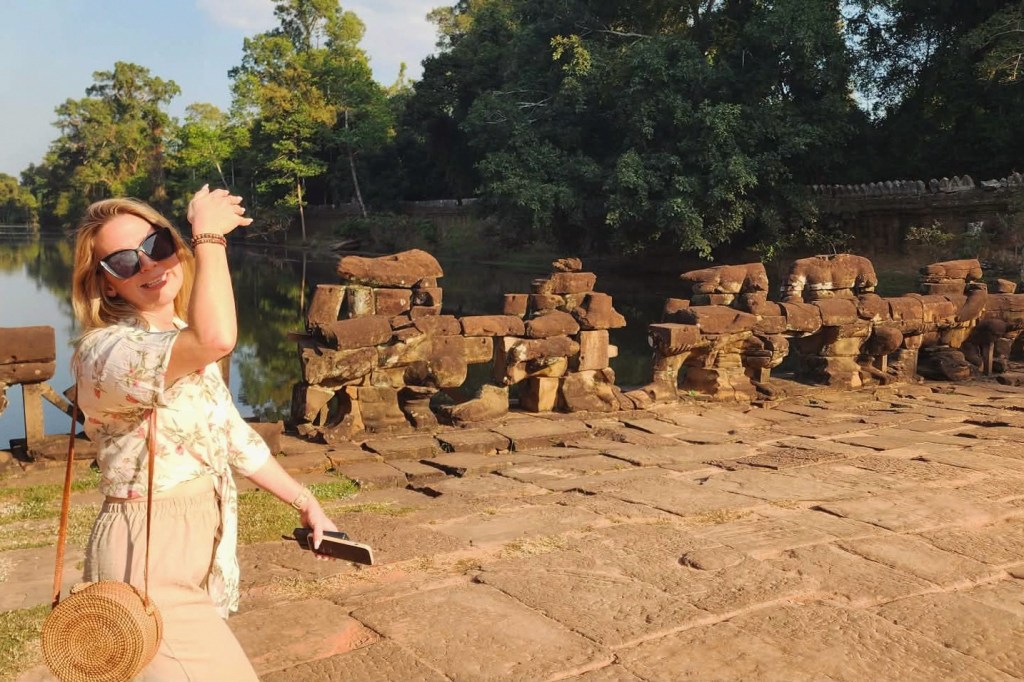
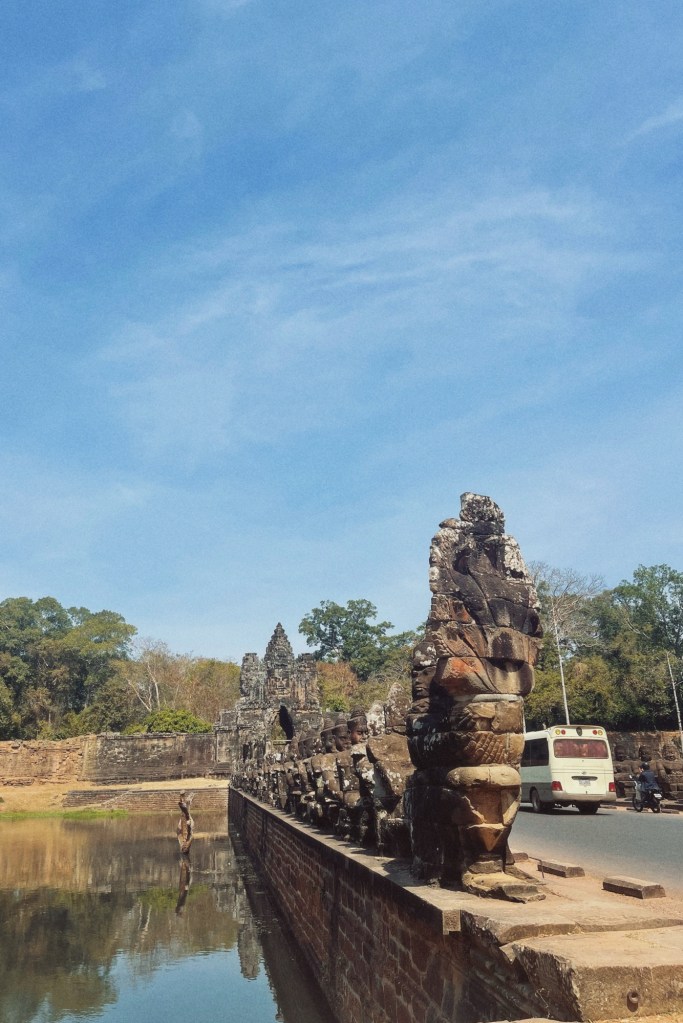
We bid farewell to Angkor. It was amazing to see the sites and surrounding area, a true empire worth experiencing. It’s a lot to take in, maybe shorter tour days over a day or two longer. I wouldn’tve cut any of the stops we did, and there were many more we could’ve seen if so inclined.
Our next stop was in regard to a sobering yet pivotal part of Cambodias more recent history. The Tuol Sleng Genocide Museum, a memorial of the Killing Fields. What was once a school, hastily converted to a prison/interrogation centre/torture facility in 1975 where the Khmer Rouge imprisoned and forced false confessions from tens of thousands before transferring them to be executed in the killing fields – mass graves.
A (not that) brief history?
It’s 1970, as the Vietnam war raged, Cambodia’s then leader, Prince Sihanouk, tried to keep Cambodia out of the conflict but Northern Vietnamese forces were operating from bases in eastern Cambodia, and the war increasingly spilled across the border.
A coup overthrew Sihanouk in 1970, General Lon Nol and other opponents overthrew him and established a pro-American government. This was a huge turning point. Sihanouk then made a decision to ally himself with the Khmer Rouge, despite previously opposing them, and encouraged Cambodians to join their rebellion against Lon Nol.
That gave the Khmer Rouge what they desperately needed: legitimacy, support and recruits, particularly among rural Cambodians. A civil war then became intertwined with the Vietnam War, the United States conducted extensive bombing in Cambodia, targeting Communist forces and supply routes. The bombing and fighting caused enormous displacement and suffering. The Khmer Rouge gradually went from a relatively small communist insurgency to controlling large swaths of the countryside.
By 1975, the government was on the verge of collapse, Phnom Penh was surrounded, and hundreds of thousands of refugees had crowded into the capital.
On April 17, 1975, the Khmer Rouge stormed Phnom Penh.
People initially celebrated because they thought the five-year civil war was finally over. Instead, the Khmer Rouge immediately began forcing the city’s population into the countryside. And this is where the story changes completely
The Khmer Rouge craved a radical vision for Cambodia. They wanted to create a self-sufficient, classless, agricultural communist society. They rejected money, private property, traditional religion and urban life. Their leadership believed Cambodia needed to be completely remade. So their answer wasn’t: “We’ve won the civil war; let’s govern the existing country.” It was essentially: “We’re going to destroy the old society and build a completely new one.”
The people being imprisoned there weren’t simply people caught in a normal post-war purge. The regime was systematically trying to identify and eliminate anyone it regarded as an enemy of its revolutionary project. If you weren’t for them you were against them, and a threat. No neutrality. Two million people died of starvation, in forced labour camps, disease and executions.
The Khmer Rouge ruled from April 1975 until January 1979, when Vietnam finally invaded Cambodia and overthrew the bloodthirsty regime.
It obviously wasn’t all unicorns and rainbows after the collapse. The Khmer Rouge still had their claws deep in politics, even holding Cambodia’s UN seat for years after being overthrown. The UN stepped in and organized a transition back to a civilian government by 1993 and Sihanouk returned as King also in 1993, making Cambodia a constitutional monarchy.
Barang waited patiently in the lot while we toured the museum, reading transcripts of the few survivors and historical documents. There was in depth details on the many war criminals and their crimes, that either escaped, received some sort of punishment or died of natural causes. Incredibly rage inducing.
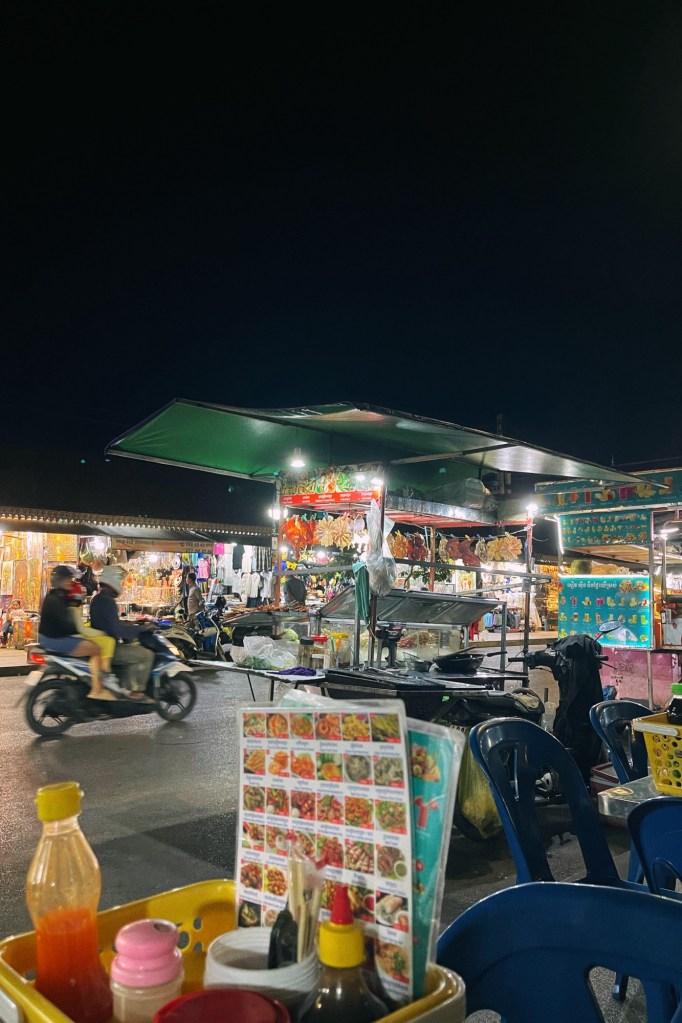
We were dropped off at the hotel by 2 and were physically and mentally exhausted, it was the perfect time for afternoon tea, a swim to cool off and a poolside nap before getting ready to find some dinner and checking out pub street. Cambodias little Khaosan equivalent. Shut down for traffic in the evenings, the entertainment district is full of bustling nightlife, street vendors, shops, and bars.
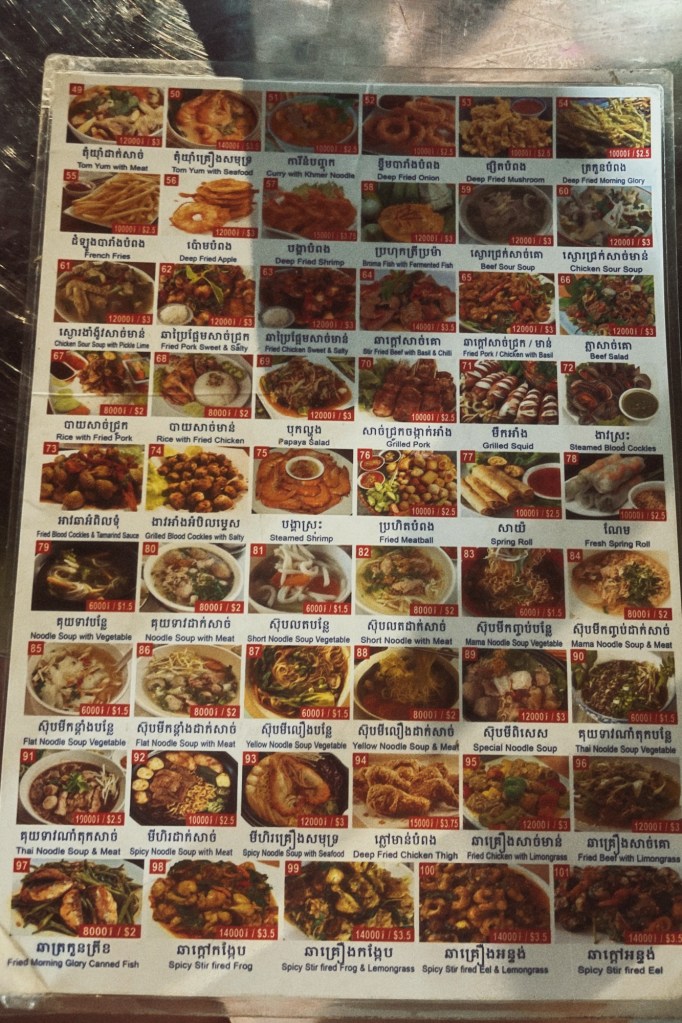
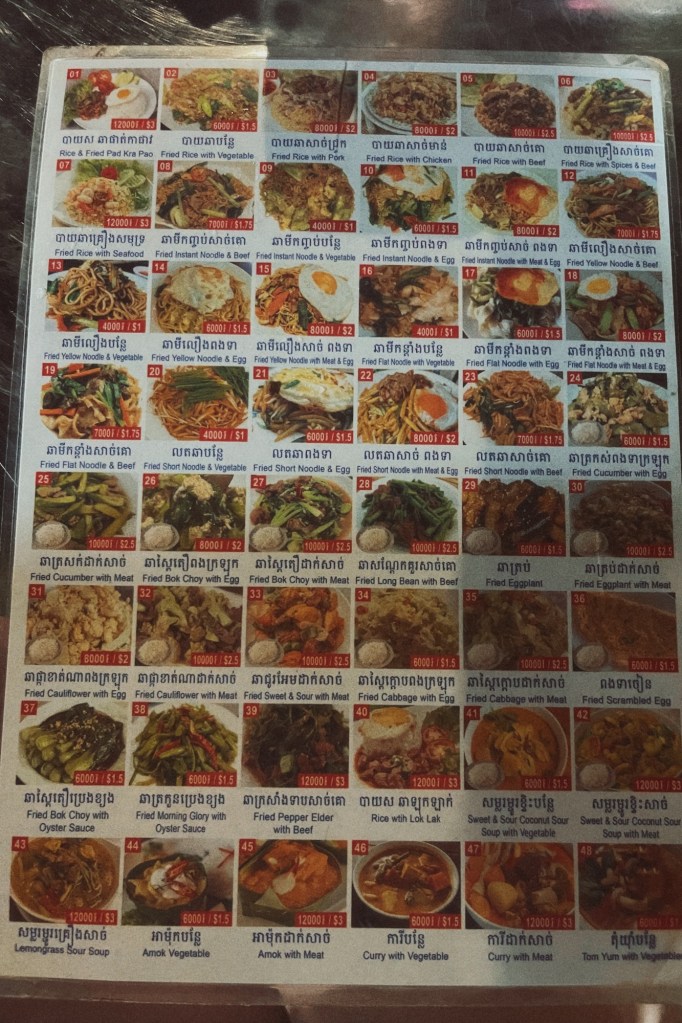
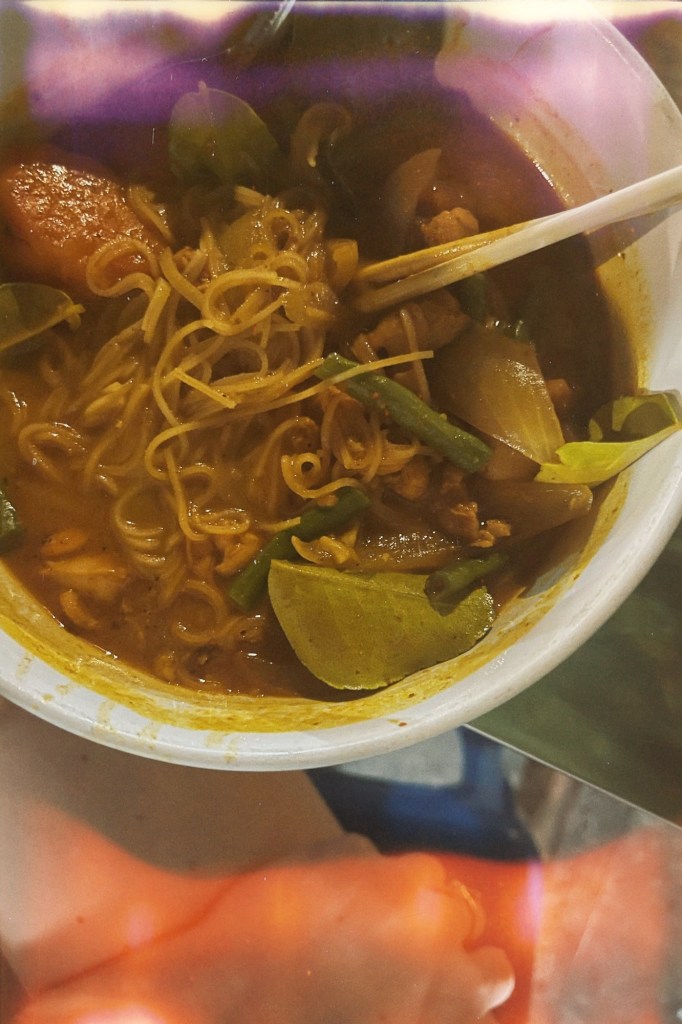
We saddled up roadside, over by the river, given a laminated menu with pictures, English writing and prices, all between $1-$4. I had an aromatic curry noodle dish with chicken and veg, a generous amount of fresh lime leaf. We all had mains and split salad rolls, smoothies and Michael a beer. Under $10 American. Because of course. No one can escape the all mighty American dollar. We were all floored with the meal and set out to pick up some souvenirs for friends and family, I picked up a couple pairs of tie on pants and Michael eyed up brand name backpacks. In hindsight, Cambodia had much more competitive pricing on knock off items and I’d advise picking up what you need at the shops there, if you’re in the market for a fake louis.
We went for another wander through pub street, snagged a banana roti, burrito style and headed back to the hotel, did a little pre pack and were off to bed. We had easy hotel breakfast the next morning and bid adieu to the lovely Community. Highly highly recommend.
For a country that was devastated almost beyond recognition in the 70’s and 80’s Cambodia managed to rebuild remarkably quickly once peace arrived. The history is absolutely horrific, but Cambodian society hasn’t been defined by that history. There’s a strong cultural tradition of hospitality and generosity, the people you encounter in the tourism industry have a friendliness that is both genuine Cambodian hospitality and part of a very well-developed tourism culture.
And while the infrastructure has made Siem Reap one of the country’s showcase areas, Cambodia still has considerable poverty and inequality, and development is notably uneven. Parts of Cambodia have benefited enormously from investment and tourism, while basics like access to clean water, education and healthcare falter just 60 minutes outside of tourism heavy areas. Cambodia is a land of resilience, and there’s so much waiting for this beautiful country to grow into in the future.
Our flight wasn’t until 120pm, we were picked up at 930am and had ample time at the very modern airport. Our return flight was uneventful, no checked bags, everything went well, back on the ground by 315pm and dropping off our bags at Gravitique on Khaosan Rd before grabbing a bite and heading to a Muaythai night at Rajadamnern Stadium. Also epic. But this is for Cambodia, not Thailand. I’ll likely eventually make a small (lol) post about Bangkok things. Beat a dead horse. Tbh one of my many pet peeves is literally anyone (influencer want-to-be’s) saying “you have to check out ___” so don’t think that’s my ploy, this is all rambling diary blog style, for family and a few friends to read – and for myself to read a few years in the future when my memories have blurred a touch.
Thanks for reading!
Hope you enjoyed!
Highly highly recommend Barang’s service – http://www.angkordriverservice.com

